


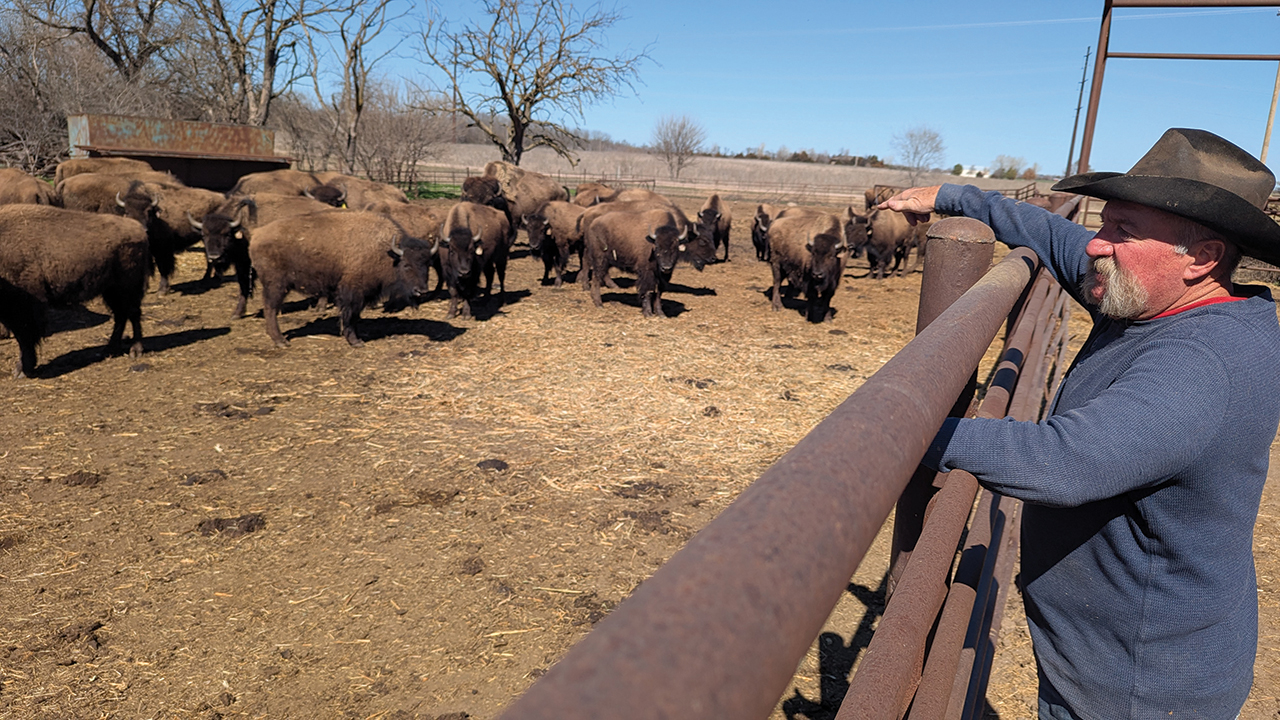
Dick Gehring isn’t afraid to put his boots on the ground when he’s working with the bison on his ranch in central Kansas. That’s not because the 1,000- to 2,000-pound animals can’t hurt him but because he’s learned that if he respects them, the bison will respect him back.
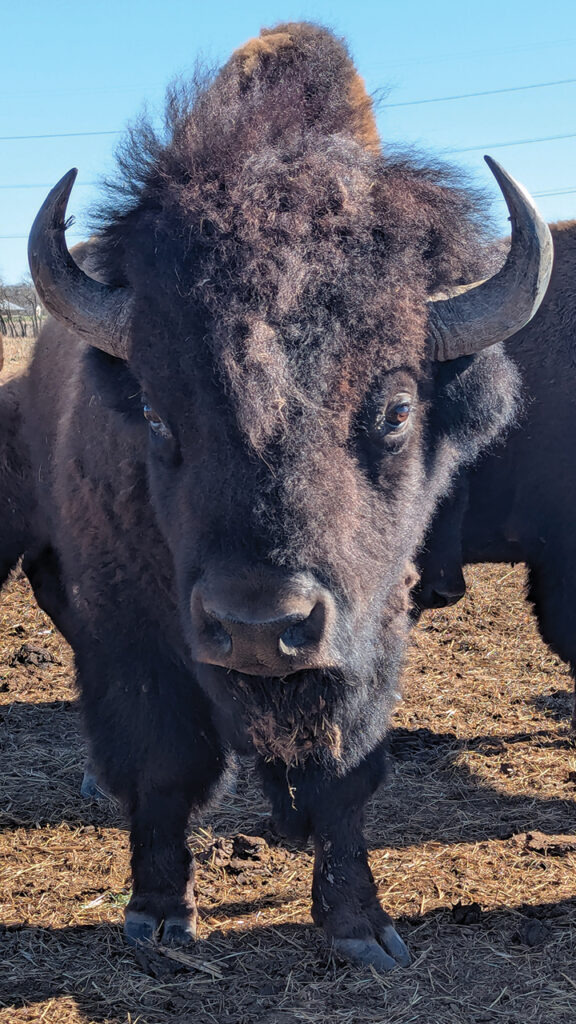
“There are so many people that are scared of these animals,” Gehring said, and for good reason. The American bison is North America’s largest land mammal, and, unlike the cattle raised by most ranchers in his area, these ungulates have never been domesticated. If you make them feel threatened, Gehring said, “it can be a bad day.”
Luckily, the Mennonite farmer has learned the opposite is also true: If he makes sure the bison have a good day, it can be a good day for him, too. His relationship with the animals over the last 40 years has shown him there is an order to the natural world, and it’s best if he follows it.
“God had this figured out a long time ago,” Gehring said of the synchronicity between the bison and the prairie. “We insist on being smarter and trying to improve on it, and we end up shooting ourselves in the foot.”
Based in Moundridge, Gehring is the founder of Black Kettle Buffalo, which he operates with his eldest son, Reese. Each year, they sell over 1,500 animals for meat as well as breeding stock.
“It’s not just a cow-calf operation,” Gehring said. “We kind of hit all the angles.”

When Gehring acquired his first bison in 1988, his motivation was economic. He was running a meat locker and noticed that bison was a high-value protein that almost no one was selling.
When he introduced the animals to his family’s farm, he was in for a learning experience.
“People ask all the time what it’s like,” Gehring said, “and I tell them it’s just like raising cattle, only completely opposite.”
With over 100,000 years of history on the American continent, bison are experts at taking care of themselves. They can endure harsh winter storms and intense summer heat. Their large heads act as snowplows, allowing them to dig for forage under snowdrifts. And their breeding cycle is perfectly synced with the seasons.
“That’s kind of the neat thing about these guys,” Gehring said. “Once you get set up, you get out of the way.”
In fact, getting out of the way is often the only option, especially during calving season, which lasts from April to June. Gehring said he might as well go fishing, because meddling with the process would cause the mothers too much stress.
“You don’t [help with calving],” Gehring said, “and you couldn’t, and you’d probably get killed if you did.”
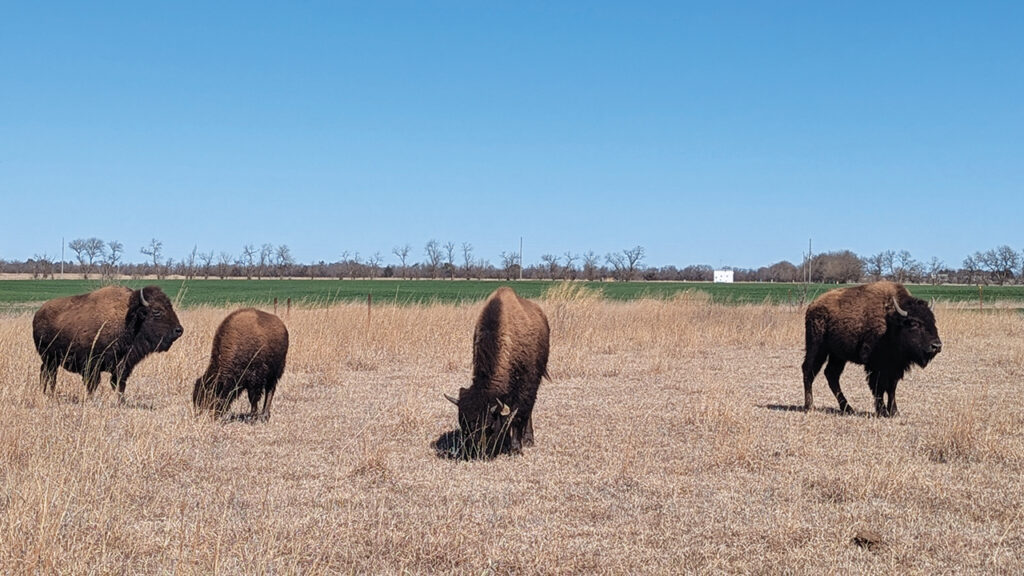
For bison farmers and ranchers, minimizing stress is the name of the game.
When bison feel threatened, their cortisol levels go up. This not only causes problems for the producer in the moment but also leads to health issues down the road. For example, Gehring said, a lot of respiratory diseases can be traced back to a stressful event in the past.
To avoid causing stress, Gehring tries to think like a bison.
“They don’t like to be alone, and they don’t like to be confined,” he said. In the early years, when the animals needed vaccinations, he ran them through a corral built for cattle.
“We put them by themselves in an area where they couldn’t turn around, and it didn’t go well,” he said. “It stressed them out, which ends up stressing you out.”
Since then, he and Reese have modified the system. The alleys are wider so the bison don’t feel trapped, and they’re allowed to move through the pens in groups of their own choosing. When they get to the squeeze chute at the end, they’re calmer and usually enter willingly.
After years of observation, Gehring said, “we know how they’ll act and react, so we set the scenario up so they act and react, and it does what we want. By doing that, they think life is good, and therefore for us, life is good.”
Bison don’t require much in the way of human assistance to be content. What they do need is plenty of biodiverse grassland for grazing.
Gehring is the third generation on his family’s farm, and it wasn’t always pasture.
“Most of our land got turned under and put into wheat years ago,” he said.
Gehring’s Mennonite ancestors who settled the area in the late 1800s were farmers. They plowed fields out of the prairie and planted grains — first wheat and milo, and later corn and soybeans. They also raised European livestock.
“We collectively as a group of Europeans,” Gehring said, “came over to another country and brought all of our wisdom and knowledge that was in concert across the pond to an area that is not set up the same way, and we damaged the ecosystem here and changed it.”
Before the arrival of Europeans, over 30 million bison roamed the grasslands of North America. With a range stretching from Northern Mexico to Southern Canada and from the Rocky Mountains to Appalachia, they provided an abundant source of food for many Indigenous peoples.
![A bison cow and calf. “You don’t [help with calving] . . . and you’d probably get killed if you did,” Dick Gehring says. — Tim Huber/AW](https://d1j7svwn1w6x2c.cloudfront.net/wp-content/uploads/2026/03/bison-cow-and-calf-1024x576.jpg)
But by the end of the 1800s, European hunters and disease had reduced the population of bison in North America to less than 1,000. Loss of the keystone species was an added blow for ecosystems already fractured by farming and industrialization.
To bring bison back to his family’s land, Gehring planted native grasses, including big bluestem, little bluestem, sideoats grama, indiangrass and switchgrass.
He encouraged the bison’s natural grazing behavior by moving the herd frequently, and everywhere they grazed, they fertilized the soil with their manure and urine, aerated the earth with their hooves, created wallows which captured rainwater and left behind habitat for birds and rodents.
Before long, Gehring noticed species he hadn’t planted beginning to show up. Kanlo switchgrass, a deep-rooted lowland native, popped up on its own, he said in a YouTube video produced by Broken Arrow Bison. He found nests built by birds and rodents using the bisons’ fur.
“Farming and ranching,” Gehring said, “is highly sustainable if you’re doing it in concert with Mother Nature.”
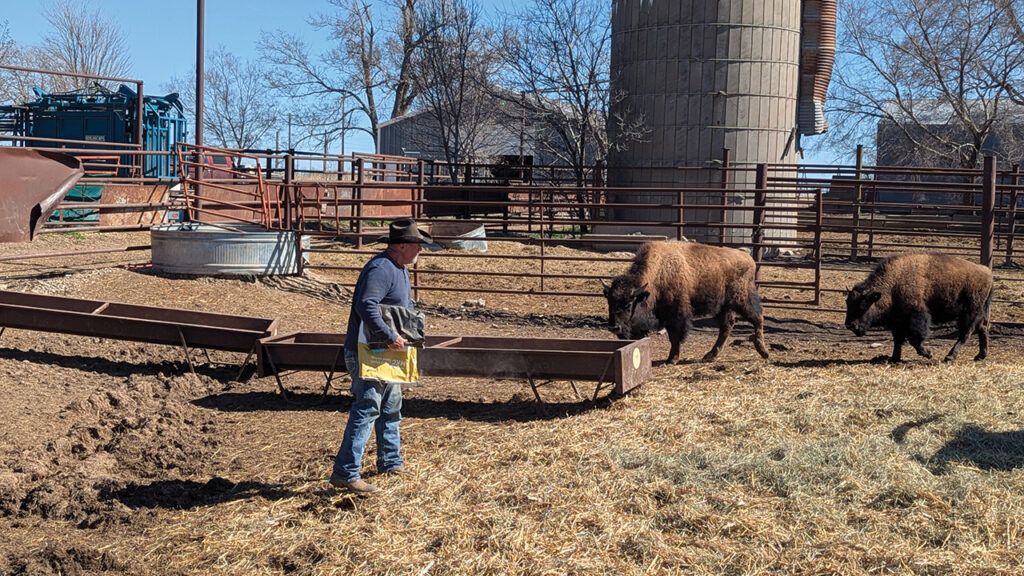
Over the years, Gehring has been a mentor to many new bison producers, some of whom now sell him their calves. He’s served in many capacities with both the National Bison Association and the Kansas Buffalo Association, where he is currently the sale chair for the annual stockyard sale in Salina.
When working with people, he applies lessons he’s learned from the bison. One is to “treat people with respect, giving them the time to come around to your way of thinking instead of forcing your opinion.”
“My way or the highway doesn’t work with these animals, and it doesn’t work with people,” Gehring said. “Allowing for buy-in and participation in the outcome always lets things run much more smoothly.”
Another lesson he’s learned is the importance of community.
“They all have their place [in the herd]. They all have their job,” he said. “They’re all connected to the greater good. They’re all, in effect, serving each other.
“You’ll have the protector that’s constantly on guard. You’ll have the one that will sound the alarm when there’s danger close by. You’ll have the nursery . . . where a few gals will be tending to a majority of the calves, and they’ll take turns doing that.
“There’s so many similarities between how we operate as humans and how they operate, and you have to sit and watch.”
Sierra Ross Richer is a freelance writer and farmer from Goshen, Ind. She writes on climate change and sustainability in her Substack, “Sierra’s Adventures in Sustainability.” This article is the third in a series on faith-based action caring for the land and environment.



Have a comment on this story? Write to the editors. Include your full name, city and state. Selected comments will be edited for publication in print or online.