


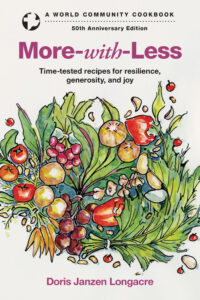
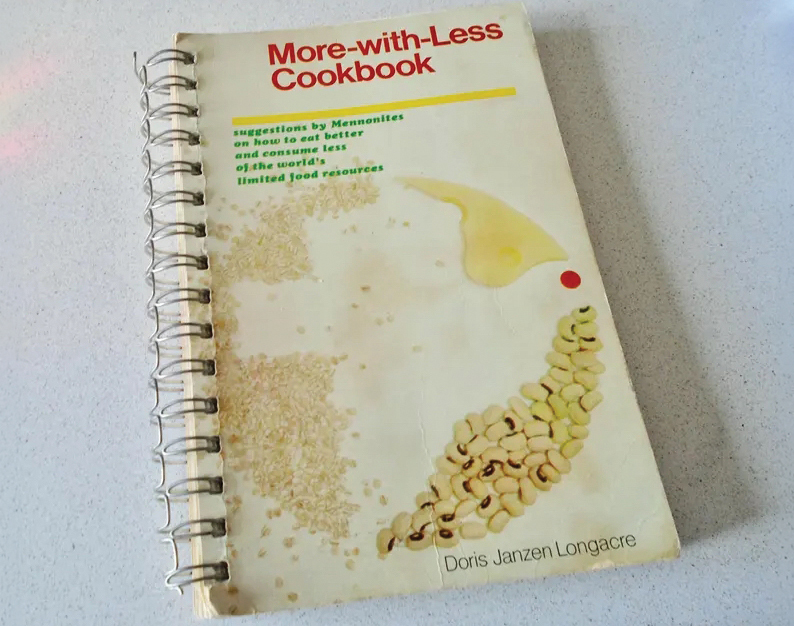
Susan Janzen still has the More-with-Less Cookbook she received as a high school graduation gift. It is signed by the author, her aunt Doris Janzen Longacre.
As the number of copies sold climbs closer to 1 million, Herald Press in September released a 50th anniversary edition of the cookbook that helped revolutionize simple eating from a faith perspective.
In a celebratory worship service Aug. 2 at Zion Mennonite Church in Elbing, Kan., Janzen said something special keeps her aunt’s book coming back again and again, long after the natural health food craze of the 1970s.
“For her words on faithful living and eating to still be relevant and worthy of publishing again is no less than a miracle,” she said at the church where both she and Longacre grew up.
Longacre connected food choices with stewardship, sustainability and justice, encouraging cooks to prepare meals at home with basic ingredients while considering the needs of others around the world.
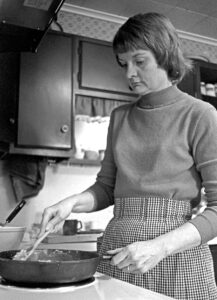
The book was released to support the work of Mennonite Central Committee in 1976. Just three years later, Longacre died of cancer at the age of 39 while nearing completion of the sequel, Living More with Less.

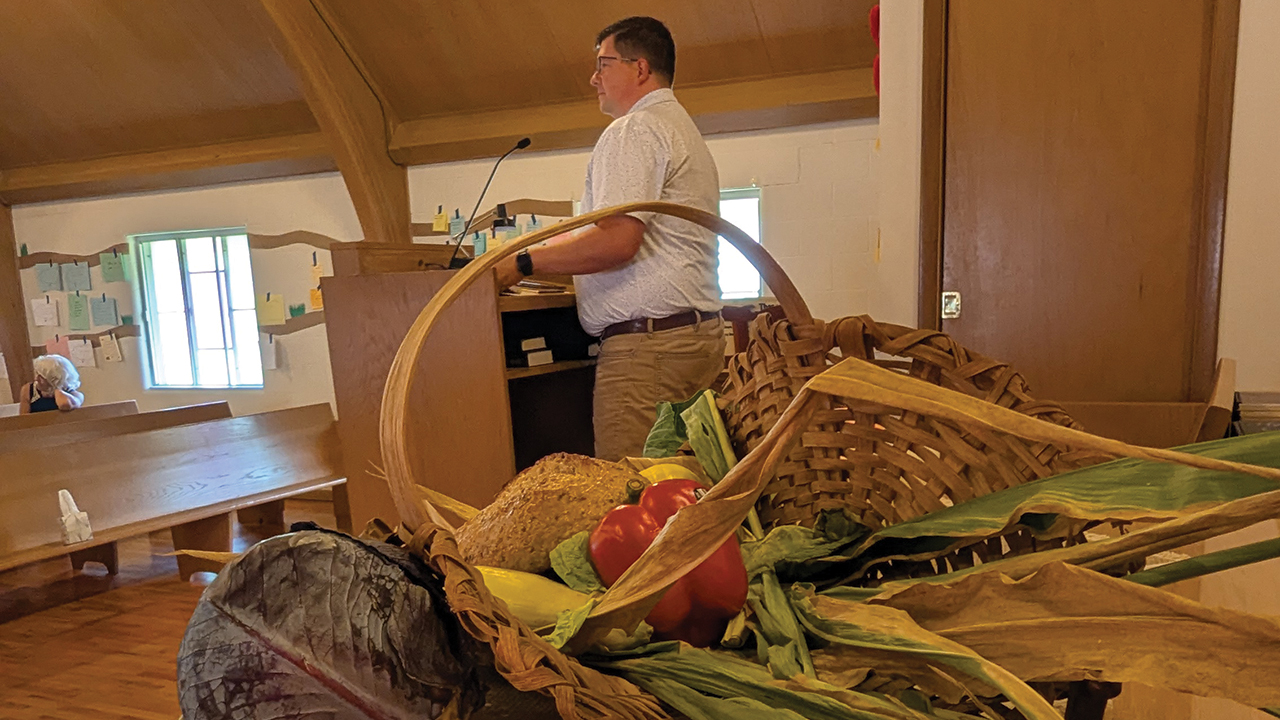
Mitch Stutzman, MennoMedia director of development and partner engagement, noted in his sermon that her message of blending of faith with food resonated because both are so important and essential to life.
“Around the table we discover that joy grows as it is shared, generosity multiplies when everyone brings what they have, and resilience is formed as people nourish one another through all seasons of life,” he said.
Sharing joy one meal at a time continues with the new edition, which returns to the spiral-bound format of the first edition, to once again lie flat on kitchen counters.
A sturdier hardcover replaces the laminated cover of early editions. Vegetarian and gluten-free labels are now included among the more than 400 recipes.
The 50th anniversary is also a chance to get back to the basics with more than 70 black-and-white illustrations that hark back to the original approach.
Stutzman said readers asked for a return to simplicity with this, the fourth edition and at least the 75th printing.
“Each time it has been reframed and reformatted to meet the cultural moment,” he said, noting there’s less lard this time around, and soybeans appear. “Doris’ essays that she wrote 50 years ago and the preface continue to find relevance. That is part of why nearly 850,000 copies have been sold in its 50-year history, making it the top-selling resource of all the publications Herald Press has ever released.
“It has sold more copies than Martyrs Mirror or the complete writings of Menno Simons. I cannot think of another book that has shaped Mennonite Anabaptist expression so quietly or so profoundly.”
Stutzman suggested it is no overstatement to say Doris Janzen Longacre might be the most widely read Anabaptist theologian.
“Doris’ theological teaching didn’t come in dense volumes or in biblical commentaries but in practical guidance for a theology that is lived out at the table,” he said. “The simple acts of preparing food, gathering people and eating intentionally are not performed out of utility but as acts of discipleship. It is this practical theology that has resonated with audiences for half a century.”
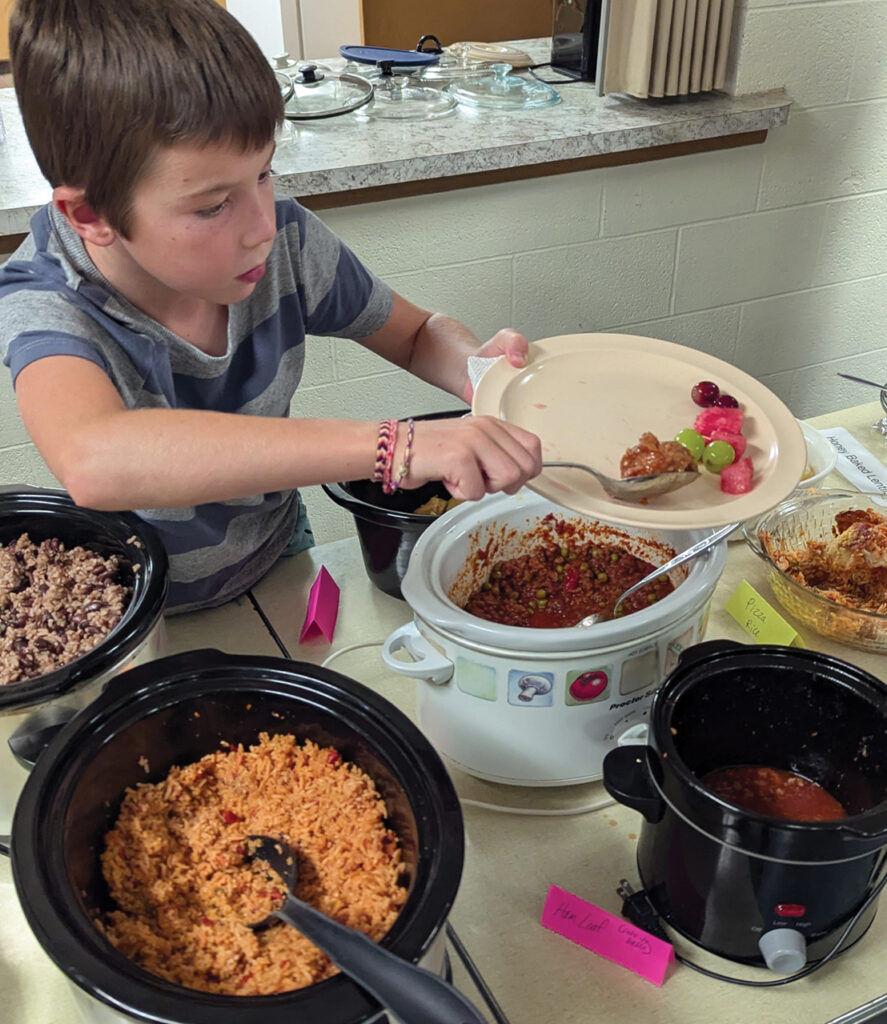
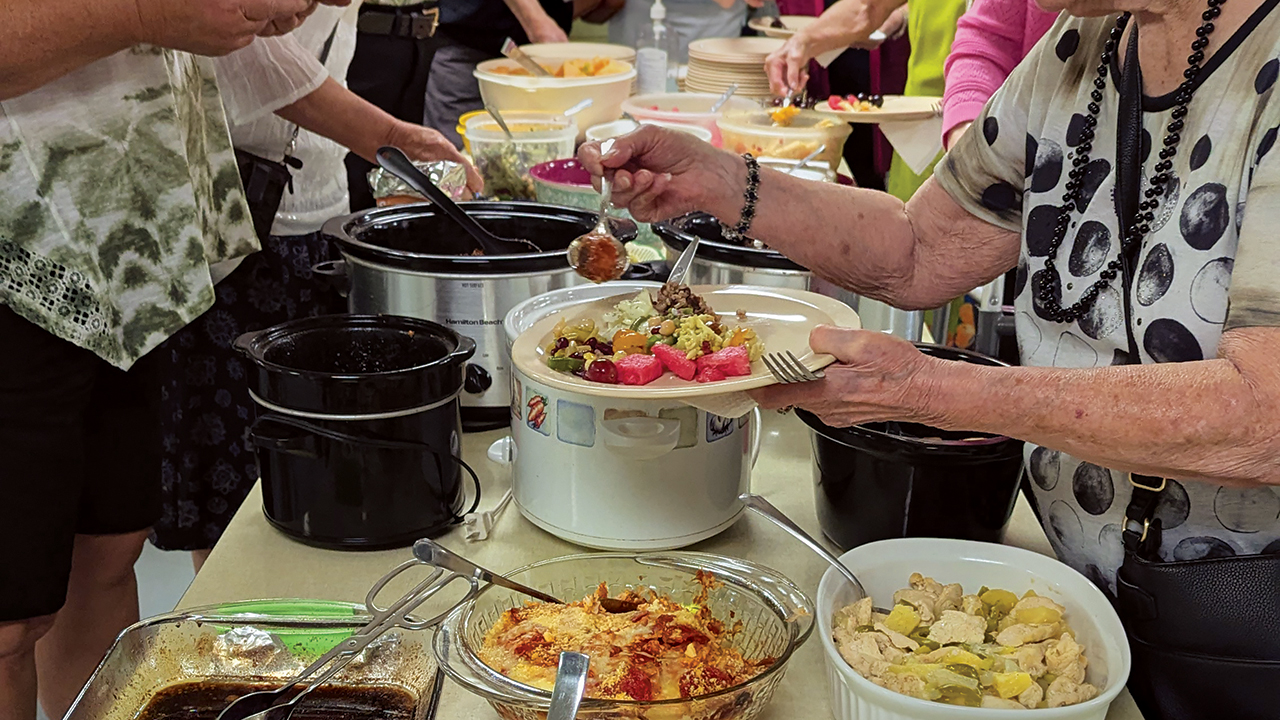
During the service, aromas drifted up from the church basement: honey-baked lentils, three-bean salad, Jamaican baked bananas. A potluck made up of the cookbook’s recipes, such as Caribbean rice and beans, date bars and cream of wheat pudding, sat ready as the sermon shifted into sharing time.
 50 potlucks for 50 years
“Eating with joy is eating together,” author Doris Janzen Longacre wrote in the original 1976 edition of the beloved More-with-Less Cookbook. Celebrate these words and the half-century legacy of the cookbook by being part of Mennonite Central Committee’s “50 Potlucks for 50 Years” initiative.
Between now and April, MCC invites supporters and churches to gather friends, families and neighbors to break bread together. Explore how the themes of More-with-Less can enrich our lives now and raise funds to help our global neighbors have the food they need for today and tomorrow.
Visit mcc.org/50-potlucks to learn more and sign up. The first 50 potlucks registered will each receive one free copy of the new 50th anniversary edition of the cookbook. They will also receive MCC’s potluck kit, including customizable posters for your event, labels to list ingredients for dishes, easy links for online fundraising and more. — MCC.
“I was introduced to More-with-Less when I entered my voluntary service assignment in Denver, and we used it for many of our shared meals,” attendee Mark Unruh said. “It was also the beginning of my love-hate relationship with lentils. My father used to say simple food was poor people’s food, but I learned from More-with-Less that simple food is faithful food.”
By video, Karla Morton — who encountered Anabaptism through the cookbook while living with roommates as a student at Northern Arizona University, before her husband, Craig, served as pastor at Zion Mennonite in the 1980s (“Cookbook Convert,” AW, September 2024) — shared remarks. The cookbook’s ethos inspired Morton’s continuing support for seeking God’s justice for all, near and far.
Longacre’s call to simple living didn’t come without complexities, even in her own congregation. Many of her neighbors and fellow church members made their living and supported the church by raising beef and pork, which she encouraged readers to eat less.
“Doris was well aware that some of the lifestyle and food choices suggested in her cookbook might not sit well with her immediate community and family, but she felt strongly about more-with-less living and being stewards of God’s creation,” Susan Janzen said. “And, in some ways, More-with-Less doesn’t seem as radical as it did 50 years ago, but in other ways I think living simply is potentially still as life-changing as ever.”



Have a comment on this story? Write to the editors. Include your full name, city and state. Selected comments will be edited for publication in print or online.