


Leadership: A word from Mennonite Church USA leaders
The Corinthian Plan is doing well. It continues to provide health coverage and other benefits for more than 1,000 people who are involved in serving God in Mennonite Church USA congregations and conferences.
 This includes nearly 60 congregations that are receiving assistance for the cost of health coverage, ensuring that some pastors and their families who were previously without health coverage now have it. This was one of the reasons delegates called for Mennonite Church USA’s Executive Board to develop a health plan for pastors at the 2007 Delegate Assembly in San José, Calif., and we celebrate the mutual care the plan has made possible since its launch in January 2010.
However, one feature of The Corinthian Plan is underutilized: its emphasis on wellness and health. Resources and incentives promoting healthy lifestyles and good stewardship of health care are available to participants in the plan. Each family may receive up to $300 per year for filling out an online health profile and meeting certain minimum criteria. Wellness tips and personal coaching also are available to help participants meet their wellness goals and reduce health-care costs.
To date, the response to this incentive has been disappointing. In the first two years, fewer than 20 percent of participants completed the health assessment and received the cash incentive. Why the poor response? Is it lack of awareness that it is available? Is the process too difficult? Do the resources just tell us what we already know? Are pastors not concerned about wellness in general and their own in particular? Is the $300 incentive too small to attract attention?
Wellness is being emphasized in many organizations and workplaces these days. It sometimes seems we are bombarded with information and messages urging us to make changes in what we eat or how much we exercise. We are told that if we can make even minor lifestyle changes, we will be able to improve our quality of life and reduce spending on health care. Employers are providing a variety of incentives and penalties to encourage employees to do so.
The lack of participation in the wellness features of The Corinthian Plan raises broader questions about what motivates us to change or to act on what we already know. What would motivate pastors to embrace the wellness emphasis and incentives available to them through The Corinthian Plan if they have not already done so?
We all make changes from time to time. What motivated us and got us to move in a new direction or to embrace a new commitment? Was it a new insight, knowledge, pain or the example and testimony of others?
Several respondents who did fill out the wellness profile reported that it served as a wake-up call and helped motivate them to make needed changes.
The Christian gospel calls us to embrace and expect change. Choosing to follow Jesus involves major lifestyle changes. In 2 Corinthians 3, Paul says we are being changed into the likeness of Christ. Revelation 21 says we should anticipate a new heaven and new earth.
The gospel also calls us to hold each other accountable to our commitments. But when do our efforts to change ourselves and others become willful and counterproductive?
What is the role of leaders in motivating and encouraging change? In his best-selling book Leading Change, John Kotter says leaders have an important role in encouraging change in the organizations they lead. At the same time, leaders can arouse and reinforce resistance to change when they ignore or misinterpret resistance. At times people may be resisting those trying to change them as much as the change itself.
Those of us involved in the administration of The Corinthian Plan are concerned about the health of those who are covered by the plan as well as the health of the plan. We want to be a health plan, not a plan that only pays the cost of health care.
What about the lifestyle changes—exercise, diet, work habits, relationship patterns—that would improve the quality of our lives? How do we overcome our own resistance to change, even change that we know in our heads will make us healthier and more productive? Send me your ideas at [email protected].
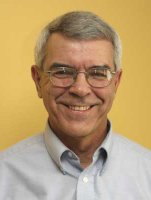
Keith Harder serves as director of The Corinthian Plan for the Mennonite Church USA Executive Board.


Have a comment on this story? Write to the editors. Include your full name, city and state. Selected comments will be edited for publication in print or online.