


The Lord giveth, and the Lord taketh away. So does the government.
Goshen College was less than halfway into a $3 million U.S. Department of Education grant in 2025 when President Donald Trump introduced a series of changes both swift and sweeping.
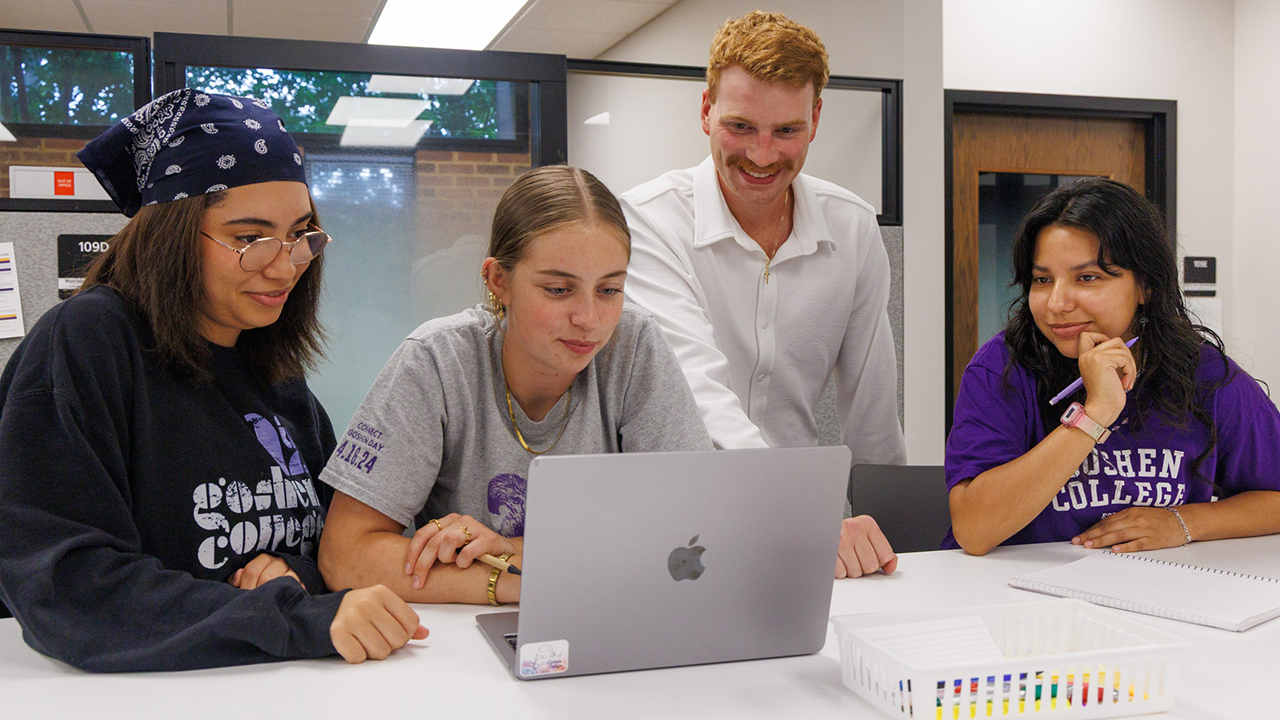
Goshen had been awarded a competitive Developing Hispanic-Serving Institutions grant in 2023 to support student success, based in part on more than 25% of the college’s student body identifying as Hispanic/Latinx. Goshen made plans to use $600,000 per year over five years to renovate its library and hire staff for Academic Success Center expansion.
“Approaching the end of year two, all of this chatter started about defunding grants to minority-serving institutions,” said Goshen President Rebecca Stoltzfus.
Goshen was committed to the grant, but the Education Department’s leadership and mandate swung in a new direction, taking the remaining three years and $1.8 million with it. Goshen learned the grant was revoked only weeks into the fall semester.
“The Academic Success Center supports all of our students, not only our Hispanic students, and that grant was a really positive infusion of resources for a five-year period,” Stoltzfus said. “We had staffed up, and one of the very hard things to do with such an abrupt stop is to staff down.”
Four full-time positions offering academic assistance to all students were cut along with related programs and initiatives, though Goshen worked to swallow the impact by extending employment through December 2025. The Academic Success Center continues as well, as private Anabaptist colleges and universities navigate a world in which federal government policies and decisions impact campus life and opportunities.
“We are now in an era of executive orders,” Stoltzfus said. “They come hard and fast. And it’s very confusing because the executive orders are then challenged, or a follow-up memo changes things. . . .
“I’ve had to sort of re-regulate my nervous system and my thinking around the new era that we’re in. I don’t know if it’s because we’ve adjusted to the degree of precipitousness and unpredictability, but 2026 feels a little less stressful than 2025. But it does feel like the way this administration operates is not by accident.”
She said the college has called on donors to create a fund to help students who need academic or financial aid and maintains a firm commitment to supporting Hispanic students.
“We are not going to move from this,” Stoltzfus said. We’re going to be scrappy, and we’re going to tighten our belts, and we’re going to do things in some other ways, but it does not undermine the institutional commitment to our students.”
In spite of the challenges, Goshen is seeing an increase in Hispanic enrollment this fall. That’s in contrast to an expected decline among international students overall, after a slight decline a year ago from 11% to 10% of enrollment.
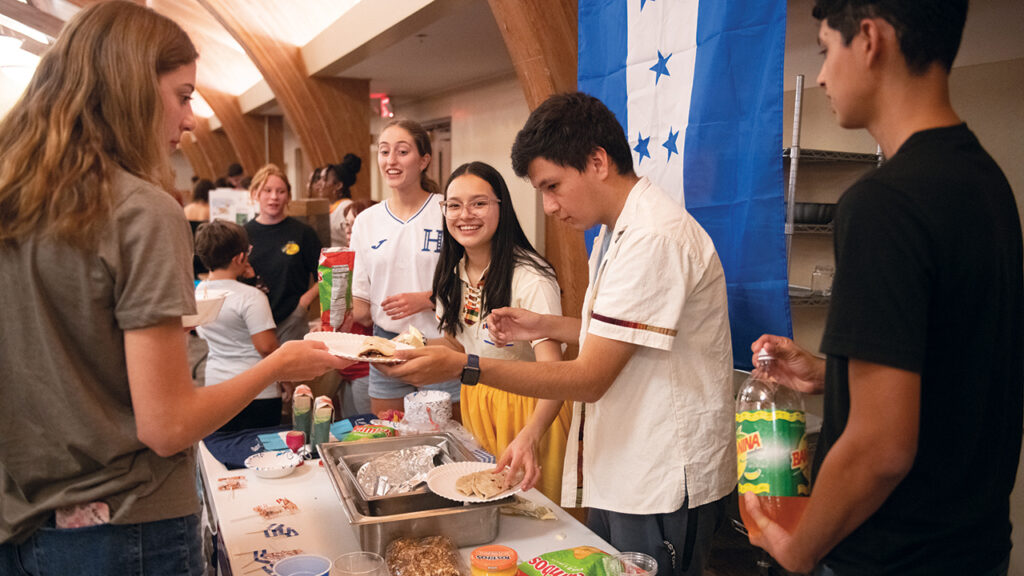
International declines were greater at Hesston College, where President Mark Landes said 54 international students in the fall of 2025 represented a 16% decline from the 64 students enrolled the previous year. That drop mirrored a 17% national decline.
“That does impact us,” he said. “We have had visa denials that we think would have been approved before, or delays that result in approval that comes too late, or students that would have been admitted from certain countries that were not approved.”
He anticipates this fall’s international enrollment to avoid another 16% decline.
“We’ve had some denials, but just last week we had several approved,” Landes said July 22. “When you’re getting visa approvals in July for students who need to come in early August, that’s late.”
The bigger impact is how it affects campus life and the college’s goal of being an international community.
“They are still very much a part of the Hesston experience and what we’re doing here, but they are coming in with more limitations than in the past,” he said. “We have to talk with international students about what they post on social media — not just in the application process, but when they are here.
“They have a different set of rights and freedoms, to a degree, than other students, and that’s a change from the past. It’s a bit more fickle out there. We advise them on that, and we do that with a bit of sadness, but that’s just the world we’re in.”

Hesston has not made big changes in the last year and a half, recognizing that the White House is more concerned about Ivy League schools and large state universities, though it has been intentional about being prepared if Immigration and Customs Enforcement representatives were to visit campus.
“Our student population is 53% non-White,” Landes said. “We also talk to students and have updated some policies about what we will do if ICE comes to campus. I don’t think that will happen because we are not the target, but you want to be ready.”
Department of Education delays have also impacted the international community at Bluffton University. Claire Kleman, vice president of enrollment and communication, said international student recruitment dropped significantly in the last year and a half, and Bluffton cannot add international student eligibility to new academic programs it starts — even for students who already have visas and are in the United States.
“The government has cut most of the staff in those [Education Department] offices, so we can’t get anyone to help us add those programs, and therefore we cannot offer them to international students until it’s approved,” she said. “We have been waiting over a year for that office to approve a request we submitted in early 2025.”
Budget cuts could soon impact federal grants that students at both private and public institutions use to make college more affordable.
Bluffton receives federal work-study grants for on-campus student employment. Kleman said the White House’s upcoming budget proposal includes cuts to that funding, as well as to need-based Pell grants that are available to all U.S. students who meet eligibility criteria.
“Being a ‘private’ institution does not mean being independent and unaffected by government decisions,” Kleman said. “In fact, it often impacts private institutions just as much or more than public institutions.
“Bluffton utilizes Title IV federal financial aid funding programs, and by utilizing that funding, we are required by law to follow federal mandates, including executive orders and congressional changes. As an institution with approximately 50% Pell-eligible students, we would jeopardize our students’ ability to attend college if we did not comply.”
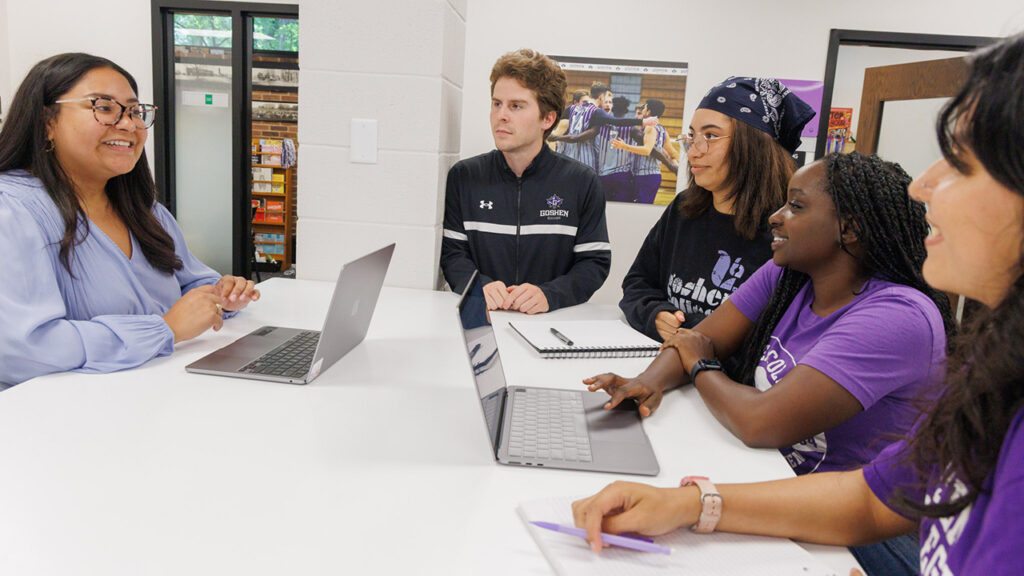
Stoltzfus said that proportion is similar at Goshen, where a little over half of students receive federal funds via grants or loans.
“It’s a very big vulnerability and something we have to watch,” she said. “To date, there has been no withdrawal of federal loan dollars from students based on their identities or the programs they’re enrolled in.”
Goshen works to stay in compliance so students can receive matching grants from the state of Indiana.
“We’ve sort of reviewed the whole landscape of vulnerability to both federal and state funding initiatives,” Stoltzfus added. “That is a year-by-year watch on our part.”



Have a comment on this story? Write to the editors. Include your full name, city and state. Selected comments will be edited for publication in print or online.