


What is a Granola Mennonite? In dozens of mildly annoying internet memes, I’ve suggested a Granola Mennonite is a person who reuses twist-ties and plastic bags, names their backyard chickens, bakes granola with organic oats and attends a protest or home-cans peaches on a first date. But how is a Granola Mennonite different from any barefoot, ecologically-and-politically-tuned-in hippie type?
An Anabaptist youth informed by Martyrs Mirror taught me that faith is material, a place where bodies may be given up for suffering — not just a Christ on his cross up front, as other churches had it, but where any member of the body of believers should be prepared to die as a testament to their faith. This lent a fervor to any material act of faith, a conviction that whatever you give, however much work you may put in or how simply you live, it is only a small portion of what you could be giving or giving up.
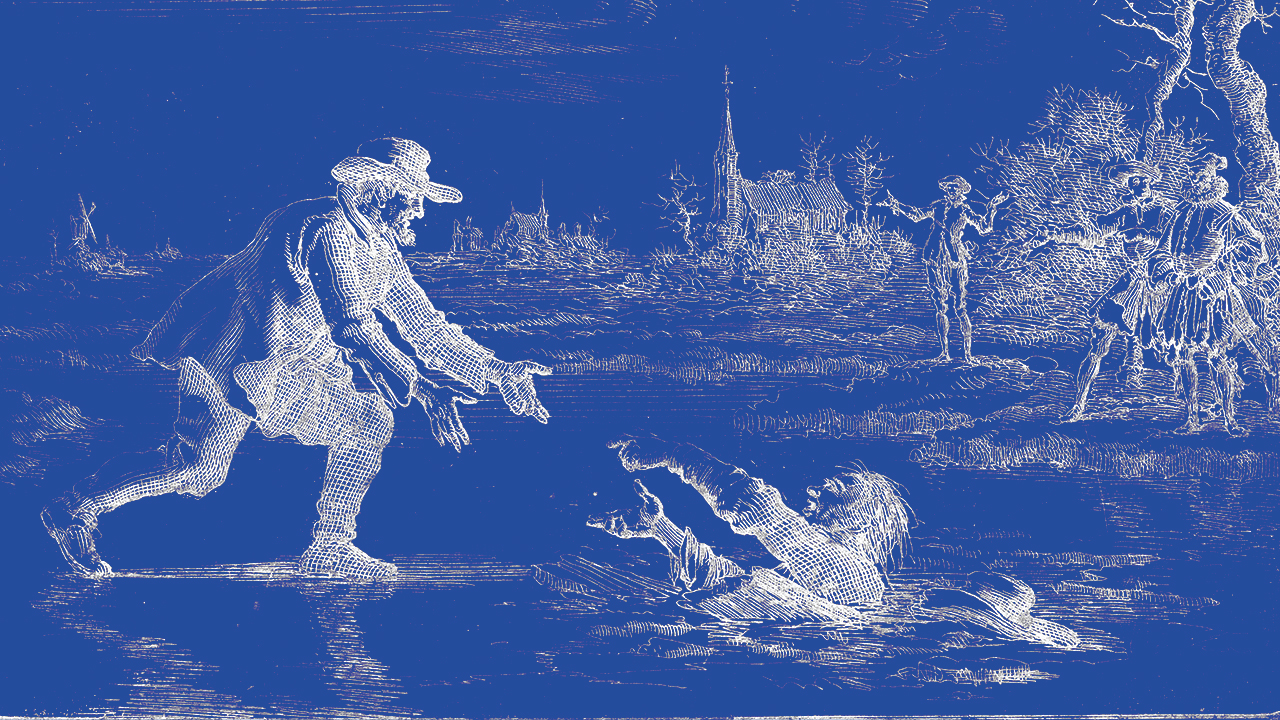
This martyr history inflects the way some of us do anything, including living the “granola” lifestyle. We might even keep score to see if we are measuring up, and that is a game none can win — except for Dirk Willems, who would surely have driven a used electric vehicle, grown organic tomatoes, volunteered at the MCC thrift store and turned back at the protest to lend a hand to that ICE agent who slipped on a patch of sleet. (I’ll stop here, before harm comes to our Anabaptist hero.)
Back to the granola. In Jonathan Kauffman’s 2018 book Hippie Food: How Back-to-the-Landers, Longhairs and Revolutionaries Changed the Way We Eat, the author celebrates the food- culture conversion in his 1970s Mennonite childhood, recalling how Doris Janzen Longacre’s More-with-Less cookbook influenced his community. He describes the delicious “strange brown substances” that replaced Velveeta Cheese and Frosted Flakes in his household: “oatmeal whole-wheat bread, homemade yogurt sweetened with a spoonful of my mother’s own jam, date-pecan granola, West African ground-nut stew and vegetables pulled from our garden — grown without pesticides or herbicides, of course.”
While Martyrs Mirror demonstrated that our Mennonite bodies were for sacrifice, in More-with-Less, Doris Janzen Longacre taught that our bodies deserved nourishment — a whole complement of proteins — and that we could and should experience delight and “Eat with Joy!” along the way as we saved and stewarded resources. We could respond to the troubles of the world — in particular the food crises of the 1970s— from a table full of easy-to-make, delicious, fortifying food.
As a young person, I wasn’t conscious of the influences of these texts, but as I raise my own children, I’m very aware of the ways that they shaped me, and how a More-with-Less approach helped orient me to meaningful life and witness from this place of relative peace and privilege.

Kauffman writes that even after his community moved on from the initial dietary conversion, “the consciousness around food that the cookbook inspired — of the political significance of what we were eating, of the sense that no cuisine is truly foreign, of the goodness of whole-wheat flour and honey— remained.”
As did the book. More-with-Less is, wonderfully, a living document, revised through multiple editions, cycling out some of the less-popular soybean recipes, adding hummus and guacamole, swapping butter in for margarine, acknowledging the rise of sourdough. Each generation of editors updated Doris Janzen Longacre’s opening chapters — at first carefully noting where words were changed and materials added but in recent editions joyfully mingling original phrasing with the new until a choir of editorial voices discusses the perennial themes of health, stewardship and justice, layering contemporary examples alongside vintage ones.
I was delighted to join that choir this year as project manager for the 50th anniversary edition, editing the revised cookbook, crowdsourcing new vignettes to share in the margins and developing companion materials to help small groups gather around food and faith. (If this column is starting to sound like an advertisement for More-with-Less, you now understand why!)
Herald Press and Mennonite Central Committee chose a perfect theme for this celebratory edition: resilience, generosity and joy. Favorite recipes are framed with a wealth of on-topic stories and blessings, old and new, from the More-with-Less community, adorned with illustrations by botanical artist Rebecca Souder Gish.
I cherish my tattered More-with-Less with its inscription from my mother, who gave it to me upon graduation (“As you spread your wings”), and I can’t wait to get my hands on the updated cookbook, sturdy with a hard cover and metal spiral, to accompany me into the second half of a Granola Mennonite life that I hope will be marked by abundance, generosity and joy.



Have a comment on this story? Write to the editors. Include your full name, city and state. Selected comments will be edited for publication in print or online.