


There are two ways to lose your soul in politics, and most of us are afraid of only one of them.
The first is familiar enough: partisanship. It is the belief that political struggle can supply what worship used to supply: an account of why the world is broken, a community of the righteous, an enemy whose defeat would heal us and the sense that one’s small life is caught up in something enormous.
That is not civic interest. That is a religion. And it is a religion that cannot forgive you, cannot save you and will never tell you the whole truth.
The second way is quieter and, among religious people, more common than we care to admit. It is withdrawal. It sounds humble.
I don’t get into politics. “My kingdom is not of this world.”
But when a believer says this, it usually means one of three things: She is exhausted. Or she is protecting her reputation. Or the present arrangement of power costs her nothing, so she can afford to call her detachment a virtue.

The prophets had a name for people who could look directly at injustice and feel nothing. Hint: They did not call them righteous.
Scripture does not propose a third option that neatly balances these two. Rather, it proposes something better: Live as exiles who plant gardens.
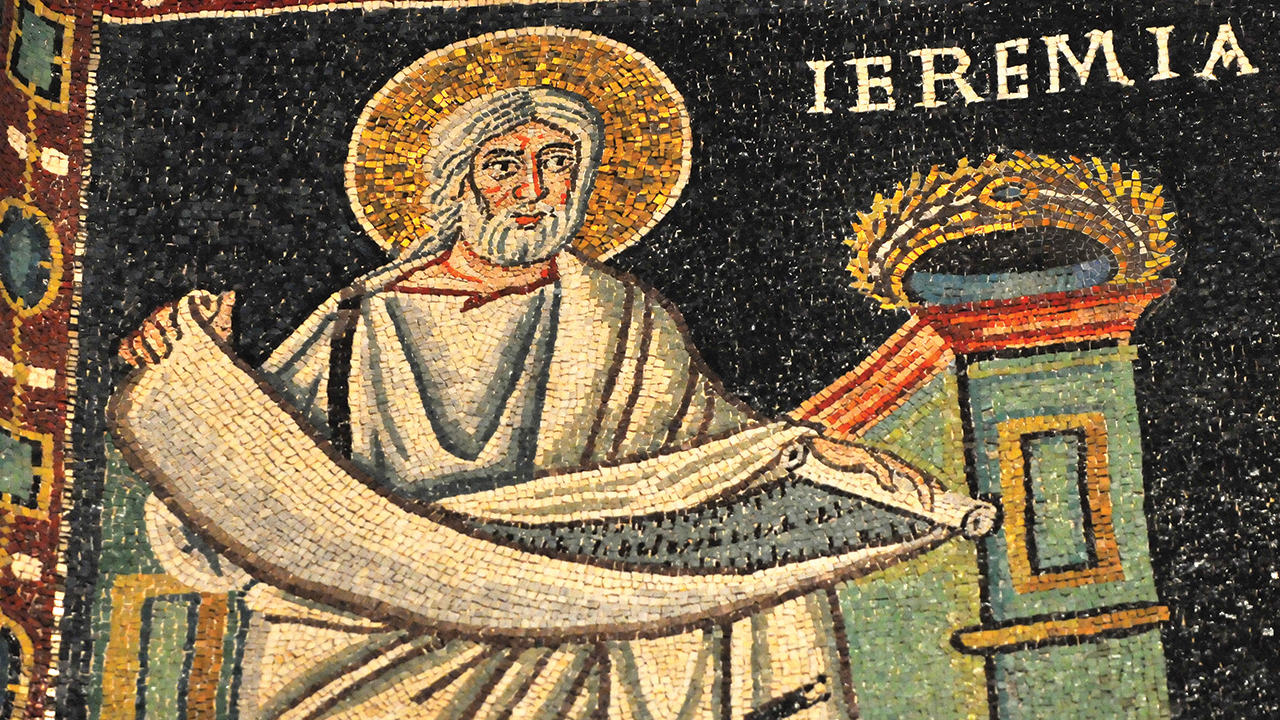
When Jeremiah wrote to the Judeans deported to Babylon, he addressed people who had every reason to fall into one of our two errors. Some wanted to assimilate — to become Babylonians and embrace the imperial project as their own. Others wanted to sit by the river, weep and wait for the whole rotten city to burn.
Jeremiah told them to do neither. Build houses. Plant gardens. Have children.
And then came this astonishing line: “Seek the welfare of the city where I have sent you into exile, and pray to the Lord on its behalf, for in its welfare you will find your welfare” (Jeremiah 29:7).
Notice what that instruction assumes. It assumes that the city is not your home and that you are responsible for it anyway. It assumes that Babylon will not become the kingdom of God and that Babylon’s water supply, courts and grain stores matter to God right now.
Augustine of Hippo (A.D. 354-430) said there are two cities in the world, formed by two loves, and they are intermingled until the end of the age. But he did not tell Christians to leave Rome. He told them that because their ultimate hope was not in Rome, they were finally free to serve their community without misplaced trust in its leaders or institutions.
That freedom frames our position before the state. If your political tribe is your salvation, you cannot criticize it, because that would jeopardize your standing before God.
If your political tribe is your idol, you will excuse in your own leaders exactly what you condemn in theirs, and you will not even notice you are doing so.
But if your identity is already settled elsewhere, if your security is in Christ, you can serve a cause without lying or compromising. You can lose an election without losing yourself.
Christians often want their faith to hand them a political party. It will not. The moral commitments running through scripture do not sort themselves into the political platforms available to us. Concern for the unborn and concern for the immigrant sit on the same page. The dignity of the poor and the dignity of work sit in the same chapter.
Care for creation, sexual fidelity, racial justice and the protection of conscience: no coalition on the ballot holds them all together. Anyone who can read a party platform and then the prophets without discomfort is not reading either carefully.
This does not mean faith offers no guidance. It offers a great deal. It tells you which questions are not negotiable, which goods must be weighed against one another, which methods are forbidden even if they would work. It tells you that every person you are voting for is an image-bearer, including those your side finds ridiculous. And it tells you that your vote is a stewardship decision, not a sacrament.
Much of the cruelty in our public life stems from people who make what they see as a prudential judgment and then treat it as a confession of faith, so that anyone who judges differently must be not merely mistaken but evil.
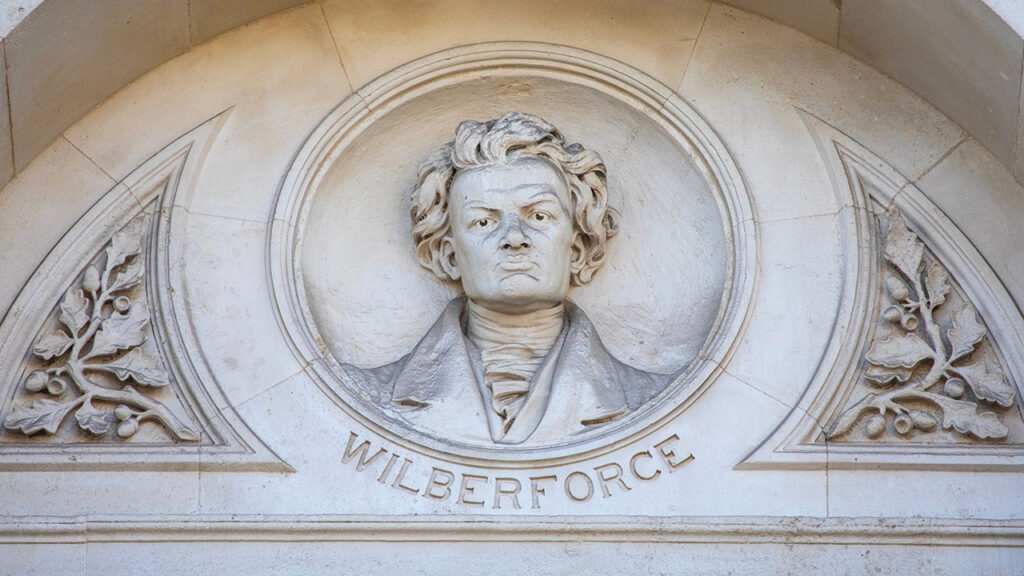
If you want to change a society, promoting legislation is both necessary and the slowest option available. Consider how slavery was abolished in Britain. William Wilberforce (1749-1833) introduced anti-slavery legislation for decades and lost year after year.
What eventually moved the country was the formation of a network of researchers gathering evidence, Hannah More (1745-1833) writing for ordinary readers, ministers preaching, consumers boycotting sugar, former slaves telling their own stories over the 40 years of failure. Enacting legislation was the last step, not the first.
That remains the pattern. Culture is shaped by institutions, and institutions are shaped by the people who stay. Teach. Practice medicine. Run a small business honestly. Serve on the school board. Take in foster children. Fund both the crisis pregnancy center and the refugee resettlement agency.
— Chris Dorney/Shutterstock
Dutch politician and pastor Abraham Kuyper (1837-1920) said there is not one square inch of creation over which Christ does not say, “Mine.” (He meant it as a call to be ambassadors for Christ everywhere, not as a call to seize everything.)
And do this: Serve people who will never vote the way you do. Nothing exposes a political idol more quickly than being asked to help someone whose support does not advance your side.
Three things are needed now:
Repentance, which begins at home. The Hebrew prophets occasionally indicted Assyria, but they spent most of their breath indicting Israel. The word we most need from people of faith is not a sharper condemnation of the other party but an honest accounting of what our own has done and what we have tolerated in it. Anyone can be brave against enemies. Say a true thing that costs you standing with your friends, and people will begin to believe you care about truth.
Truthfulness under pressure. If your faith permits you to circulate an unverified story because it harms the right people, your faith has been hollowed out, and something else is living in its place.
Blessing. Paul told Christians living under an emperor (who would later execute him) to bless those who persecute them, feed a hungry enemy and refuse to be overcome by evil. This is not a strategy for winning. It is a refusal to become what you oppose.
Remember how Jesus died. He was killed by a political coalition, a religious council and an imperial governor, all cooperating for the sake of “order.” He had every power available to him and yet did not grasp it. He was not defeated by politics; he absorbed its violence on the Cross.
That is why Christians can afford to lose an election. We do not need to win to be safe. And people who do not need to win but only to serve are the only people you can trust with power.
Stephen White is a retired pastor, nonprofit executive and author from Scottsdale, Ariz.


Have a comment on this story? Write to the editors. Include your full name, city and state. Selected comments will be edited for publication in print or online.