


Let’s agree that the current Iranian regime represses its own people and supports armed groups in the region. Human Rights Watch’s 2026 World Report, which tracks human rights practices in more than 100 countries, says: “Iranian authorities in 2025 carried out executions on a scale unseen since the late 1980s, carried out mass killings in response to protests across the country, conducted mass and arbitrary arrests and ratcheted up repression under the guise of national security.”
Iran is known to support armed groups in the Middle East. Resistance movements, according to Iran. Terrorist organizations, according to the United States.
There is no need to be an apologist for the Iranian government. An Iranian graduate of Eastern Mennonite University’s Center for Justice and Peacebuilding told me recently that the majority of Iranians do not support their government’s actions.
Still, there is more to the story.
Let’s remember the history of this conflict. Iranian and U.S. narratives start at different historical moments. For most U.S. Americans, the problem began in 1979 when Ayatollah Khomeini became the Supreme Leader and Iranian students took hostages at the U.S. Embassy in Tehran and held them for 444 days. It was a humiliating experience for the United States.
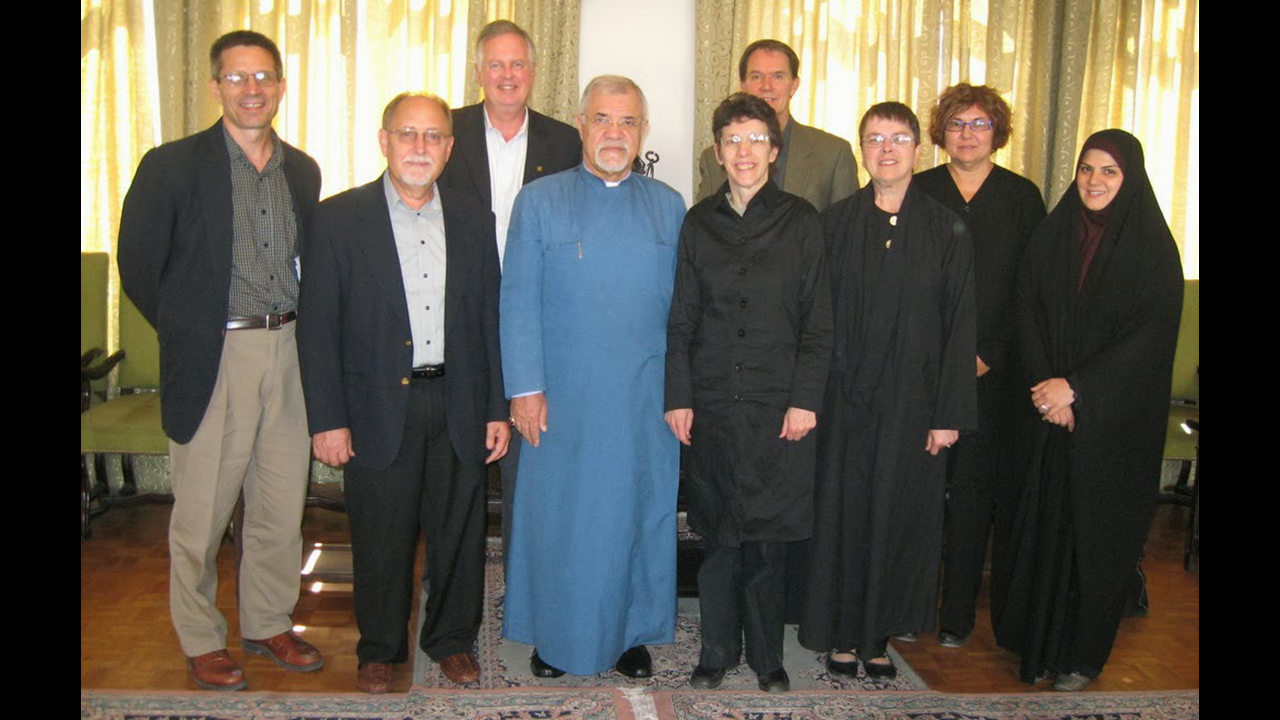
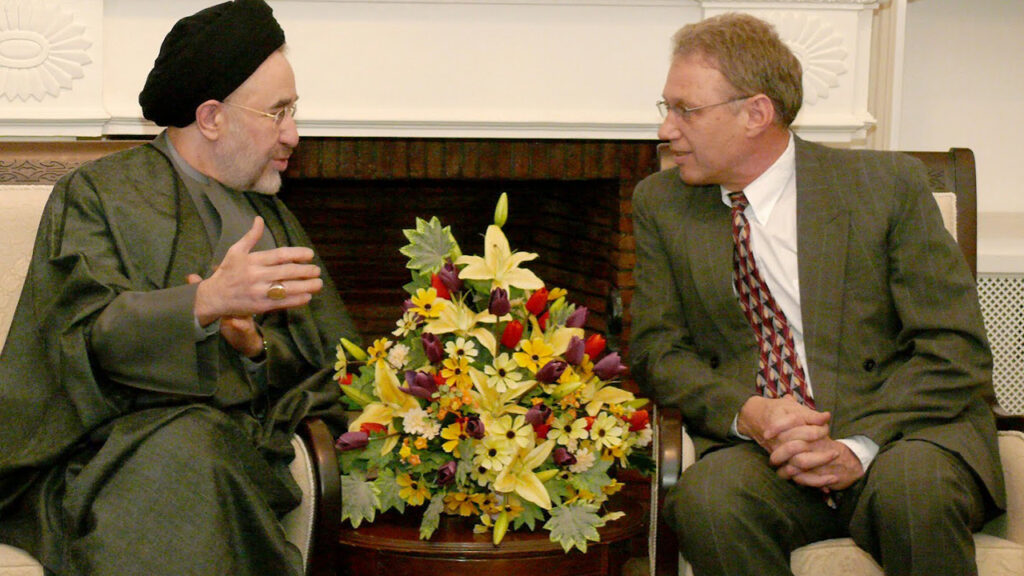
During the past 30 years, I have traveled to Iran a dozen times with Mennonite Central Committee delegations. We met with humanitarian aid workers, students, professors, government officials and ordinary Iranians. We heard a very different history.

Their story starts in 1953 when the CIA orchestrated the overthrow of the democratically elected Prime Minister Mohammad Mousedeh. His “crime”? He wanted to nationalize Iran’s oil to benefit the Iranian people rather than British and U.S. companies.
For the next 26 years, the United States backed the autocratic rule of Shah Mohammad Reza Pahlavi, who had a horrible human rights record. During this period, the United States helped Iran begin and expand its nuclear program.
After the Iranian Revolution in 1979, the United States provided military and economic support to Iraq during its eight-year war with Iran.
None of these facts excuses the current Iranian government’s abuses. However, they provide important context in understanding how it came to power and why it characterizes the United States as a hostile power.
Let’s also remember what happened when the United States attacked Afghanistan and Iraq. The Costs of War project at Brown University estimates that “20 years of post-9/11 wars have cost the U.S. an estimated $8 trillion and have killed more than 900,000 people.” That’s a high price for the outcomes achieved.
Today, after trillions spent and thousands of lives lost, the Taliban rule Afghanistan. When the United States invaded Iraq and overthrew Saddam Hussein, some Iraqis celebrated in the streets. But that was short-lived as the country quickly spiraled into chaos. Today, things have stabilized somewhat, but at what cost?
Let’s imagine other options. The United States and Israel have chosen another massive military campaign against Iran, alleging that it poses a grave threat and will attempt to build a nuclear weapon.
There are several ironies to this most recent attack. When Israel and the U.S. bombed Iran in June 2025, President Donald Trump declared that the United States had obliterated Iran’s nuclear program. So why is it suddenly a threat?
There is also a blatant double standard: The United States and Israel have nuclear weapons and aggressive militaries that attack other countries at will. They are now attacking Iran so that it won’t do the same.
My Iranian peacebuilding friend says this approach plays right into the hands of the Iranian regime, which has told the Iranian people for years that the United States poses an existential threat. While the majority of Iranians do not support the regime’s actions, he estimates that external attacks will increase internal support for the government and set back the progress Iranians were making toward changing their government.
The documentary series A Force More Powerful: A Century of Nonviolent Conflict chronicles how nonviolent mass action overcame oppression and authoritarian rule in the 20th century. It emphasizes that nonviolent action is a strategic, disciplined method that succeeds when ordinary citizens withdraw popular consent and cooperation from authoritarian regimes. The series highlights the following six movements:
— India (1930s): Gandhi’s leadership in the Indian independence movement against British colonial rule, specifically the 1930 Salt March.
— Denmark (1940s): Danish resistance to the Nazi occupation during World War II, using strikes and “resistance disguised as collaboration” to protect citizens and sabotage German objectives.
— United States (1960s): The desegregation of lunch counters in Nashville, Tenn., led by James Lawson and student activists as part of the Civil Rights Movement.
— South Africa (1980s): The nonviolent consumer boycotts and mass action that fatally weakened business support for the apartheid government.
— Poland (1980s): The Solidarity movement, which used factory occupations and strikes to demand independent trade unions and eventually challenge the Communist Party’s monopoly on power.
— Chile (1980s): Protests and civil resistance that eventually led to the democratic ouster of dictator Augusto Pinochet through a 1988 referendum.
In addition to being strategic, disciplined and effective, nonviolent resistance is biblical. It is what Jesus chose when he could have called down a legion of angels to fight for him. But it can also be slow and costly. Its proponents choose to suffer harm rather than inflict it.
After nearly 50 years of hostilities, Americans and Iranians barely know each other and are filled with fear and suspicion of one another.
In the first week of March, we celebrated Iftar — the evening meal that ends the Ramadan fast — with two Iranian families. We lamented the current violence in Iran but also shared laughter and memories of our time at the Center for Justice and Peacebuilding 10 years ago.
“I wish more Americans could have this experience,” I told Mohsen as we hugged goodbye.
“And I wish more Iranians could have it,” he responded.
J. Daryl Byler is director of development at the DC Bar Foundation, which supports organizations that provide free legal help to people with low income. He previously served as executive director of the Center for Justice and Peacebuilding at Eastern Mennonite University and with Mennonite Central Committee.


Have a comment on this story? Write to the editors. Include your full name, city and state. Selected comments will be edited for publication in print or online.