


Community Mennonite Church of Lancaster, Pa., is a church with an art gallery.
At Community Mennonite Church of Lancaster (CMCL), an overhaul of the ground floor church fellowship area has been exceptional.
Not many years ago it was adorned with stained carpet, chipped tabletops and dinged walls due to increasingly dilapidated room dividers. Now, clean walls, new carpet and warm lighting, accompanied by a cozy library, help showcase original artwork created by members of the congregation.
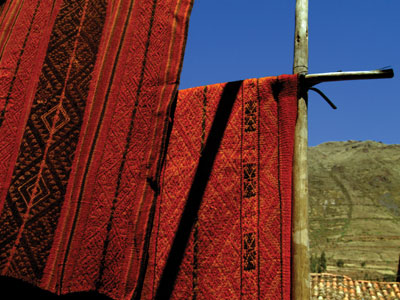
In October 2009, the Parrot Gallery (named after the church’s mascot of sorts) at CMCL opened to the public just in time for the Fall Arts Walk in Lancaster, Pa. By joining in that weekend featuring over 100 exhibits in venues all over town, the congregation embarked on an exciting new program to share the creative endeavors of its own artists with each other and with its neighborhood. Art gallery? In a church? This may sound paradoxical, but for CMCL it is no fluke. This new project is a natural outgrowth of the church’s core values and its presence in the community.
The history
For most of its 25-year journey, CMCL has embraced and celebrated the visual, musical and literary arts as vital gifts of the church.
In 1989, Mary Lou Weaver Houser encouraged the formation of Art Spirit, a support group for those interested in the arts and spirituality. The group continued meeting regularly until 1996 and included 50-plus participants. A core group of participants were CMCL members. But many came from beyond the congregation. Art Spirit met monthly for conversation, critique, studio activities, field trips and annual public exhibits on Art Sunday.
At that time, Lancaster was beginning to coordinate gallery-walk events twice a year, and CMCL participated in this effort. The sanctuary was transformed into a makeshift gallery space for a weekend at a time. Worship happened amid the art.

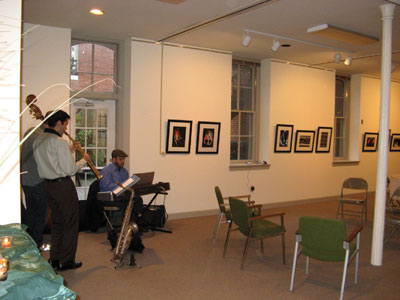
On Art Sundays, Vern Rempel, a jazz pianist and CMCL’s first pastor, preached lively sermons, sometimes espousing the arts as “the angel of CMCL.” He argued the arts are like messengers of God to us and to the world. Poetry, painting and music are some of the best ways CMCL knows how to communicate something of God to the world. They are like attending spirits among the congregation, radiating God’s presence.
Throughout the years, this view of the arts has not diminished. When a few participants first decided to float the idea of creating an art gallery in the church, almost immediately artists volunteered with enthusiasm. When planners circulated a preliminary gallery schedule, artists—all regular participants in the church—stepped forward and filled up nearly two years worth of exhibits. With that first tentative sign-up sheet, a dream took form.
The dream
Robert Wuthnow, a widely respected sociologist of religion in the United States, has written about the importance of the arts for the vitality of churches. He interviewed hundreds of people and conducted a national survey on the arts and religion. He concluded there is a profound correlation between personal faith and positive experiences with the arts.
In his book All in Sync: How Music and Art are Revitalizing American Religion (University of California Press, 2003), Wuthnow claims that “for artistic interests to benefit the nation’s churches and synagogues, then, religious organizations must channel these interests in ways that encourage serious commitment to spiritual growth and, in turn, involvement in congregations. … The lion’s share has to be done through congregations, small groups, retreat centers, publishing efforts and other vehicles by which the public comes into contact with organized religion.”
To be vital to people’s spiritual longing and seeking, the church must embrace and promote the arts. CMCL’s Parrot Gallery is, in a sense, a direct response to this phenomenon. The congregation has experienced the deep-running connection between vital spirituality and affirmation of the arts within its common life.
Printmaker Beky Weidner, reflecting on this vision says, “Allowing a space to display the creative works of our church community acknowledges that not only are the visual arts important but they belong in the church.”
CMCL feels a calling to celebrate, support and deepen this connection in its wider community. In a sense, this is a sacred calling. “The arts represent our most colorful form of hospitality,” notes Weaver Houser. “We are meeting neighbors who have never before visited a Mennonite congregation.”
The gallery also serves an inward purpose for the community. The Parrot Gallery provides exhibit space specifically for CMCL artists. Giving special attention to our own artists has made the gallery a vital way to support individuals within the congregation.
The gallery has added a new way to share personal stories. In church life, some are gifted to share in worship through music, preaching or prayer. But others communicate best through pictures and images.
As potter, Phil Kreider, who is a nurse in his “day job,” explains, “Being able to do this at church, I was able to share something about myself that many people didn’t know about me.”
Another artist, Naomi Paine, exhibited artwork when she was new to the congregation. Her experience helped welcome her into the church as a full participant.
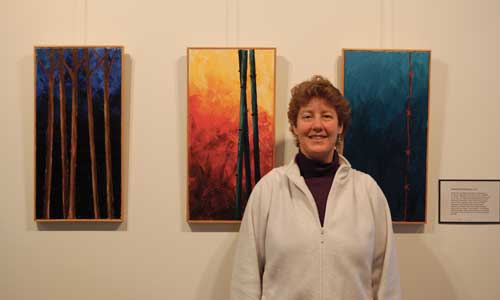
“Since my exhibit focused on spiritual experiences I had on a 30-day silent retreat, I felt vulnerable in sharing it,” she says. “Responses were positive, though, and I was blessed by revisiting that pivotal time in my life.”
This gesture of welcome and support for artists is the heart of the vision for the Parrot Gallery. As artist and gallery committee member Susanne Mundok, puts it: “The Parrot Gallery has given many artists at CMCL who either have never shown their work or have not shown in a long time the opportunity to do so in a space that is both familiar and comfortable. Showing one’s work sometimes gives a reluctant artist the clarification and legitimacy they need to continue confidently on their creative journey.”
The future
The Parrot Gallery at CMCL has opened a door to creative programming and new forms of relationship. With a couple years of practice, the nuts and bolts of setting up exhibits and hosting receptions is becoming routine. And gallery planners are actively dreaming next steps. Some artists have hosted informal gallery “chats” where visitors can learn more about the artwork. Kreider taught a mini-workshop on making clay tiles for youngsters in the congregation.
Gallery planners hope the artwork will increasingly be seen as a resource in the broader life of the congregation. Perhaps the gallery can become a place for Sunday school lessons, youth group conversations or spiritual retreat. These are some of the exiting possibilities emerging in the Parrot Gallery.
Weaver Houser casts a vision transcending any given program or moment in the life of the church. “The Spirit’s energy breathes through our bones and brings to life things unimaginable for our healing. And so we paint, sing, write, dance, design, build, garden.” Particular programs such as Art Spirit or the Parrot Gallery may come and go. But an angel is on the move.


Have a comment on this story? Write to the editors. Include your full name, city and state. Selected comments will be edited for publication in print or online.