


Two congregations on different trajectories have made a home together in Gordonville, Pa.
One of them, Branch Community Church, doesn’t identify as Anabaptist but attracts many people from conservative Anabaptist backgrounds. Some used to be Old Order Amish. Many retain some form of Plain dress.
Having grown from a small group to about 180, including a lot of children, Branch needed a bigger home.
The other congregation, Ridgeview Mennonite Church, had a sanctuary with room for about 500, built in the 1990s when the church was growing. But by 2023, it was drawing only about 70 people on Sundays.
Now both congregations feel more at home — in spaces that fit their needs and sizes — after a move in 2023 that put Ridgeview back in its original, smaller space.
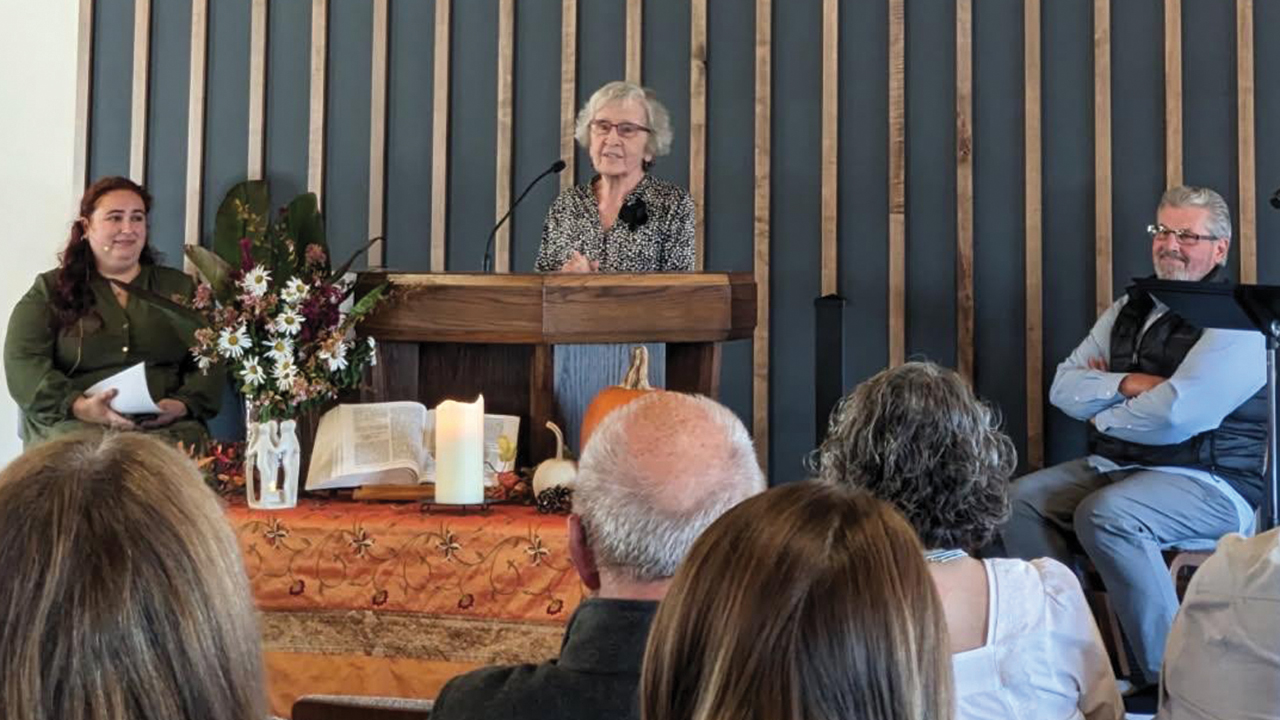
On Oct. 26, Ridgeview rededicated the chapel it moved out of about 30 years ago as its home once again.

Branch has been using the sanctuary since 2023, in the same building.
“Churches around the world are falling apart,” one person said in a time of open sharing during Ridgeview’s dedication service. “And we’re rededicating ourselves.”
The congregations’ relationship began in 2019 when Branch, a young adult prayer group, began worshiping in Ridgeview’s building.
“Branch came when we needed them,” said Katelyn Robbins, Ridgeview’s pastor.
Members of Branch also sensed God’s hand and right timing in the matter. Steven Fisher, lead pastor of Branch, called Ridgeview a “godsend for us.”
People from Branch had been praying for an established space, said Dave Smucker, a former member of Branch’s leadership team, who helped to connect Branch to Ridgeview.
During the Oct. 26 rededication of the chapel, Robbins prayed, “This is your home, God.” She lit a candle to remember the homeless and those who have been cast out of their homes. She also prayed for those who “lack a home or received hurt in a spiritual home.”
Ridgeview celebrated its new, but old, space by inviting members of the congregation to reflect on the congregation’s history and their sense of spiritual home.
Emily Glick said she had grown up in Ridgeview but drifted away from church attendance. As an adult, she returned and has not regretted it. She experiences Ridgeview as a place of welcome. She was grateful Ridgeview is “growing on our spiritual path while remaining true to our roots.”
Ridgeview began as an outgrowth of Maple Grove Mennonite Church, Atglen, Pa., of the Ohio and Eastern Conference in the early 1960s. Loretta Lapp, who attended Maple Grove and is a charter Ridgeview member, remembered Maple Grove was growing and that the congregation was looking to expand near Intercourse, Pa.
A Maple Grove member drove through the area and was taken by the ridge location’s “beautiful view” of the surrounding farmland. The congregation purchased the land in 1960 and erected a church building. Worship in the new building began in 1962.
At Maple Grove, Lapp said, there was separate seating for men and women. But this changed at Ridgeview. Families decided to sit together. Women’s head coverings gradually disappeared.
By the 1990s, the congregation had outgrown its chapel and built a large sanctuary to accommodate its 400 members and attenders. The original chapel became a gymnasium and a multipurpose space.
Over the years, denominational disagreements and U.S. political differences took their toll. As numbers dwindled, the large sanctuary space no longer felt like home.
“People felt distanced from each other,” Robbins said. The congregation decided to renovate the gymnasium and return to its original chapel.
The sense of home in the old space became especially clear when church member Sam Zook discovered Ridgeview’s original lamp fixtures in his barn. Bob Heine, another member, refurbished the fixtures, and the congregation was unanimous in its decision to use them.
Fisher said he was “impressed at how Ridgeview has adapted to our needs.” At first, Branch, which started out as a prayer meeting for young adults, rented only a room or two in Ridgeview’s building. As Branch grew and became a congregation, Ridgeview released more space. Worship services now attract more than 400 people.
Fisher describes Branch as “third-wave charismatic” — a movement that emerged in the 1980s (after earlier charismatic movements in the early 1900s and 1960s) that emphasizes gifts of the Spirit such as prophecy, healing and speaking in tongues.
Fisher, who comes from an Amish background, says Branch is deeply connected to the history and inheritance of Anabaptists.
The Anabaptist understanding of “not being afraid to be countercultural if God is leading us there” takes on personal meaning at Branch, Fisher said.
Some Branch members have paid a price for leaving the Old Order Amish. They have gone against family and cultural expectations; others have lost family relationships. Some have sacrificed financially because they will no longer inherit a farm or property. Business owners lost workers who can’t or won’t work for former church members.
Renting space from Ridgeview has allowed Branch to focus on its mission to reach out to the surrounding community and to do some international missions, Fisher said. Not needing to worry about a building has been significant for a young church, he said.
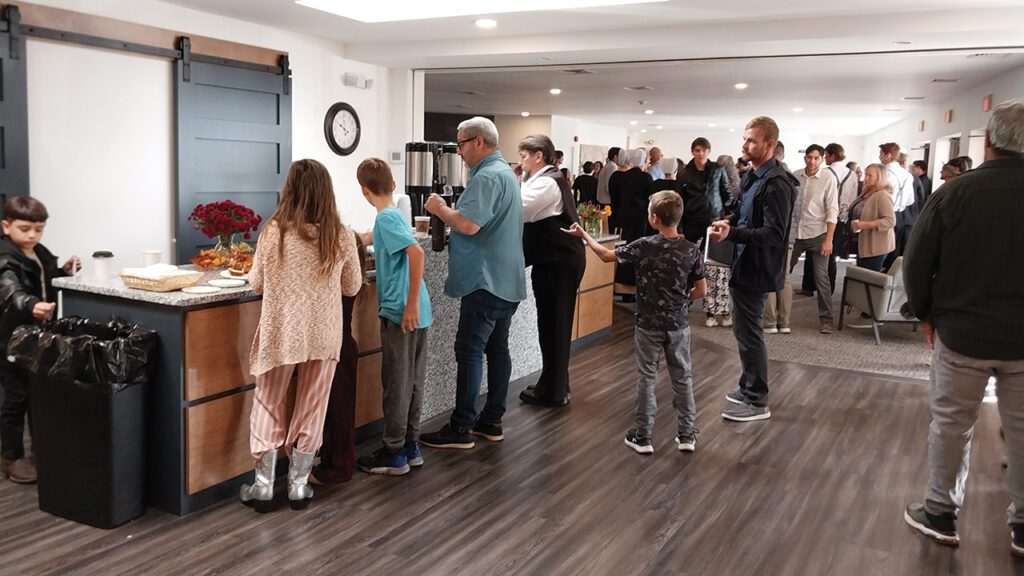
Branch and Ridgeview evenly shared the cost of major building upgrades and renovation of the lobby. Branch donated time and labor to repair Ridgeview’s roof. On Sundays, members of the two congregations have some interaction in the lobby over coffee hour.
The building is still surrounded by farmland, and Ridgeview members are pleased to host a congregation that ministers to the neighborhood. Lapp is “glad to see young, old, children, pastors” in the building.



Have a comment on this story? Write to the editors. Include your full name, city and state. Selected comments will be edited for publication in print or online.