


Opinion: Perspectives from readers
The following reflections come as a response to the article “Mission as Form of Exoticism” by Leo Hartshorn in the November 2010 issue.
 My responses are shaped by 25 years of experience in the Republic of Congo with Congo Inland Mission/Africa Inter-Mennonite Mission (AIMM) and another 12 in the home office in Elkhart, Ind.
Hartshorn lodges a series of critiques with which I heartily agree:
- Within the North American Mennonite community, Christian Mission was for decades equated with ministry in distant places.
- Meanwhile “home missions” were seen as less compelling and less glamorous.
- Over time there developed a consequent imbalance in funding, publicity and preparation of personnel.
- There also emerged a tendency to highlight and circulate “foreign missionaries” on home leaves while leaving others quietly at work in inner-city settings or isolated rural areas much less publicized, and this happened amid a society steadily drifting into secularism.
- And, yes, there was a certain fascination with captivating stories and colorful artifacts from distant strange places.
I cannot agree more with Hartshorn when he insists that a truly missional church is equally aware of and concerned about human need situated both south of the equator and around the corner from where we live.
However, the article reflects four inadequate perceptions:
- His article leaves the broad impression that the “foreign mission” enterprise of the past 150 or so years has essentially been driven by a fascination with the exotic. There is no recognition of the enormous sense of urgency that prevailed from the mid-1800s through much of the 1900s, which spawned a host of mission organizations across the western world, including the Mennonite communities of North America. This urgency was born of the conviction that the mandate left by Jesus to his followers to be his witnesses “in Jerusalem, in Samaria and unto the uttermost parts of the earth” had not expired. It was an era when Christian mission was not viewed as an intriguing topic for debate or as a noble humanitarian enterprise or a working vacation. Christian mission was instead born of the conviction that the millions who had never heard about Jesus had to be given that opportunity at whatever cost. And cost there was.
- His article reflects no understanding of the enormous price paid by overseas missionary communities—particularly during the pioneering decades. Stories are told of missionaries assigned to Africa in the late 1800s who packed their supplies in personal caskets since they had no realistic expectation of ever returning to their homelands. Congo Inland Mission sent its first exploratory trio of missionaries to Congo in January 1912. Before year’s end, one of the three already lay in an African grave. All this suggests there was something much more profound at work than fascination with the exotic.
- The apparent belief that the missionary enterprise across the years has essentially cast white-skinned people from the west as the unchanging practitioners of mission among people of darker skins is untrue. AIMM will celebrate its centennial year of unbroken ministry in the Congo in 2012. A major focus of celebration will be the publication of stories highlighting how, in the broad sweep of a century, Congolese Christians were the evangelists of their own people and the planters of their own churches.
- Finally, the repeated statement that missionaries have typically clung to roles of authority and power among the churches that emerged from their work is untrue. Once again our experience differed from this assessment. Upon our arrival in the late-1940s, we already found African church councils in place on our major mission posts. These met on a regular basis to seek resolution of conflicts between members, exercise discipline, recommend candidates for baptism and probe opportunities for placement of teacher-evangelists in outlying villages. In 1971, the mission voluntarily annulled its legal status in Congo and merged with the African church. Thereafter, missionaries went to Congo only as invited and served where they were assigned.
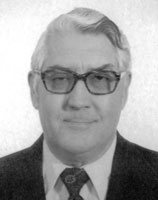
Jim Bertsche is a member of Silverwood Mennonite Church in Goshen, Ind.


Have a comment on this story? Write to the editors. Include your full name, city and state. Selected comments will be edited for publication in print or online.