


The Confession of Faith in a Mennonite Perspective was developed in 1995, and is the most recent systematic statement of belief for Mennonite Church USA. In its introduction, the writers identify six ways that confessions of faith serve the church, including: providing guidelines for interpretation of Scripture; providing guidance for belief and practice; build a foundation for unity within and among churches; offer outlines for instruction new church members or faith “inquirers”; give an updated interpretation of belief and practice “in the midst of changing times”: and help with discussing Mennonite belief and practice with other Christians or people from other faith traditions.
Over the course of the next several months, we will be releasing “roundtable posts”, featuring two to three members of Mennonite Church USA congregations reflecting on an article from the Confession of Faith and how it impacts their ministry, congregational life and theology. We’ll move through the articles in numerical order.
Today’s authors are reflecting on Article 3: Holy Spirit. Writers appear in alphabetical order. The views expressed do not necessarily represent the official positions of The Mennonite staff, the board for The Mennonite, Inc., or Mennonite Church USA.

Grace Pam is one of the founding pastors of Los Angeles Faith Chapel.
There are many schools of thought as many people attempt to understand who and what the Holy Spirit represents in our dispensation.
Many call him an ‘it’, meaning He is impersonal. Some say He is like a powerful wind: you cannot see where it’s coming or going, but can observe the effect after it passes.
At Los Angeles Faith Chapel, we believe the Bible is the word of God, and it says the Holy Spirit is the third person of the triune God existing before creation and continuing to live in every believer in Jesus Christ, working in us and through us to establish the perfect will of God.

The Holy Spirit is God in us. In John 14:16-17, Jesus said to his disciples that when He goes to
the father, he will send them the Holy Spirit of truth, who will be in them as a continuous
presence of God.
John 16:7‐11 says that the Holy Spirit will teach God’s righteousness and judgements. The Holy Spirit is the power of God in us stirring us up unto godliness. The Holy Spirit convicts and rebukes the believer of sin and leads us to brokenness, confession and repentance.
The Holy Spirit enables us to do the work of ministry. In Acts 3:1‐14, Peter, who was a fisherman, received the Power of the Holy Spirit and began to preach eloquently, converting men and healing the sick, lame and demon possessed to the astonishment of his audience.
At Los Angeles Faith Chapel today, the presence of the Holy Spirit heals the brokenhearted, restores the lost, and delivers many from emotional, psychological and spiritual diseases, leading many to salvation in Christ Jesus.
At LA Faith Chapel, the Holy Spirit fills our worship like in the day of Pentecost, granting many people different abilities to work in the Spirit. By the power of the Holy Spirt, the word of God is broken down with ease for the understanding of the people.
The work of the Holy Spirit cannot be overemphasized. He makes the Christian walk a reality and without the Holy Spirit, we can do nothing.
 Willard Swartley is Professor Emeritus of New Testament at Anabaptist Mennonite Biblical Seminary, Elkhart, Indiana.
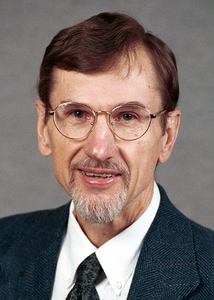 Willard Swartley is Professor Emeritus of New Testament at Anabaptist Mennonite Biblical Seminary, Elkhart, Indiana.
My comments on this “Article” are informed by my longer treatment in John (Believer’s Church Bible Commentary series; Herald Press, 2013) and the 1977 Mennonite Church text, The Holy Spirit in the Life of the Church.
In John’s gospel, Jesus’ farewell to his disciples says much about the Paraclete—the Holy Spirit that he will send from the Father to his disciples upon his departure. The key texts are:
- And I will ask the Father, and he will give you another Advocate, to be with you forever. This is the Spirit of truth, whom the world cannot receive, because it neither sees him nor knows him. You know him, because he abides with you, and he will be in you. (John 14:16-17)
- But the Advocate, the Holy Spirit, whom the Father will send in my name, will teach you everything, and remind you of all that I have said to you. (14:26)
- When the Advocate comes, whom I will send to you from the Father, the Spirit of truth who comes from the Father, he will testify on my behalf. You also are to testify because you have been with me from the beginning. (15:26-27)
- Nevertheless I tell you the truth: it is to your advantage that I go away, for if I do not go away, the Advocate will not come to you; but if I go, I will send him to you. And when he comes, he will prove the world wrong about sin and righteousness and judgment: about sin, because they do not believe in me; about righteousness because I am going to the Father and you will see me no longer; about judgment, because the ruler of this world has been condemned. (16:7-11)
- I still have many things to say to you, but you cannot bear them now. When the Spirit of truth comes, he will guide you into all the truth; for he will not speak on his own, but will speak whatever he hears, and he will declare to you the things that are to come. He will glorify me, because he will take what is mine and declare it to you. (16:12-14)
- My little children, I am writing these things to you so that you may not sin. But if anyone does sin, we have an advocate with the Father, Jesus Christ the righteous; and he is the atoning sacrifice for our sins, and not for ours only but also for the sins of the whole world. (1 John 2:1-2)
The NRSV translates Paraclete as Advocate; the KJV, Comforter. Both emphases describe well the Holy Spirit’s role. Paraclete occurs in all these passages from John except 16:12-15, which extends 16:7-11, and 1 John 2:1-2 as well.
Further meanings for Paraclete are guide, helper, and teacher. The Paraclete is the indwelling presence of Jesus in the life of the believers. Paraklētos denotes an advocate in the Greek court. The Septuagint’s verb parakaleō translates the Hebrew naḥam, comfort. Most significant is the word another in the first text. What Jesus was and did, the Spirit continues.
The Confession of Faith occasionally references the Paraclete texts. The “Holy Spirit” is mentioned only once in these texts; “Spirit of truth” occurs three times. Do we look to the Spirit of truth to guide us?
Both the 1995 Confesssion and 1977 Holy Spirit Statement cast a wider New Testament net than John, and rightly so. These salient emphases shape the 1977 Statement:
- The Spirit indwells every Christian. To belong to Christ is to have the Spirit (Rom 8:9).
- The Spirit undergirds the whole range of Christian experience from beginning to end, including spiritual gifts (1 Cor 12–14).
- The Spirit is closely tied to the person and mission of Christ [here the Paraclete references are cited].
- The Spirit is given that the church might truly be the body of Christ, sharing in his life, faithfully manifesting his character, and being fruitful in every good work (Rom 8:29; Gal 5:16-26).
- The Spirit is given to the church to empower it for the task of bearing witness to Christ (Acts 1:8) [true also of the Paraclete in John].
- It is the work of the Spirit…to interpret and vitalize the gospel in the lives of God’s people.
- “The Spirit interprets Christ (Jn. 14:16; 15:26; 16:13ff.)” (section 3B).
The 1995 Confession consists of five paragraphs, with some complementary accents:
- The eternal Spirit was and is at work from creation to new creation, guarantor of our redemption.
- Jesus’ kingdom ministry of proclamation, healing, suffering, and resurrection was done in the power of the Spirit.” “By the power of the Holy Spirit, the church preaches, teaches, testifies, heals, loves, and suffers, following the example of Jesus its Lord” (17).
- God pours out the Holy Spirit on all flesh, making the church worldwide.
- Through the Holy Spirit the church “praises and worships God and brings forth the fruit of the Spirit…[and] the church comes to unity in doctrine and action” (17).
- The Holy Spirit convicts of sin that leads to repentance, comes to us in baptism, and empowers righteous living and boldness in gospel witness.
- The Holy Spirit enables Christian community, comforts us in suffering and persecution, intercedes for us [as Advocate], and is guarantor of our redeemed bodies and the new creation.
The 1977 Declaration and the 1995 Confession, together with John’s Paraclete emphasis, invite us to shine: shine for Jesus in truth, witness, and living its fruit.
For more, see Vision: A Journal for Theology and Church 13.1: The Holy Spirit and the Christian Life, ed. Karl Koop, 2012. Note especially Shillington (31-39), Pieffer (48-55), and Snyder (64-73).


Have a comment on this story? Write to the editors. Include your full name, city and state. Selected comments will be edited for publication in print or online.