


A Mennonite church brings hope to its neighborhood.
Train a child in the way he should go, and when he is old he will not turn from it.—Proverbs 22:6 (NIV)
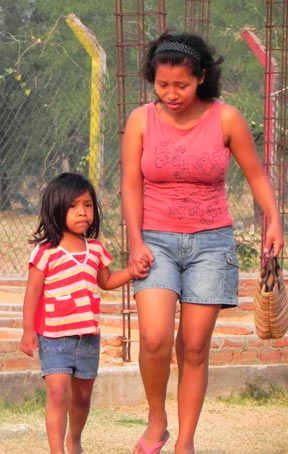
Dust fills the air as a truck hauling Mendocina soda flies past a farmer in his buggy being pulled by a malnourished horse. The farmer is bringing his daily harvest of milk to the city to sell at a local market. Floating through the extreme heat and humidity of Bolivia, the dust covers the faces of a mother with her two children, waiting patiently to cross the road. As a break emerges in the traffic, 4-year-old Sofia Sandoval dashes across the street carrying her backpack, as her mother tries to run without waking up her 4-month-old baby. It is just before 8 in the morning as Sofia wipes sweat from her brow as she continues walking to day care.
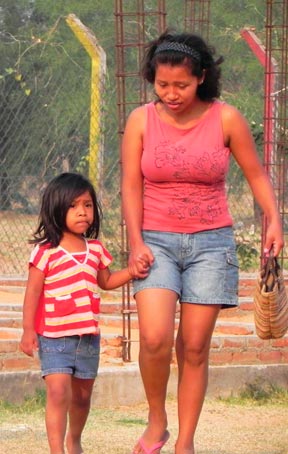
Sofia lives in the neighborhood Libertad, on the outskirts of Santa Cruz, Bolivia, a neighborhood where life has never been easy. For the people living there, finishing school is almost unheard of, and going to college is not even a dream. Education is not a priority but an experienced “babysitter” until one is old enough to find work or have a baby. The majority of the women have children at an early age and are forced to drop out of school and care for their children. While many of the women start having children at age 16, by the time they are 20 it is common to have three children. In a neighborhood where the average person makes around $4 a day, raising three children can be more than a nightmare. Being forced to work, mothers in Libertad have no other option than to leave their children, though not old enough to go to school, at home alone all day, wandering the streets and having to face crime.
In the midst of life and its problems, as many people turn to drugs and alcohol, few in Libertad seek refuge in a small church in a near-by neighborhood, Moliendita. This particular Mennonite church has five regularly attending families and numerous children who come on their own. Living in and being a part of the neighborhood, the people are aware of the problem of unsupervised children.
Having the same life as many of the people in the neighborhood, it was hard to help, but they took what they had and went to work. They had a church building, they had people seeking a change, and they had God—the three ingredients that helped start the Guarderia Samuelito.
After many hard days of painting, making chairs and tables, and preparing a schedule for the children, on Aug. 28, 2006, the Mennonite church Esmirna opened its doors to the children of the neighborhood. Not having great resources to market the new day care, the first year was slow but successful. Nine students filled the room at the church each day of the first year, 26 students the second year and 56 students in the third year.

They kept growing and growing, and it was hard to tell people there was no space. The church only had a limited amount, and it was completely filled. This did not dampen the will of the Mennonites in Bolivia or keep them from helping the children of Libertad and Moliendita. Instead it gave them a new goal, a dream to expand and double their numbers. Once again, putting their faith to work, they prayed.
Soon they found an empty lot for sale across the highway in the neighborhood Cochabamba. It seemed to fit the day care and their future plans perfectly. Churches in the United States and Canada caught word and sent volunteers, helping construct the new day care. In two years, half was finished, and children attended for the 2010 school year (February through December).
Today, Sofia, along with 76 other children from 55 families, 10 paid staff and two volunteers, make their way to the day care each day either by foot, microbus or taxi. Parents can go to work, knowing their children are cared for and getting a solid diet.
While in the day care, the children (ranging from 6 months to 6 years) follow a strict schedule each day, teaching them the importance of routine, which is lacking in the neighborhoods where they live. Children are served two meals and two snacks each day and are bathed, their teeth are brushed, they sing songs, have workbooks and play time.
While health and cleanliness are stressed to the children and their families, Christianity and the church is the priority in the day care, and they spread the love of Christ with each empanada (cheese-filled pastry), each song and every hug and kiss the children receive.
The Guarderia Samuelito has started construction on the second half of their building, with a conference room, offices for the two directors, an infirmary, a room designed for babies, with proper changing stations and cribs, and housing for volunteer groups. Upon completion of the project, the Guarderia will be able to help just over 80 more children, with a capacity of 150. The foundation is set and everything ready to go. But they just lack the funding to finish it. About $140,000 separates the Bolivian Mennonite Church and the Guarderia Samuelito from helping that many more children get out of the streets and into a Christian environment.
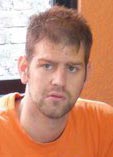
In the summer of 2001, I visited Santa Cruz, Bolivia, with my youth group from Pleasant Valley Mennonite Church in Harper, Kan., on a short-term mission trip. While in Bolivia, our youth group worked in a small village building a “camp” on the outskirts of Santa Cruz named Don Lorenzo. Being around the Bolivians during these two weeks, I uncovered a passion I never knew I had. The trip sparked in my mind doing mission. The spark finally ignited in 2010, when I went back to Bolivia and served a one-year term with Mennonite Mission Network’s Radical Journey program. My placement in Bolivia was with the Guarderia Samuelito during the week and working with the youth in Don Lorenzo on the weekends. I found an instant love for the people and the culture. At the end of my placement, I felt emptiness in my heart, wanting to continue my work there. Today, I am back in Bolivia independently, working with the children of the day care, serving as a teacher in the room for 2- to 4-year-olds.


Have a comment on this story? Write to the editors. Include your full name, city and state. Selected comments will be edited for publication in print or online.