


Opinion: Perspectives from readers
In March 2013, Mennonites in the Harrisonburg, Va., area were invited to a gathering at one of our local churches to welcome and support two prominent leaders of the Ethiopian Meserete Kristos Church and the Meserete Kristos College. Only about 100 people attended, a fourth of whom were a part of various singing groups providing special music for the guests. The event raised about $3,500.
I wonder how Kiros Teka Haddis, the president of the fledgling Meserete Kristos College, or Kelbessa Muleta Demena, the associate secretary of the MK Church and chair of the board of the school, felt about no official representatives of either Eastern Mennonite University (EMU), Eastern Mennonite Seminary or the Virginia Mennonite Conference being present.
 In spite of our being a part of a global Anabaptist community through our membership in Mennonite World Conference, we are worlds apart in having grassroots connections with each other, to say nothing of the disparity in our wealth and standards of living.
Let’s compare some numbers:
We locals represented the well-to-do sending church, Mennonite Church USA, which helped launch the mission effort in Ethiopia some 60 years ago. Today MC USA has a declining number of baptized members, around 98,000, while the Meserete Kristos (“Christ the Foundation”) Church has over 225,000 members, plus an attendance of twice that number. The Ethiopian church continues to grow rapidly, with 726 congregations and 839 church-planting centers.
The average U.S. income is over $48,000. Ethiopia, one of the poorest countries in the world, has a per-capita income of just over $400.
MC USA has five colleges and two seminaries with a combined enrollment of over 5,000. MKC has one college with an enrollment of 180 men and women who are being trained mostly for various forms of church leadership.
Our five colleges have well-financed development departments working year round to raise budgets of millions for each of their institutions, plus having expanding (and expensive) admissions departments competing with each other in recruiting students from a shrinking pool of students.
MKC has no problem attracting sufficient students but struggles to meet its annual operating budget of $325,000, which I’m guessing is less than our U.S. colleges spend on lawn care.
Tuition and room and board for a school like EMU is over $37,000 per year, with considerable financial assistance available. At MKC it only totals $2,500, and students also have to rely heavily on financial aid.
My alma mater, EMU, has raised over $5 million toward a $7 million fund-raising effort to renovate its Science Center, and other MC USA colleges are engaged in similar capital fund-raising projects. By contrast, MKC is having difficulty raising enough money to complete a $500,000 women’s dormitory.
Is there something wrong with this?
I think so. If you agree, you may consider supporting some of the other Mennonite colleges and seminaries around the globe, such as Meserete Christos College, the Mennonite Theological College of East Africa, STAKWW (Disciples of the Word College of Christian Religion) in Indonesia or the Latin American Anabaptist Seminary (SEMILLA) in Guatemala City.
Here are some other ways we might help address the above concerns:
- Have each MC USA college or seminary adopt a sister institution outside the United States or Canada to exchange information, students and faculty as appropriate.
- Appoint representatives from the Global South as advisory members of the decision-making boards of each of our church educational institutions, participating via Skype or teleconference.
- Consider a moratorium on new construction or expansion of our institutions until our world neighbors have more of their needs met.
- Have all MC USA colleges and seminaries become one “multiversity” (with some different specialties located on separate campuses) in order to reduce competition with each other for needed dollars and student enrollment.
- Have at least one of these U.S. campuses offer a low-cost, no-frills education specifically designed to prepare students for global involvement and to serve as a training center for needy students from other countries.
More needs to be done to reduce the disparity between us and the rest of the world, with our goal being not to have our partners become more like us but for us to become more like them.
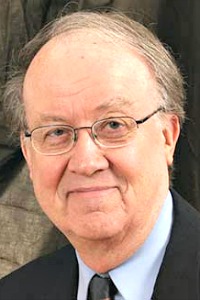
Harvey Yoder is pastor of Family of Hope in Harrisonburg, Va.


Have a comment on this story? Write to the editors. Include your full name, city and state. Selected comments will be edited for publication in print or online.