


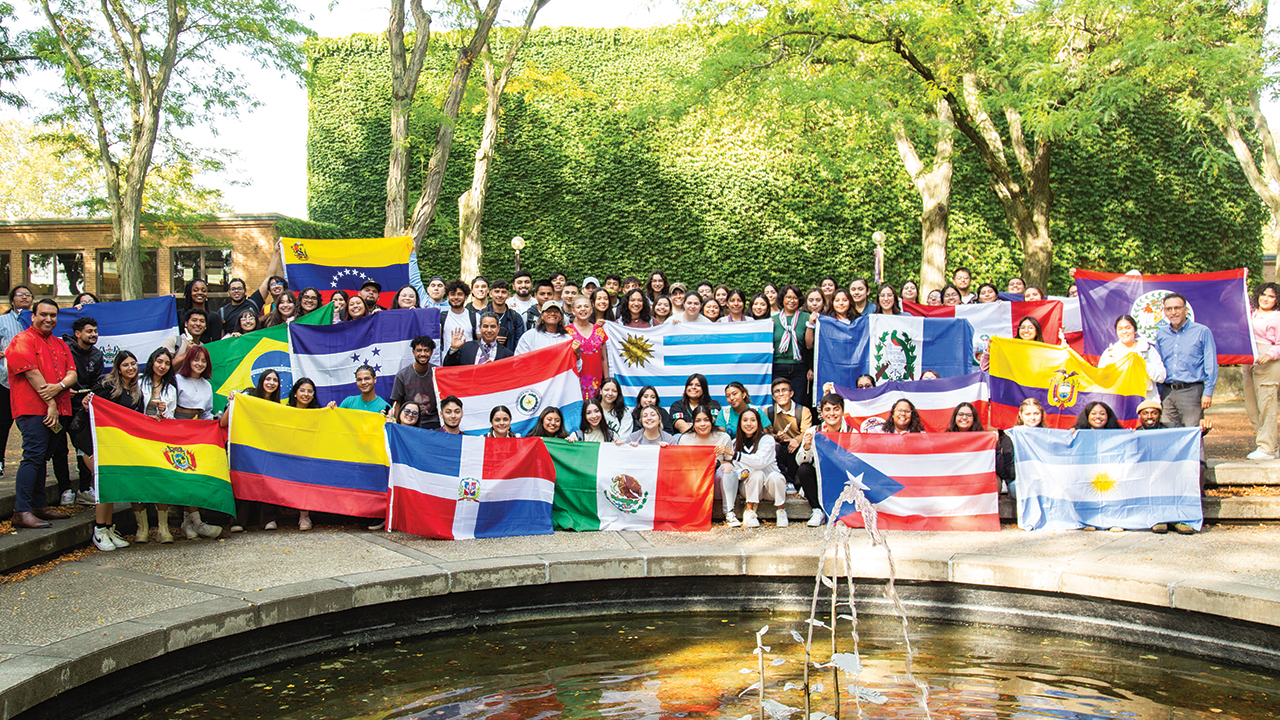
At Goshen College, we are fighting to create spaces of safety in which our immigrant students and their families can learn while healing from the trauma of immigration.
At this moment, federal and state governments are ramping up efforts to detain and deport immigrants. As a college, there are many external circumstances and forces that we do not control. But we also recognize our calling as Mennonite leaders and educators to:
— craft conversations that do not increase animosity;
— complexify the dominant narratives with human stories; and
— create as much safety as possible for the immigrants who enrich our campus, our city and our regional workforce.
We work in the context of higher education, which is also under threat. As a Hispanic-Serving College affiliated with Mennonite Church USA, we feel the tensions. Around 30% of our students are U.S. citizens of Hispanic origin. Our international students (another 12% of our students) are also facing greater scrutiny and unpredictability of their visa processes.
We feel the cultural and political forces against our use of well-defined English words, such as inclusion, equity and diversity, and we are learning to use our words with care. We cannot ignore the political realities when millions of dollars of our annual operating budget come in the form of federal student financial aid. In addition, we are beneficiaries of millions of dollars in multiyear federal grants.
At the same time, we are Christians who take seriously the biblical call to provide hospitality: “The stranger who resides with you shall be to you as one of your citizens; you shall love them as yourself, for you were strangers in the land of Egypt” (Leviticus 19:34, Jewish Publication Society).
In the Gospels, Jesus Christ not only echoes this command but identifies himself as the stranger: “For I was hungry, and you gave me food, I was thirsty, and you gave me drink, I was a stranger, and you welcomed me” (Matthew 25:35).
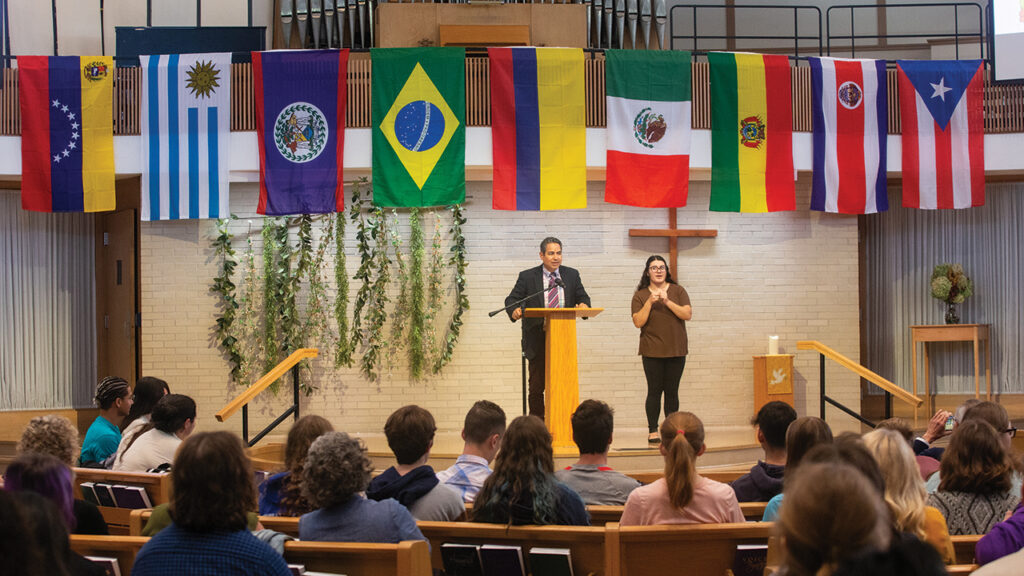
And we are Mennonite educators called to follow Jesus and love courageously through our words and actions. One powerful element of our mission and our educational excellence is the diversity of our campus, including the rich immigrant and international heritages of our students and surrounding community. This we are willing to fight for.
What does our fight look like?
These principles guide our work:
— We will not preemptively give up our rights or freedom of expression out of fear. We are telling our story — including working with Telemundo, a major Spanish-language media provider, to speak about what it means to be a Mennonite Hispanic-Serving Institution.
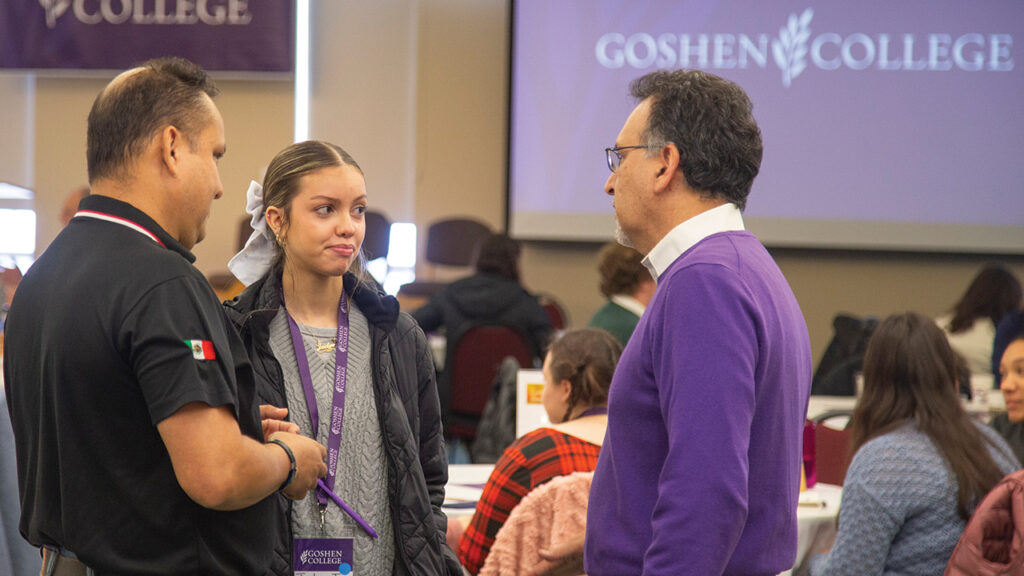
— We are supporting our students. We are expressing to our immigrant students and their families that we value them, we know they are under threat, and we will work with them to create as much safety as possible. We continue to provide Spanish-speaking, bicultural academic coaches and counselors to our students and their families. Our student leaders created a new student club, Voces Fuertes (Strong Voices), an advocacy and support group for immigrant students. We are working to replace tuition funding lost by our students due to state and federal changes.
— We are learning. We are developing our knowledge and practices around immigration and deportation policies and practices and the widespread trauma associated with those. Saulo Padilla, Mennonite Central Committee’s immigration resource coordinator, spent time with our President’s Cabinet at our annual retreat to help us envision how we can lead with care for our immigrant-rich community through this time of heightened fear.
— We are creating solidarity. While the pandemic years taught us about self-care, we believe the present moment calls us to learn about solidarity — how to embody love in action. We are creating gatherings, some for Spanish-speaking immigrants and others for all employees and community leaders, to educate ourselves on our rights and responsibilities. Local Mennonite immigration lawyers, Felipe Merino and Lisa Koop, have been strong and generous resources. We are convening pastors of Spanish-speaking congregations across the City of Goshen to share faith-based resources to support our congregants. And we are engaging with College Mennonite Church, the Mennonite congregation on our campus, to discuss our convergent missions in supporting refugees and being spaces of safety and faith formation in our immigrant-rich community.
Nearly 50 years ago, the German theologian Jürgen Moltmann wrote:
The social and cultural upheavals of the present draw attention to that great upheaval which [the Bible] itself describes as ‘new creation,’ as the ‘new people of God,’ when it testifies to the world concerning the future of ‘the new heaven and the new earth.’ What is required today is not adroit adaptation to changed social conditions, but the inner renewal of the church by the spirit of Christ, the power of the coming kingdom.
This is the ground of our vocation: To speak good news to the poor, to proclaim release to the prisoners and recovery of sight to the blind, to liberate the oppressed and to proclaim the year of the Lord’s favor (Luke 4:18-19) — especially in this time of upheaval.
Rebecca Stoltzfus is president and Gilberto Pérez Jr. is vice president for student life and Hispanic-serving initiatives at Goshen College.



Have a comment on this story? Write to the editors. Include your full name, city and state. Selected comments will be edited for publication in print or online.