


As a young mission worker in the 1980s, Linda Shelly stood on the muddy banks of a Bolivian river, arms outstretched, learning to sing Maravilloso es el amor de Dios (Wonderful Is the Love of God), a children’s song about God’s boundless love.
The river was too high to cross alone, so, while waiting for help, she began practicing to sing with Sunday school children, her voice rising over the rush of water. It was a simple act that crystallized lessons she carried through decades of mission work:
— embrace vulnerability;
— sing with joy even when off-key;
— trust in God’s love through every challenge.
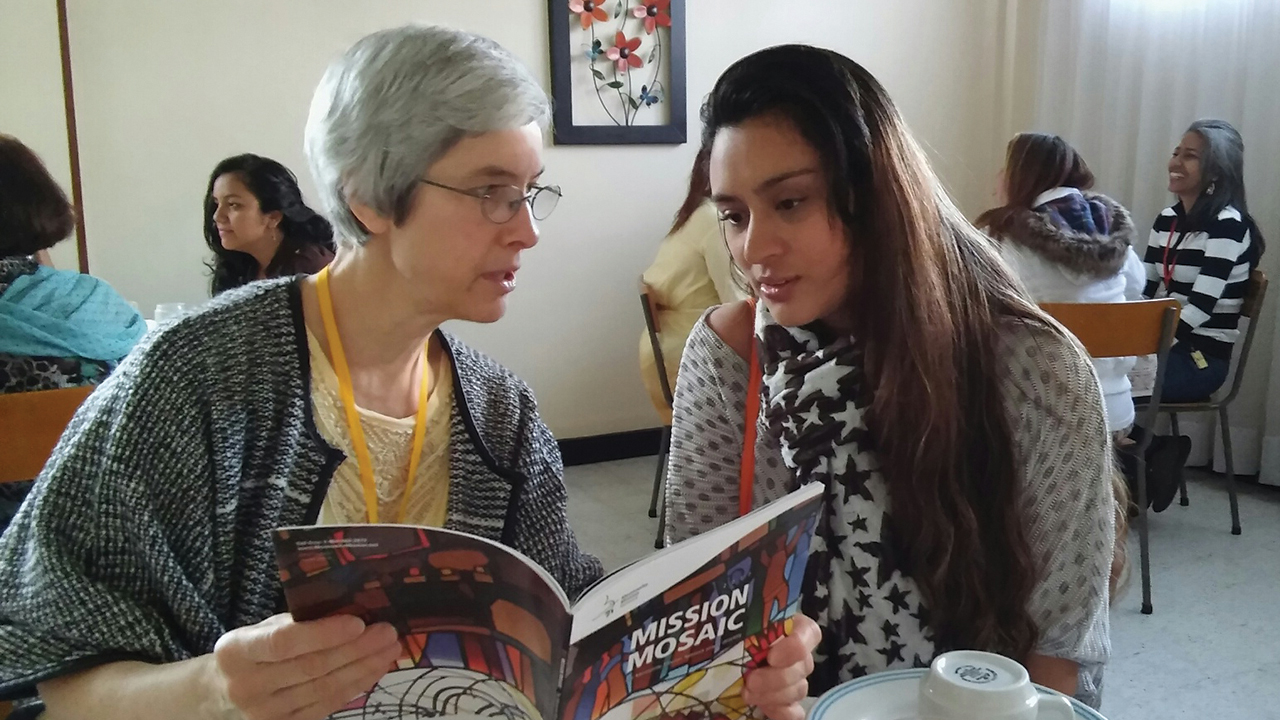
Shelly, who has served 23 years as Mennonite Mission Network director for Latin America, is preparing to retire after a transition period with a new director.
Her 44-year career in Latin America is marked by fostering partnerships, empowering local leadership and advancing peace, justice and theological education.
“Relationships with Latin Americans have greatly enriched my life,” Shelly said. “We grow together through the decades, and blessings are mutual. The partnerships have contributed to keeping this job new for so many years.”
In her youth, formative experiences planted seeds for volunteering. After graduating from Bethel College with a bachelor’s degree in history and social science, she joined Mennonite Central Committee, first in Akron, Pa., and then in Latin American programs.
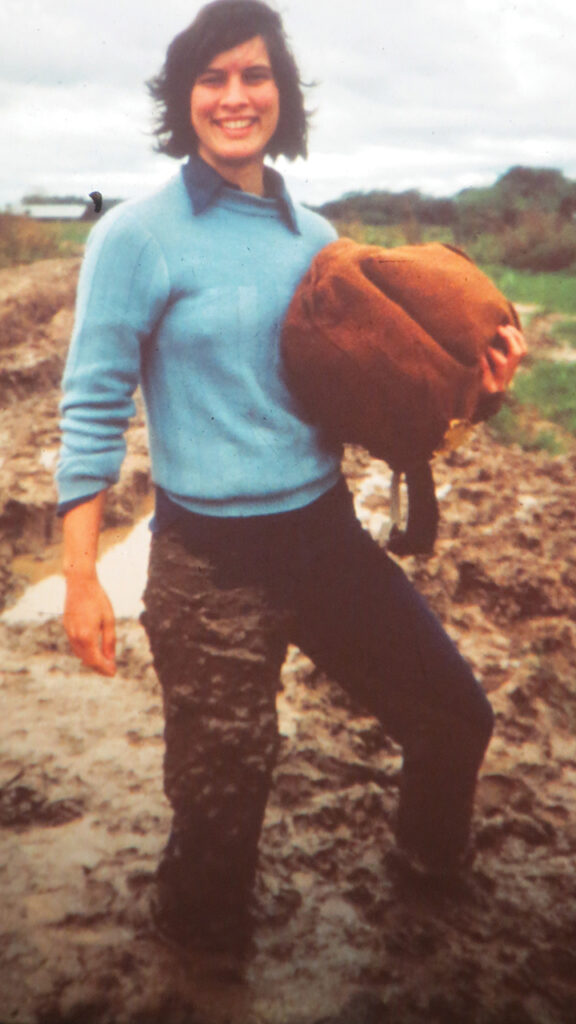
In 1980, she ventured to Bolivia, a move that stretched her in profound ways. As part of a nonformal education team, she supported young teachers and, along with her MCC housemate who was a nurse, began a library in their home, helped start a Sunday school and conducted health education and nutrition workshops.
Two years into her Bolivian service, MCC called with a new challenge. Salvadoran refugees were fleeing violence, swimming across the Lempa River to escape bombs dropped by their government — bombs supplied by the United States. The Honduran Mennonite Church was responding with food and clothing, but the Honduran government labeled the refugees “subversives,” aligning with El Salvador’s regime. MCC needed a country representative to establish a long-term program and asked Shelly to lead.
In Honduras, she found herself in the heart of a spiritual and political crucible. The Mennonite church’s work with refugees led to intense Bible studies, grappling with God’s call to justice and love for all. She worked with refugee camps near San Marcos de Ocotepeque, interpreting for groups eager to hear the refugees’ stories. The refugees spoke of bombs falling, villages destroyed and Catholic “delegates of the word” killed for advocating justice.
A North American visitor interrupted a testimony: “How can you still believe in God after all this?”
A refugee woman responded: “God was with us the whole time. If it hadn’t been for God, we would have all been killed.”
The refugees’ resilience despite unimaginable loss taught Shelly the power of accompaniment and of God’s nearness in the darkest moments.
After four and a half years in Honduras, she enrolled at Anabaptist Mennonite Biblical Seminary, earning a master’s degree in peace studies. There she wrestled with questions about loving enemies and addressing wealth disparities. Her time in Honduras and El Salvador revealed how the wealthy clung to their wealth, fueling violence and oppression of the poor — dynamics she recognized mirrored those in North America. Returning to Honduras, she and an MCC colleague worked with a Mennonite pastoral family in La Esperanza, supporting the growth of a new Anabaptist faith community committed to justice and reconciliation.
Later, as MCC’s regional director for Latin America and the Caribbean from 1992 to 2001, she saw the transformative power of small resources in the hands of visionary churches. Mission agencies contributed to theological development that prepared churches to embrace a holistic gospel.
“I learned while I was with MCC the significance of theological education and church development, including the work of mission agencies,” she said. “The churches with a strong Anabaptist theology are often the ones prepared to work with MCC in relief, development and peacebuilding.”
In 2001, as Shelly prepared to leave her MCC role and move from Pennsylvania to Kansas, she received a call asking if she would consider serving as Latin America director with the newly forming Mennonite Mission Network. Initially hesitant, she committed to two years, seeing it as a way be involved in Latin America while staying in Kansas to support her mother after her father’s death. On her first trip to Latin America, mission workers and Latin American leaders urged her to stay long-term, and she agreed.
She enjoyed nurturing global mission partnerships, bringing together churches from Mennonite Church USA, Argentina, Bolivia, Colombia, Ecuador and Venezuela, while across Latin America relating with and encouraging the vision of Anabaptist and Indigenous evangelical churches.
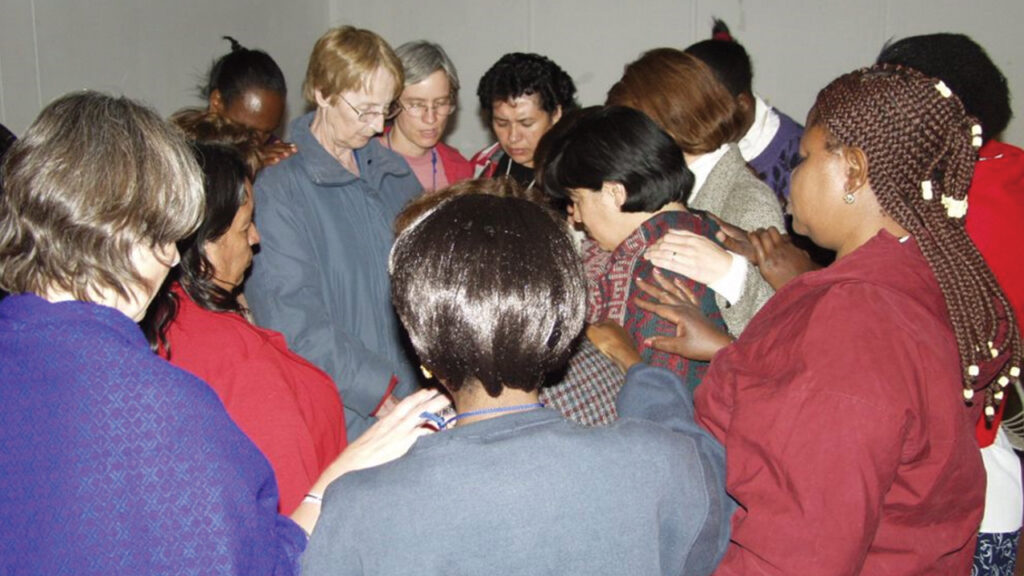
Shelly is a longtime advocate for women’s leadership, particularly through her work with the Movement of Anabaptist Women doing Theology in Latin America, or MTAL.
She played a pivotal role in supporting MTAL’s initiatives, such as sharing Sister Care across Latin America, regional gatherings and scholarships. Her collaboration with Sister Care seminars throughout Latin America, supported by Mennonite Women USA, provided trauma healing and leadership training, further integrating peacebuilding with spiritual growth.
“Sister Care from MW USA contributed significantly to the development of MTAL,” Shelly said. “The themes resonated with women’s life experiences, and more leaders emerged in organizing the workshops. . . . For a few years we tried to keep track of how many women participated in workshops led by Latin Americans, but we lost track after 4,500.”
Her support for women’s leadership extended to programs like the Q’eqchi’ Bible Institute connected with Seminario Anabautista Latinoamericano (SEMILLA, the Latin American Anabaptist Seminary) in Guatemala, where Q’eqchi’ Mennonite women study the Bible and theology. In regional gatherings, women’s presence as leaders grew from a minority to nearly half.
In 2016, she initiated a gathering of Spanish Anabaptist educators in Guatemala, representing organizations like SEMILLA and the Seminario Bíblico Menonita de Colombia, to advance online learning initiatives. This led to the creation of the Community of Anabaptist Theological Institutions, or CITA, a network for students worldwide to take Spanish-language courses from an Anabaptist perspective.
“Having a role in the formation of MTAL and CITA is very fulfilling,” Shelly said. “Knowing people, programs and ministries in many places makes networking possible. It’s so good to see what people choose to do together as they get to know each other.”
Her work included support for Latin American churches, such as securing Mennonite Men JoinHands grants for church buildings and to plant avocado trees at Q’eqchi’ Bezaleel Mennonite Educational Center in Guatemala.
She backed the Equipo Menonita in Argentina, working with Indigenous evangelical churches in a context where a church’s Indigenous identity is more relevant than its denomination.
“When we come together with people from other backgrounds,” she said, “we understand God and God’s call for humanity more fully.”


Have a comment on this story? Write to the editors. Include your full name, city and state. Selected comments will be edited for publication in print or online.