


The deafening sounds and scary sights of the war in Zaporizhzhia, Ukraine, are taking a toll on parents and children as the conflict grinds on toward its fifth year.
“When you go to the city, you can hear the sirens. You can see that people are a little bit tense or worried,” said Tatiana, a mother raising a teenage son and young daughter with her husband, who is not healthy, on the outskirts of the city.
“You see lots of military people around. You think maybe it is a horror movie or something.”
Sadly, it is not a movie.
In December, Zaporizhzhia was about 25 miles from the contact line, where the Ukrainian army was trying to hold off the Russian military. Missiles fell in parts of the city every few days, usually at night.
The stress is hard on parents and children, according to psychologists at New Hope Center, a Mennonite Central Committee partner that offers emotional support for families. New Hope is one of a dozen MCC Ukraine partner organizations who have continued to address physical, emotional or spiritual needs throughout the war.

The more stressed that parents become, the less patience they have with their children, said Ira, a psychologist for adults at New Hope. Children feel that stress, which adds to their own sense of insecurity from the war. When they act out, parents are embarrassed, causing more stress.
“Children are losing out on their childhoods, beginning to behave like miniature adults,” said Kateryna, a psychologist for children at New Hope.
(For their security, this article uses only Ukrainians’ first names.)
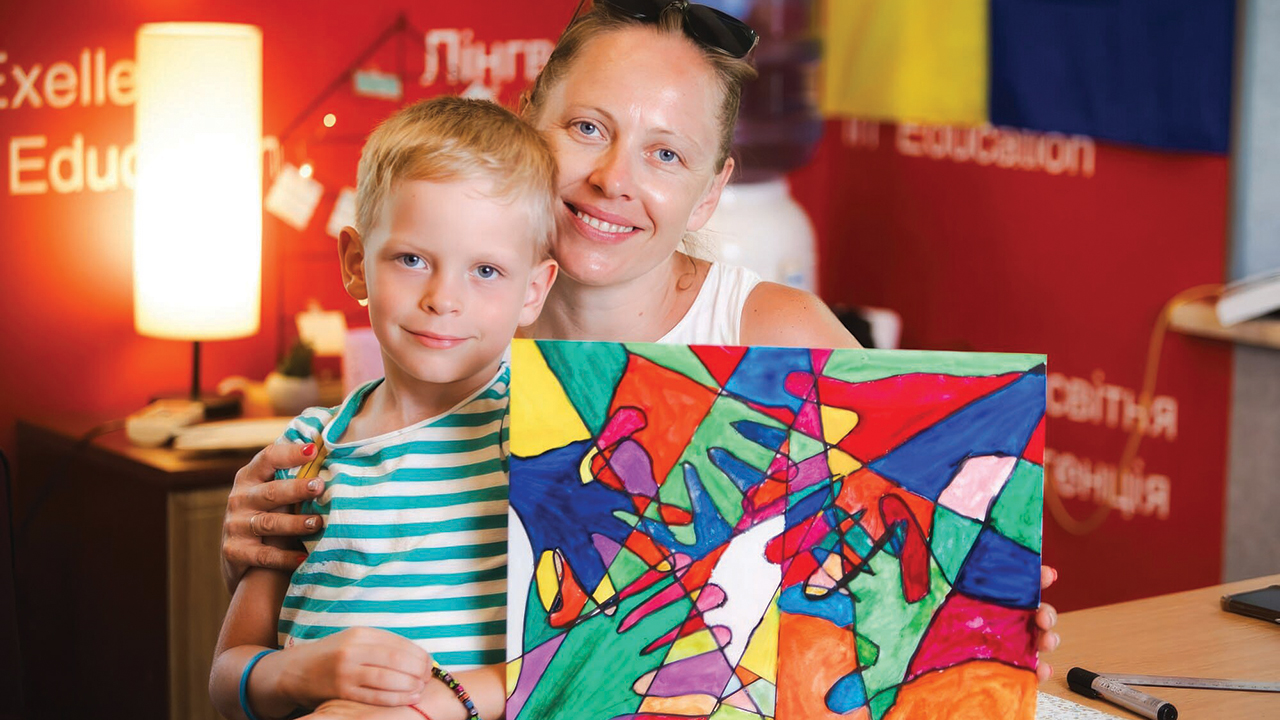
When parents recognize that they and their children are struggling, they can come to New Hope for free emotional support and guidance. The staff offer children art and play therapy, sensory activities and training on emotional regulation. Parents can join support groups and participate in individual or family counseling.
That safe space is very different from the streets of the city.
“We are trying to heal the brokenhearted,” said Maxym, the longtime director of New Hope who also pastors a Mennonite Brethren Church in Zaporizhzhia. “We must help those in danger. We share love.”
Tatiana came to New Hope to get help with the fear, anxiety and panic she was experiencing, especially regarding her children’s safety. She joined a women’s support group led by Ira. While the group meets, her 4-year-old daughter, Polina, attends children’s activities.
“For me, it’s personal,” said Tatiana, who has been coming weekly since February 2025. “My kid is in good hands for an hour, hour and a half, and I can take care of myself, be in a women’s circle and share.”
She’s also learned more about relating to her children, especially her teenage son.
“At New Hope Center you can learn how to talk to your kids, how to connect with them better,” Tatiana said. “They’re [the staff] wonderful people.”
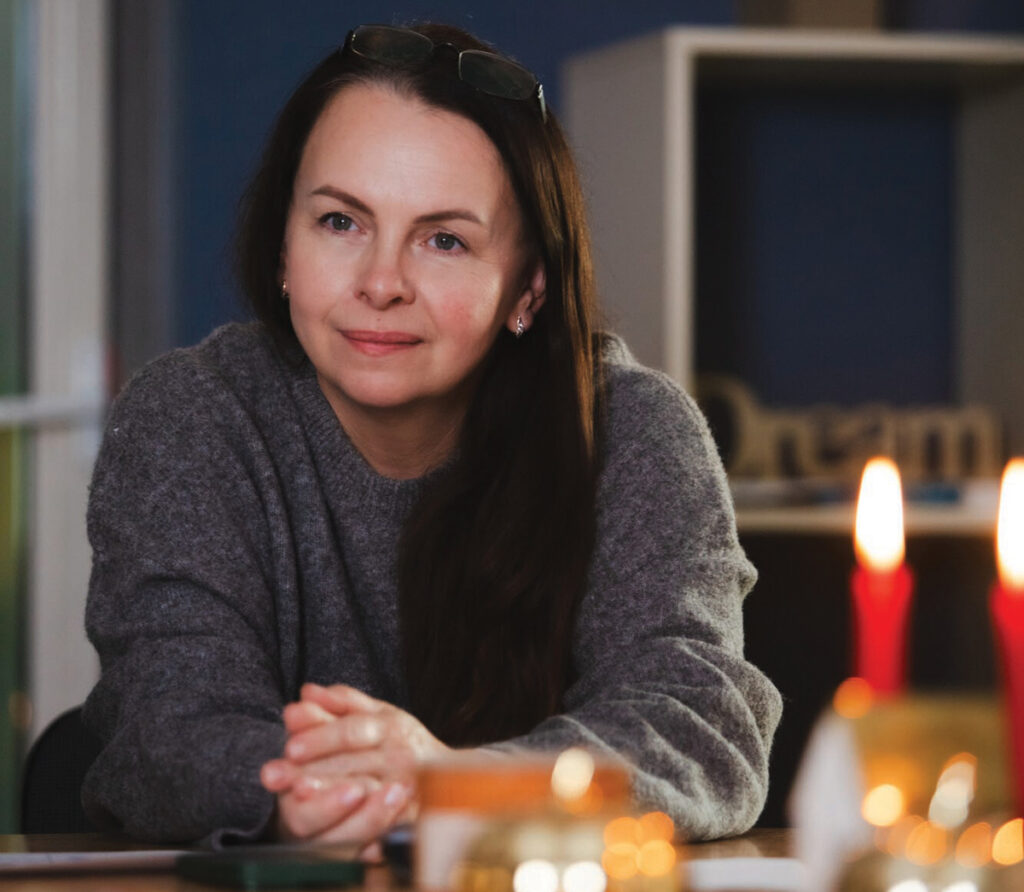
New Hope has 15 employees who have varying levels of professional training to deal with people in trauma.
Ira works primarily with parents struggling to raise their children during a war.
“The first thing I tell the parents is that if [they] are calm and stable, then they can share this calmness and stability with their children,” she said.
She met with a mother and father who were worried their child had a psychological disorder because he was acting so aggressively. His parents found him unmanageable at times.
In addition, they were taking in the judgment of society and of their extended family when he misbehaved. They carried with them the sense that they were not good parents.
In therapy, she worked with them first to express their own emotions and to learn how to calm themselves. She helped them understand children’s common responses to the stress of war.
“Before the war, people were able to handle most issues,” Ira said. “With the war, all the emotions and feelings are amplified. There is a secondary trauma that happens to people — the explosions, the air alerts, blood from people being killed.”
Children’s emotions also are intensified by the war, said Kateryna, who offers individual and group therapy for children.
“If they had some issues with, for example, anger, the war increased this problem, so it makes everything worse” she said. “If you have some anxiety, it increases their anxiety.”
To help the children learn to cope, she teaches them about emotions and engages them in activities where they can express their feelings.
Giving the children a safe place to be active, to relax, to create, to express feelings and to have simple conversations about the future builds resilience and gives them positive memories.
“Some kids, I actually am amazed how they are strong,” Kateryna said.
As Tatiana listens to Ira and the other women, some of whose situations are worse than her own, her perspective changes.
“You come here, and you feel in a safe space, [with] nice friendly people,” Tatiana said. “It gives a feeling of hope that you believe in the future.”
Since this article was written, Tatiana and her family moved to Denmark because she decided the nearby explosions were too dangerous for her children. For those who can’t move, New Hope’s doors remain open.


Have a comment on this story? Write to the editors. Include your full name, city and state. Selected comments will be edited for publication in print or online.