


In the wake of his fatal shooting, Charlie Kirk leaves behind a vast network of politically active religious leaders that will likely continue to influence politics for years to come.
“Turning Point USA is an organization unparalleled on the Christian right today,” said Matthew Taylor, a senior scholar at the Institute for Islamic, Christian and Jewish Studies in Baltimore.
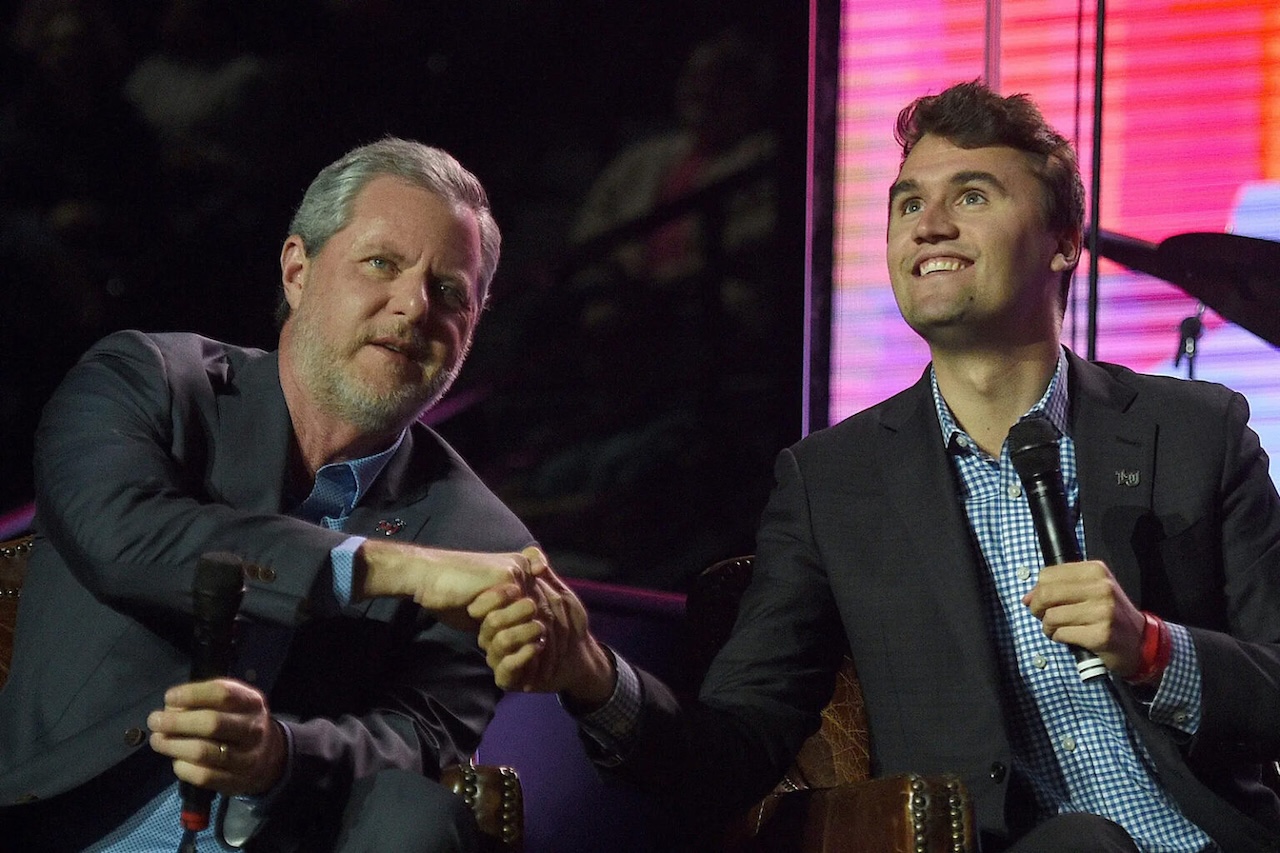
Kirk, 31, who died Sept. 10 in Orem, Utah, grew up attending a congregation in the Chicago suburbs affiliated with the Presbyterian Church (USA), a liberal mainline tradition. It wasn’t until 2019 that his evangelical shift became apparent in his public work, when he joined then-Liberty University President Jerry Falwell Jr. to create the Falkirk Center for Faith and Liberty at the evangelical Christian school.
While that project ultimately faltered after Falwell was involved with a series of scandals, it was around the same time Kirk met Rob McCoy of Godspeak Calvary Chapel in Newbury Park, Calif. McCoy said the two found common cause in a desire to intermingle their faith with their politics. Soon, the two began organizing what would become Turning Point USA Faith, a religion-focused TPUSA project.
Matthew Boedy, a professor at the University of North Georgia who has studied TPUSA, said McCoy pushed Kirk to embrace a specific theology known as the Seven Mountains Mandate, an evangelical movement revolving around the idea that Christians should influence seven “mountains” of society — family, religion, education, media, entertainment, business and government.
“[Kirk] then moved Turning Point into all those seven areas,” said Boedy, author of the forthcoming book The Seven Mountains Mandate: Exposing the Dangerous Plan to Christianize America and Destroy Democracy.
By 2020, Kirk was referring to the concept publicly and tying it directly to his political projects. Discussing President Donald Trump at that year’s Conservative Political Action Conference, Kirk exclaimed to the crowd, “Finally we have a president that understands the seven mountains of cultural influence.”
Kirk became a fixture in a broader effort to create a distinctly conservative Christian America, with TPUSA leaning harder into faith. By 2023, some churches openly affiliated with the organization on their websites. That year, a Turning Point Academy initiative offering “both a classic, pro-American curriculum as well as a Christian educational programming option” listed nearly 20 affiliated schools, many of them Christian.
One church in particular became a launching pad for Kirk’s religious work: Dream City Church in Phoenix, near where Kirk lived. For a time, Kirk hosted monthly “Freedom Night in America” events at the megachurch, a model replicated at other houses of worship.
By 2023, TPUSA Faith was hosting conferences for pastors, encouraging them to preach far-right politics from the pulpit as part of a church-growth strategy. Boedy said he attended Turning Point’s most recent pastors’ summit this summer in Georgia and was struck by the spectrum of faith leaders who traveled from across the state to attend.
“I think the people [Kirk] brought there really helped the people in the audience — and the audience’s pastors — to see how they could do politics from the pulpit that they weren’t doing before,” Boedy said.
Kirk’s brand of faith was infused with Christian nationalism. In a public appearance he promoted on his X feed, he argued the United States at its founding was so Protestant that the “structure of government was built for the people who believed in Christ our Lord.” He then argued the U.S. requires a Christian populace to properly function.
He urged followers to pressure otherwise like-minded faith leaders who stopped short of embracing his politics to do so, such as when he chided pastors for not doing more to resist Covid-19 pandemic restrictions on churches or condemn abortion.
“If you are a pastor and you are not speaking out for pro-life ideas and policies and politicians, you should resign from the ministry,” Kirk said in 2024 while speaking at a conference at Dream City. At TPUSA’s America Fest late last year, he referred to then-Pope Francis as a “Marxist” and suggested the pontiff was a heretic.
Kirk sometimes sparred with opponents further to his right, both politically and religiously. Nick Fuentes, known for extremist rhetoric that conflates White nationalism and Christian nationalism, feuded with Kirk for years, accusing him of being inadequately conservative.
Even when steeped in theological debate, Kirk focused on building a winning political coalition. He routinely worked with people he disagreed with theologically, so long as they overlapped with his right-wing political vision. The result was building an influential network of conservative Christian pastors, leaders, churches and schools in a short amount of time. Now his martyrdom, as declared by his supporters, will likely contribute to keeping his religious network a force to be reckoned with.


Have a comment on this story? Write to the editors. Include your full name, city and state. Selected comments will be edited for publication in print or online.