


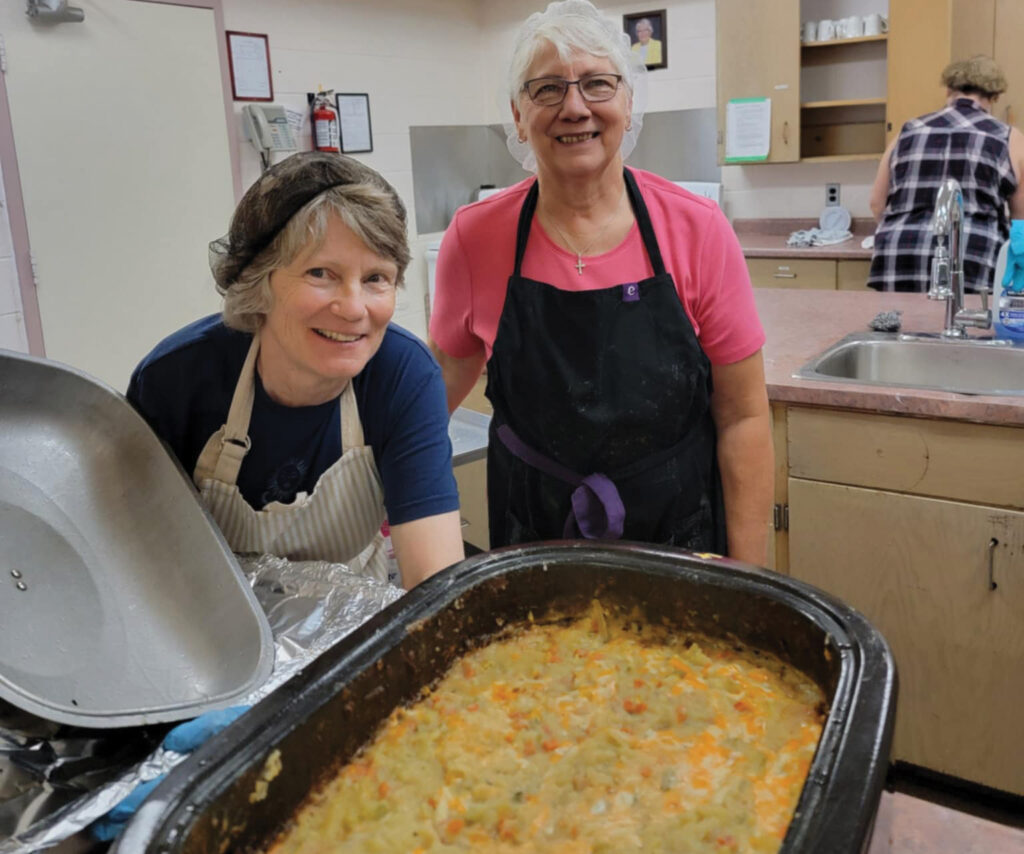
Mashed potatoes, meat loaf and salad were on the menu at the Light on Main Street weekly community lunch in Hanover, Ont., the day Lydia Dyck and Suraiya Foss-Phillips attended in June. The two young farmers were there to meet neighbors and see firsthand where the 80 pounds of potatoes they gleaned that week ended up.
Dyck and Foss-Phillips run a food- rescue program that diverts surplus produce from farms to people in need. Looking around her in the noisy dining hall, Dyck was pleased to see people from all walks of life enjoying the potatoes together.
“Wow,” she thought, “this is a real community-building event.”
Getting food to people who need it is at the heart of her and Foss-Phillips’ mission. So is connecting people to build more resilient communities.
Food insecurity is on the rise in Ontario. In fiscal year 2023-24, the number of people accessing food banks in the province rose 25%, reaching almost 8 million, according to the Feed Ontario Hunger Report. At the same time, a study by Second Harvest, the country’s largest food rescue organization, revealed that over 46% of food in Canada is wasted.
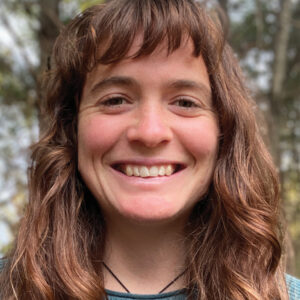
Dyck graduated from Goshen College in 2020 with degrees in biology and sustainability studies and now lives in her hometown of Durham, Ont., where she grows food and is active in the organic farming community.
In response to the problems she saw, Dyck applied a lesson she learned from her training in permaculture: “Turn the problem into the solution.”
With four years of experience working at organic vegetable and meat farms, Dyck knows even small operations often end up with excess produce that is thrown out or tilled under. A $5,000 grant she and Foss-Phillips received from Community Foundation Grey Bruce allows them to rescue food that would otherwise be left in the fields and donate it to food banks and meal programs like Light on Main Street.
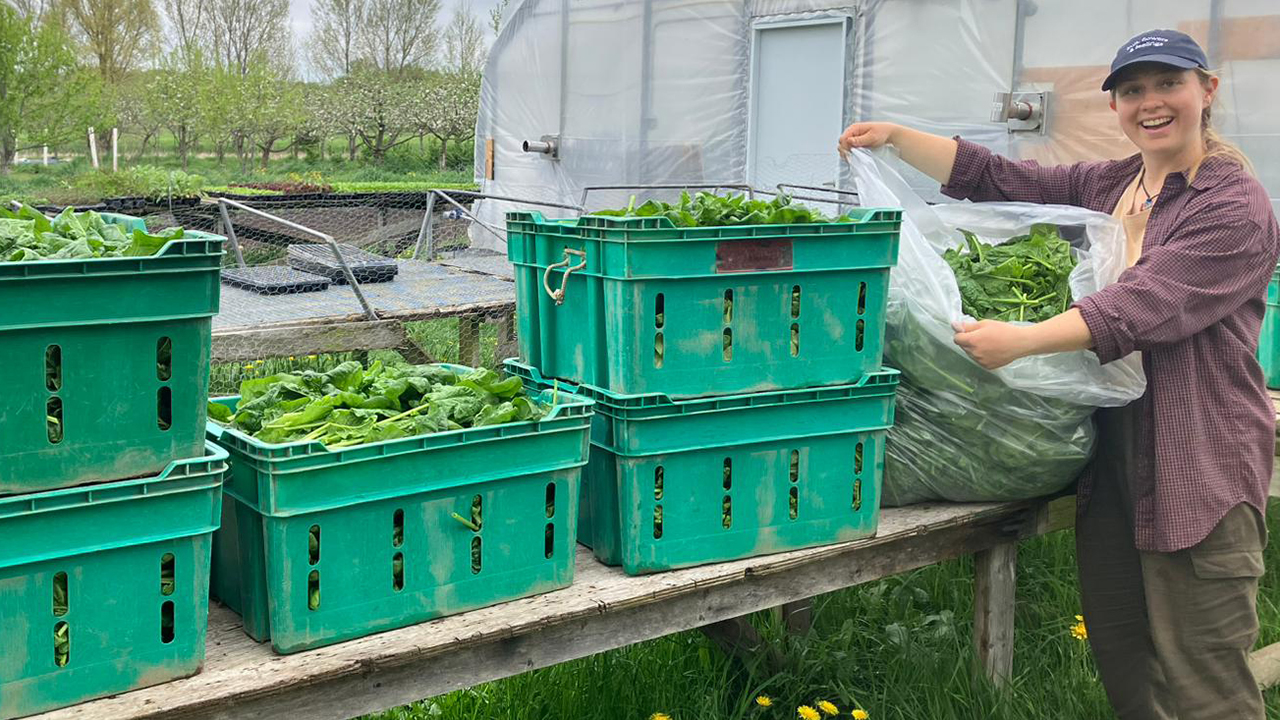
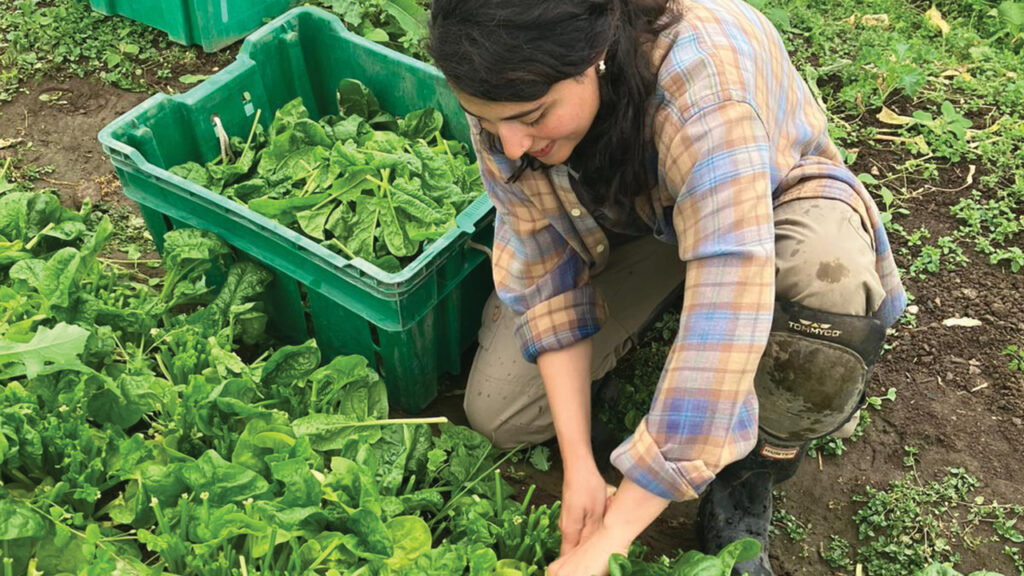
Dyck and Foss-Phillips spend one day a week harvesting and distributing excess produce from organic vegetable farms in their area, including Cedar Down Farm where Foss-Phillips works.
Good communication with the farmers is essential to keep from being an inconvenience.
“At the beginning of the year, we had a very intentional meeting,” Dyck said, “and we were like, ‘OK, how can we not be in your way?’ ”
They coordinate gleaning times that work for the farmers, and they harvest quickly and efficiently, bringing their own bins donated by a retired farmer.
To make things simpler, Dyck said, “We are asking people who receive the food if they can handle a little bit of dirt on something.” Usually they say yes.
Greens, radishes, tomatoes, kohlrabi, carrots and potatoes are some of the many vegetables Dyck and Foss-Phillips donate to two food banks and three meal programs in Durham, Hanover and Owen Sound. So far, Dyck said, the farmers are excited to see the produce go to people in need. They just don’t have the capacity to do it themselves.
Dyck understands. As the middle person, she spends a lot of time on the phone, contacting food banks and communicating with volunteers.
“It’s a lot of organizing,” she said, “and that’s not something a farmer can do.”
For Dyck, a natural networker, it’s the perfect role.
“I have a memory,” she said, “of one of my sustainability profs [at Goshen] commenting about the number of connections I made at school. . . . ‘I can’t wait to see how big your network is going to be in five years,’ ” the professor told her.
Dyck learned in college about the importance of looking at entire systems. She spent four years after graduating working at small farms where she gained experience “with the physical complexities of farming.”
And, most recently, she has transitioned into doing more community garden projects, leaning into the people side of food systems.
Trying to balance food production with community building, Dyck finds they’re often in conflict. That’s why she’s excited about the food-rescue program.
“This is an opportunity to bring in community and network between farmers and people but also feed people at the same time,” she said.
Dyck’s community includes the congregation at Hanover Mennonite Church, where she grew up. She hopes to use her social network to get more people involved in harvesting and consuming food together.
“Meal programs and food banks are definitely not the end goal,” Dyck said. Her vision is “to get people who need food directly connected with the food.”
She plans to coordinate community harvest opportunities, where a portion of the produce will go to volunteers, a portion to farmers and a portion to food banks.
Dyck knows there are challenges to including more people.
“It takes that extra step to get people onto the farm and have them involved,” she said, “and maybe you won’t get as much done, but you also get something else.”
Dyck finds satisfaction when gleaners and farmers can work together smoothly. One day early in the season, she was notified that a 60-foot bed of kale was going to be torn out of a greenhouse to plant summer crops. She and Foss-Phillips arrived early in the morning and harvested six crates.
“Just as we finished stuffing as much kale as we could into our bins,” she said, “the farm employees began clearing the plants out of the ground, prepping for the new crop. This was an example of true excess being gleaned through good communication and timing.”
Even small successes are worth celebrating. Dyck knows six bins of kale and 80 pounds of potatoes can only feed so many.
“I have absolutely no romanticism that what I’m doing is making a huge difference,” she said, “but I think it’s making a small difference, and that’s why I keep doing it.”
Sierra Ross Richer is a freelance writer and farmer from Goshen, Ind. She writes on climate change and sustainability in her Substack, “Sierra’s Adventures in Sustainability.” This article is the third in a series on faith-based action caring for the land and environment.


Have a comment on this story? Write to the editors. Include your full name, city and state. Selected comments will be edited for publication in print or online.