


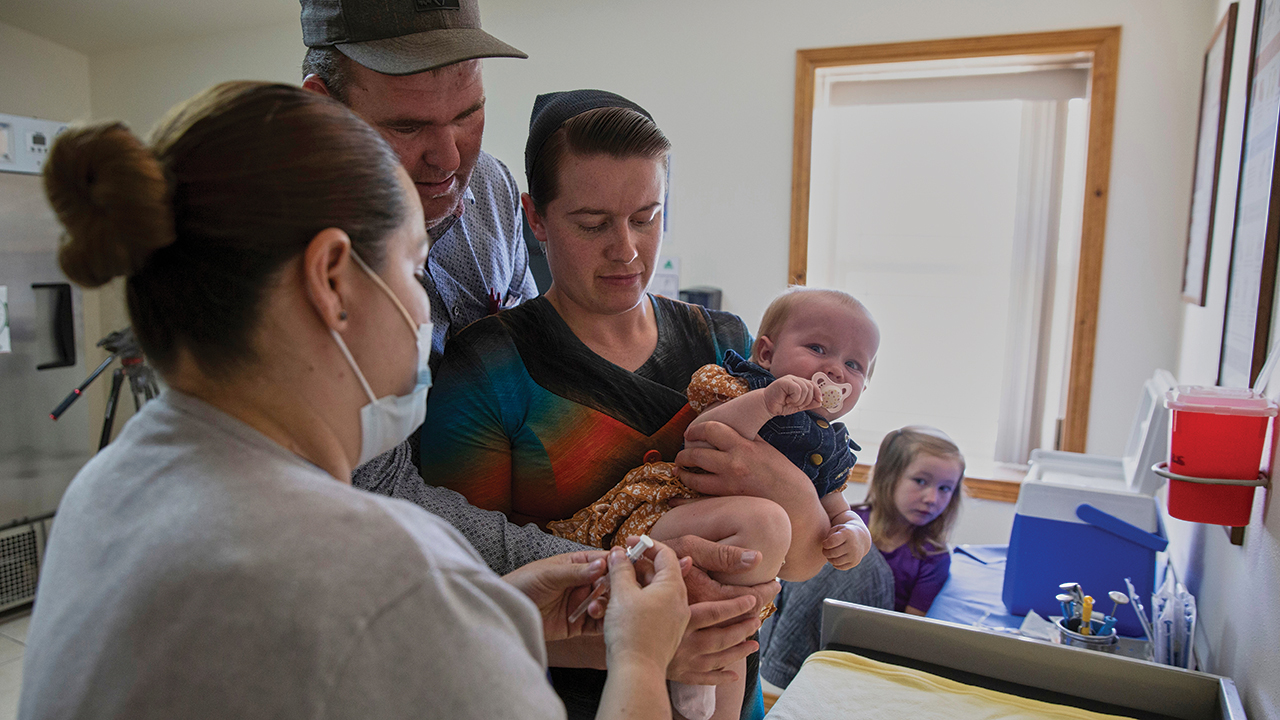
A Mennonite man in Mexico died April 3 from complications related to measles as documented cases in Mexico climbed over 920. Health officials believe the actual count is far higher.
The Associated Press reported health officials traced the Mexico outbreak to an 8-year-old unvaccinated Mennonite boy who visited relatives in Seminole, Texas, and then returned to Mexico in March. The man who died was a 31-year-old from Camello Colony near Cuauhtemoc. The AP did not report his vaccination status, but he had diabetes and high blood pressure, which can complicate the body’s ability to respond to the virus. Die Mennonitische Post carried a death notice.
Gabriella Villegas, head of vaccination at a clinic treating Mennonites with measles, estimated 70% of community members are not vaccinated. Health officials have been able to vaccinate tens of thousands of people in Chihuahua, but infections have spread from the relatively isolated Mennonite population to Indigenous groups and other people who work in orchards and cheese plants.
Gloria Elizabeth Vega, an Indigenous Raramuri woman and single mother, is vaccinated but became sick in March. She said her work supervisor at a cheese factory, who also caught measles, told her she had to take 10 days of leave and docked her pay 40% for a week.
Most Mennonites who spoke to the AP cited vaccine misinformation. Jacob Goertzen called U.S. Health and Human Services Secretary Robert F. Kennedy a hero. “I don’t accept vaccines; it’s that easy. Because that’s where freedom of expression comes in,” he said. “If we can’t make our own decisions, we don’t live in a democracy.”
The virus has continued in the U.S. and Canada. Martin and Anna Klassen of St. Catharines, Ont., wrote in the April 11 Post that some children “become very ill, and adults are also affected. It doesn’t seem to be getting better.” Tina Loewen of Brownfield, Texas, wrote in the same issue that she had measles all of February and spent a day and a night in a local emergency room: “Here in Brownfield the measles epidemic is very bad. All nine of our grandchildren have had it.”



Have a comment on this story? Write to the editors. Include your full name, city and state. Selected comments will be edited for publication in print or online.