


In whatever we do, we can surrender ourselves to that task and do it well, to the best of our ability.
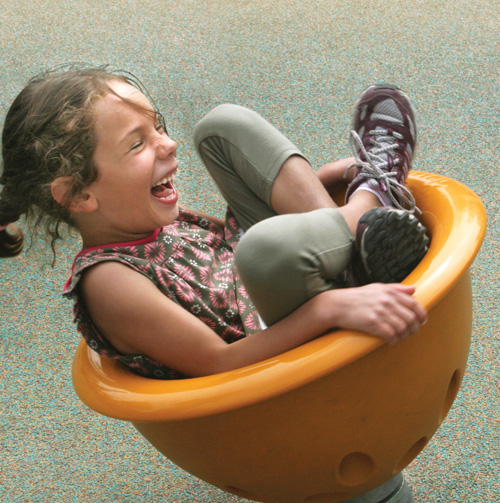
Play? While Mennonites are marked more by work than play (though they do play), they—all of us—need to play. It is how God made us, and spirituality—walking in the way of the Spirit—is primarily being who we are, which, I will argue, is a form of play.
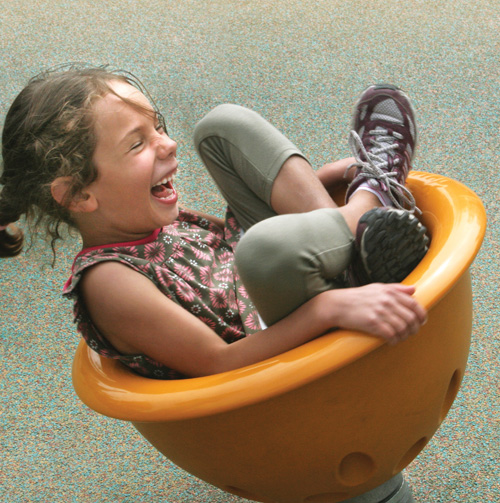
Webster’s has many definitions of “play.” These include engaging in sport or recreation, having sex, moving aimlessly about, taking advantage, performing music, taking part in a game, gaining approval. While playing can be as strenuous as any work we do, we generally distinguish it from working, which usually involves producing something.
Certainly play can be productive. Athletes, musicians and many others make their living by playing. But I’m using it more in the sense of nonproductive activity, something done for its own sake. I may even call it useless activity, which sounds anathema to many Christians (especially Mennonites), who have a pragmatic bent. But I don’t really believe play is useless; it only seems that way to most people.
Mennonites love to accomplish things, which we’d call work. And they even volunteer in droves to do it. But play? That’s another story. Mennonites tell Mennonite jokes about their refusal to engage in play or pleasure. For example, Mennonites don’t have sex standing up because it might seem like dancing. Or: Always take two Mennonites with you fishing. If you take one, he’ll drink all your beer.
Increasingly, Mennonites do play. I know of Mennonites involved in about every recreational activity you can mention—from biking to sailing to motorcycling to fishing to hunting to wine tasting and on and on.
Mennonites also are increasingly involved in the arts—writing, music, painting, sculpture, acting, filmmaking, even dancing. I go to Mennonite writing conferences and find an array of talent and interest. I hear from many Mennonites who are passionate about films.

But let’s go back to how Mennonite spirituality includes play. Much of what I’ve mentioned—recreation and the arts—can be interpreted as Mennonites simply assimilating the broader culture. Where do Mennonites get beyond their penchant for productivity or pragmatism? Where do they lose themselves in an activity that feels spiritual?
One such activity is singing. I’ve witnessed it; I’ve experienced it. Being in a group of Mennonites singing a hymn in four-part harmony can be a powerful experience.
It can also be off-putting. Mennonites take pride in our singing, and sometimes it feels like we’re showing off. I’ve felt uncomfortable on a plane full of Mennonites returning home from a national conference when they break out into the anthem “Praise God from Whom All Blessings Flow.” It seems the only way they feel comfortable witnessing to the other passengers. It doesn’t feel like loving as much as like boasting. But singing the same song in a conference with several thousand others at the end of a week of worshipping together can be exhilarating.
That act of singing can involve surrender to God and to one another in a communal act of harmony. And while it fills us with joy or peace or whatever, we do it, like all good play, for the glory of God. And like good play, it comes out of who we are. We express with skill and passion thanksgiving for God’s gift—in this case of music and one another.
But I don’t want to limit play—even so-called spiritual play—to activities considered religious, such as singing hymns. Whatever we do—whether it is recreational activities or even what we call work—can be play. And perhaps it should be.
In whatever we do, we can surrender ourselves to that task and do it well, to the best of our ability. In doing so, we are living in that moment, offering thanks to God for our ability by using it and likely experiencing a form of joy. It should not need mentioning that this is not an absolute rule. Not all activities are good or even acceptable. I suppose a torturer could surrender himself to his task, do it well and even enjoy it, but it’s plainly wrong.
Let it flow
In his book Flow: The Psychology of Optimal Experience, Mihaly Csikszentmihalyi describes a quality of enjoyable experience that occurs when a person’s ability to act is balanced by challenges to that ability. I think of when I played tennis in high school. It was most enjoyable when I played against someone at about the same skill level I had.
Playing someone much worse or playing someone much better was less enjoyable.
When we’re fully engaged in an activity (of body or mind), Csikszentmihalyi writes, we lose self-consciousness, which “can lead to self-transcendence, to a feeling that the boundaries of our being have been pushed forward.” The desire to improve the quality of our experience exists in all cultures. As Csikszentmihalyi points out, “Art, play and ritual probably occupy more time and energy in most cultures than work.”
Two obstacles to such flow, Csikszentmihalyi writes, are anomie and alienation. Anomie, or lack of rules, leads to anxiety. Alienation is equivalent to self-centeredness. No rules or too many rules are both harmful to experiencing flow. We in the church could learn from this.
“Flow” is a psychological description that can be read as a self-help aid: Here is how to improve your quality of life. However, if we approach an activity with that in mind, flow won’t happen because we’re too self-conscious.
This relates to the spiritual practice of living in the present. Play is another way of looking at this, a lens, as it were.
Here we should pay heed to Jesus: Learn from children. When my son Ethan was about 12, he and several of his friends began digging a hole in our backyard. They created connecting rooms in the growing hole as it developed over the years. They worked hard, but it was really creative play. Their hours of labor seemed less like what we may think of as work and more like hours of joy.
Play is without goals other than to engage in play. Children don’t say, Hey, it would improve our health if we played tag. Neither do they say, Let’s play chess because it may improve my mental powers and help me get into a good college.
How then should we play? We can enter activities we enjoy—whether basketball, sewing, doing crosswords or cooking—with a sense of enjoying that activity for itself. You can also call it having fun. One way you know you’re doing it is when you lose track of time.
But we can also practice this approach to whatever we’re doing, even work. Let’s say I’m doing the dishes. Many people I know have automatic dishwashers, so this activity involves rinsing the dishes and putting them in the machine. OK, but for me it means filling one tub with soapy water and one with rinse water, washing each dish with a rag or brush, then rinsing each one and placing it in the rack to air dry.
This is not an especially challenging activity or one I get a big kick out of.
Nevertheless, I can enter the activity with attentiveness, choosing how I organize the work, making sure I get each dish clean. This is a form of play. It can also be a way to be present in the moment God has given me. Brother Lawrence prayed, “Lord of all pots and pans and things … make me a saint by getting meals and washing up the plates” (Practicing the Presence of God).
We can find practices that help us play, that help free us from the dominance of our ego. Such practices will help us live patiently, peaceably and in harmony with others. They will help us attend to and love the world God has made in the moments God gives us.
Gordon Houser is associate editor of The Mennonite. This article is excerpted from his book Present Tense: A Mennonite Spirituality, which is published by Cascadia Publishing House ($16.95)


Have a comment on this story? Write to the editors. Include your full name, city and state. Selected comments will be edited for publication in print or online.