


An experience in Haiti of the presence of God
Some years ago, I had an experience of peace and salvation—and thus of God—that is still present to me. Both words, peace and salvation, are important.
 This experience of peace and salvation occurred in December 1992, on the first of my three trips to Haiti with delegations from Christian Peacemaker Teams (CPT). The experience can still overwhelm me when I think about it.
CPT is a nonviolent, activist, violence-reduction project sponsored by Mennonite, Brethren and Quaker churches. CPT has programs in places such as Hebron on the occupied West Bank, with native peoples in Canada, and in Colombia.
This CPT delegation was in Haiti to confront the violence perpetrated on much of the populace by the military junta that seized control of the government in a coup that ousted the democratically elected president Jean-Bertrand Aristide. This coup likely had the support of the U.S. government. The situation in Haiti is different now in virtually every way, but at that time, Aristide was a justice-seeking, wildly popular president. He received something like 65 percent of the vote in an election certified by foreign observers. The second-place candidate, the one backed by the United States, received 15 percent of the vote.
The rule by the junta that ousted Aristide was repressive. Haitians were forbidden to meet in groups of more than four without an army permit. It was government policy to obliterate Lavalas, the movement that had brought Aristide to the office of president. It was illegal to say the name of Lavalas, and people who mentioned Lavalas or Aristide in public were subject to arrest. Or they just disappeared in the night. More than once, our little group of North Americans was cautioned not to mention the names of Aristide and Lavalas when walking in the street, lest we bring suspicion on the Haitians walking with us.
Of a total population of 6 million, an estimated 250,000 Aristide supporters lived in the underground rather than risk death at the hands of the army. Most of those in the underground had come to the attention of the army, either because they had worked publicly for Lavalas or had worked in social programs organized by Lavalas to address such needs as literacy or the fair sale of crops. Many had left their homes precipitously, slipping out a back way when friends or family came to warn them of army personnel approaching their houses.

Our delegation spent a little more than a week talking with people in the underground in order to hear their stories and give them a voice. One part of our mission was to gather stories we could tell back in the United States to bring visibility to the problems. We hoped that exposing this violence to the light of day might unleash forces of change.
Another part of our mission was to engage in public action that would speak for the suppressed and oppressed people of Haiti. On the day of the experience I will tell you about, we went to the U.S. embassy with a statement that described the oppression of the population being carried out by the coup government the United States appeared to support. We handed the statement through the iron bars of a locked gate to a low-level functionary who assured us her superiors would give it careful consideration.
Our status as foreigners protected us, and as foreigners we could say things Haitian nationals could not. Part of our job was to speak for them. Thus we invited Haitian TV stations to film us outside the U.S. embassy. Protected by our status as foreigners, in full view of Haitian TV cameras, we read statements from people hiding in the underground. One was an eloquent call for Haitians and foreigners alike to continue to struggle nonviolently for justice in Haiti. I took great satisfaction from participating in this group that gave a public voice to these suppressed Haitian voices. But this was not yet the experience of salvation.
From the embassy, we walked perhaps a half mile to a statue in the heart of Port-au-Prince that served as a symbol of Haitian freedom. From this statue, in full view 100 meters away, were the two buildings that housed the government powers of Haiti—its army headquarters and its capitol. (This capitol is the white, heavily damaged government building that was shown so often in TV news reports after the devastating earthquake in Port-au-Prince.) These buildings housed the oppressive forces whose policies our delegation was in Haiti to protest against. We gathered in an uneven circle around this statue that symbolized freedom. In that circle, our delegation recited a liturgy, sang songs and prayed together.
I was part of our circle as someone prayed aloud. It took a couple moments before I realized that another voice was also speaking right beside me—by my right hand. I turned and saw an elderly Haitian man, who had to repeat his quiet, labored English words a couple times before they sank in. He said only, “When I hear you praying, I have hope. When I hear you praying, I have hope.” As this elderly gentleman’s words penetrated my consciousness, I sensed the presence of God. I have never felt nearer to God than at that moment.
The elderly gentleman’s experience of hope in our circle revealed to me in a new way the significance of our action. I had gone to Haiti to engage in political protest, and the public performance of worship, song and prayer had seemed secondary or even a distraction. It was important to witness against injustice and oppression and give voice to oppressed Haitians—and I would eliminate none of our political protesting. But the elderly gentleman opened my eyes to see that we were also performing these actions as Christians, as God’s people—and that was important. We were engaged in a symbolic protest against violence and injustice. But when I heard the elderly gentleman’s words, I realized what we did was more than a political protest. For a brief moment in our circle, the reign of God was present. Our group was the shalom community of God’s people, making visible and present God’s peace and salvation in contrast to the oppressive powers resident in the capitol and army headquarters in full view across the avenues. For a brief moment, our circle was more than a symbol. In the hope expressed by the elderly Haitian man, I saw that the future peaceable reign of God was tangibly present and breaking into our world, and I experienced it. The elderly man had felt that peace, and in his words I experienced it, too.
Those of us gathered in that circle were there because we were Christians committed to nonviolence. Our gathered circle expressed our solidarity with suffering people. But our gathering witnessed to another way as well, to the peaceable kingdom of God. While the vision is not yet realized, standing in that circle, we were acting out for a brief moment the peaceable kingdom of Isaiah 11. Gathered in that circle, we were making a protest against violence and injustice on the doorsteps of those who perpetrated violence and injustice.
This gathering was what the church should be: a lived, visible expression of God’s future salvation breaking into the present. In the church, people should experience the reign of God breaking into the present. The actions of this church live in the power of the resurrection of Jesus, whose life made visible the reign of God in which the church lives. This church is a community where peace, justice, and reconciliation are visible and real. This is salvation experienced in the church whose life is a continuation of the story of Jesus.
That is the vision I carry for my congregation, Madison Mennonite Church. We enacted this vision when several of us participated in an antiwar march around Capitol Square (in 2010). Our presence was a political protest in which we participated with other political protesters of various persuasions. And whatever their motivation, we could march with them as long as our varying motivations intersected in the opposition to war at this antiwar moment. But it was also important to have a sign there that said, “Madison Mennonite Church.” In my vision we were there as the people of God, giving visibility to God’s peace and salvation. For us, along with being a political statement, that march was a symbolic act of witnessing to a word from God about peace and salvation—like Isaiah’s dramatic public act of walking naked (Isaiah 20:1-5) and like Jesus’ deliberately defiant act of healing the withered hand on the Sabbath when he could have waited until the following day (Luke 6:6-11). Our public actions, whether marching around Capitol Square or having Peace Sunday in the midst of the country’s patriotic celebration of war, continue these actions of Isaiah and Jesus.
But such visible, public acts are far from the only way our congregation continues the presence of Jesus and makes present the reign of God in the world. As a congregation, our gatherings for worship are the lived presence of God’s peace and salvation breaking into our world, often not as dramatically as at that moment in Haiti, but no less real. Our daily lives as a congregation and as individuals make present the inbreaking of the reign of God into the world—in providing mental health services, healing the sick, working with Habitat for Humanity, working with homeless people, welcoming the new people who come to church because they want to experience a peace church, and much more.
This model of the church that continues the presence of Jesus and makes visible the reign of God in the world does not stop with our congregation. It is my vision for Mennonite Church USA—that every dimension of the church’s life and work be construed as an extension of the mission of Jesus in the world. May the peace and reconciliation and justice of the reign of God be visible in the life and work and governance of Mennonite Church USA.
Some 19 years later, that brief conversation with the elderly Haitian gentleman still inspires my work and my vision for our congregation and for our denomination. I pray they be an expression and a continuation of God’s peace and salvation, which we can encounter in every aspect of our fellowship together and which is a vision of the peaceful and saving presence of the church in our city and in the world. When I hear the church praying this prayer, I have hope.
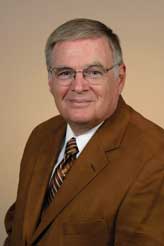
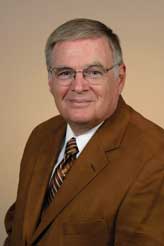
J. Denny Weaver, professor emeritus of religion at Bluffton (Ohio) University, is a member of Madison (Wis.) Mennonite Church. The first version of this meditation was a sermon at Madison Mennonite Church and is offered as a tribute to Gene Stoltzfus, who died on March 10, 2010. Stoltzfus was leader of the CPT delegation to Haiti in this story, and CPT director at that time.


Have a comment on this story? Write to the editors. Include your full name, city and state. Selected comments will be edited for publication in print or online.