


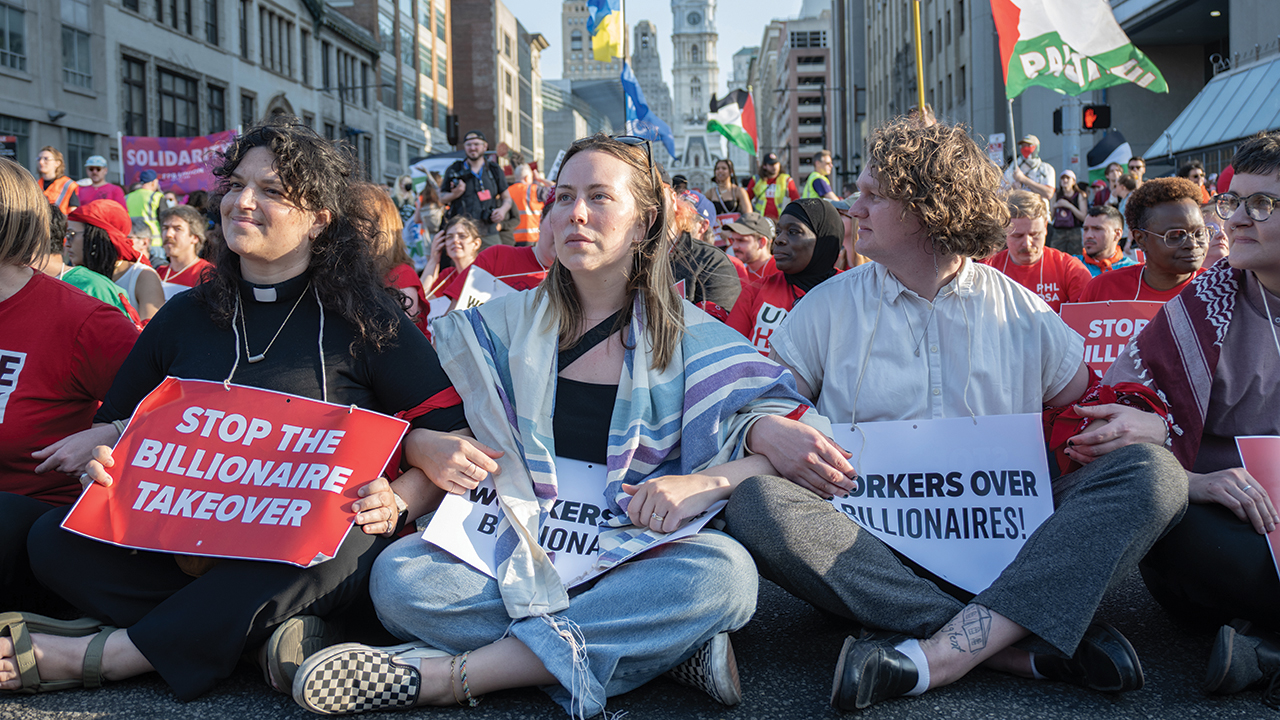
The text thread started buzzing around 8 a.m.: “ICE agents are inside the courthouse.” The group chat, several hundred people strong, rippled with concern.
After confirming that the anonymous person reporting this was at the courthouse, I messaged the leaders of the New Sanctuary Movement so they could pass on the warning to their immigrant members. I had a couple of hours before my first meeting, so I drove over to the courthouse.
A volunteer member of ICE Watch was standing in the lobby. She nodded her head at a guy in a T-shirt, jeans and combat boots. After conferring with her, anxiety rising in my chest, I went over and asked him: “Are you an ICE agent?”
“Does it matter?”
“Yes, I’m concerned for people’s safety. Are you an ICE agent?”
“Does it matter?”
We repeated this game a few more times before he told me to back off (well, not quite those words). The other volunteer and I decided to hang out near him, loudly talking about how we didn’t want Immigration and Customs Enforcement kidnapping our neighbors.
After a while, he sighed, stood up and walked quickly out of the lobby. We trailed him to a nearby 7/11. With adrenaline pumping through our bodies, we had no problem keeping up, until we decided he wasn’t returning to the courthouse.
Over the past six months, as ICE agents have stepped up their efforts to intimidate and deport people across the country, efforts like Philadelphia’s ICE Watch have sprung up everywhere.
ICE Watch relies on the power of community: Community members report possible ICE presence, and volunteers go out to confirm ICE presence and engage ICE agents, seeking to delay them, annoy them or otherwise make it harder for them to kidnap people.
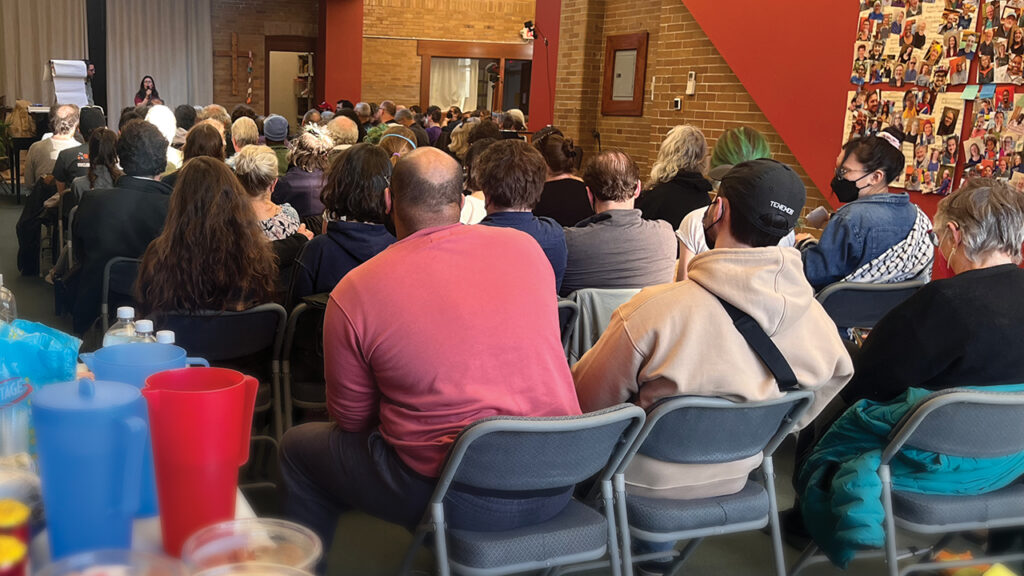
In March, I helped design and lead a training for people of faith across Philadelphia to respond to reports of ICE agents. In our trainings, we practice identifying and engaging federal agents. In role-plays sometimes called “hassle lines,” one of us takes on the role of the ICE Watch volunteer, the other the ICE agent.
The first person, the one playing the volunteer, tries out strategies for deescalating, delaying or distracting the agent. They practice using prayer to stay grounded and bold. They notice what gets them mad or makes them afraid, what knocks them off balance spiritually. We recognize that this stuff makes us scared. It pushes against the ways we are taught to obey (even unjust) authority.
We remind them before and after: This is just practice. You won’t “get it right.” This isn’t about getting it right. It is about using the spiritual gifts we have to find the most peaceful and just action to take. The more we practice, the better peacemakers we become.
When I work with predominantly White progressive groups, people struggle with playing the role of ICE agent. They protest: “I am nothing like an ICE agent!” I remind them that we all have a “cop in our heads,” as Theater of the Oppressed practitioners put it. We do, in fact, know how to act like a federal agent (in part because they are also “acting”). To be fully rooted in our nonviolent witness is to recognize that what separates us from agents of state violence is merely training.
I’m a pacifist, but I do not live a nonviolent life. I live on stolen land. I type this on a laptop that relies on systems of exploitation and extraction. I judge and condemn and dehumanize others all the time. Violence is our context and our training. But it is not our destiny.
To be a pacifist is to be engaged in training. Jesus spends most of the Gospels teaching his disciples before he turns his face to lead the march on Jerusalem. And even there, the training is ongoing. Imagine how much more damage Peter would have caused with his knife if he hadn’t spent the year steeped in the teachings of the Prince of Peace. I imagine that Simon the Zealot, once he stopped running away, began posturing that he was going to break Jesus out of detention by force.
James Lawson, arguably the most influential nonviolence trainer in U.S. history, made students from Vanderbilt and Fisk scream racial slurs at each other in preparation for their lunch-counter sit-ins for racial justice. It wasn’t for shock value. They already knew what angry White people are capable of. But he wanted them to experience the power of nonviolent resistance to undermine the fear that makes supremacy possible. ‘
In a church basement, they tried on the spiritual practices that set them free from internalized racism — practices that would build the most transformative social movement in U.S. history. His students would go on to organize alongside armed farmers across the South, rooted in the belief that nonviolence is not a project of purity but the practice of choosing the least violent and most just option.
Here in Philadelphia, trainers from the civil rights movement adapted Lawson’s lessons. Guided by their Quaker faith, they created and expanded many popular training practices. Those hassle lines have roots in the Quaker belief that everyone has an inner light that can be accessed in times of conflict and confrontation.
It takes bravery to confront armed state actors, even more so to do it with a commitment to nonviolence. As Quaker facilitator George Lakey once said to a crowd of coal miners and military veterans, trainings are our “war games” for the spiritual warfare that is nonviolent direct action.
It is through practice that we become creative and effective peacemakers, able to access our God-given courage to engage, distract and block agents of state violence. Through training, we disciple ourselves to the Prince of Peace.
Jay Bergen (they/them), pastor of Germantown Mennonite Church in Philadelphia, has organized for 15 years in movements for climate justice, immigration justice and prison abolition.


Have a comment on this story? Write to the editors. Include your full name, city and state. Selected comments will be edited for publication in print or online.