


Ten years ago, delegates to General Conference Mennonite Church (GC), Mennonite Church (MC) and Conference of Mennonites in Canada (CMC) gatherings voted to create Mennonite Church USA and Mennonite Church Canada.
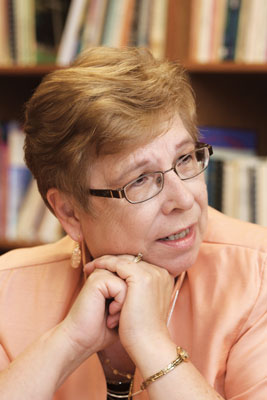
The process leading up to this vote—first called “merger,” then “integration” and finally “transformation”—was coordinated by the Integration Committee. Pastors Dorothy Nickel Friesen and John C. Murray co-chaired the committee, which did its work from 1995 to 1999. A decade later, we asked these leaders about that process and where Mennonite Church USA, in particular, finds itself now. Read a Q&A with Nickel Friesen and Murray below.
1. What was it like to facilitate the merger/integration process from 1995-1999?
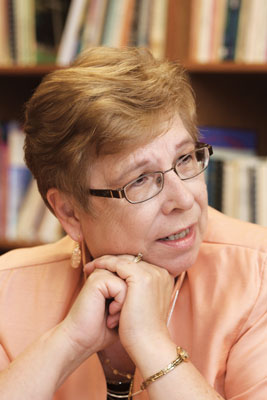 Dorothy: It was enormously complex and complicated. The Integration Committee (IC) was to “guide and monitor” the process, which meant immense data collection, endless conversations that both respected the past but prodded toward a new future. The expectations were high; the learning curve equally high; the opportunity to interact with people across the denomination—priceless.
John: I am grateful for the experiences and relationships that were forged on the journey of leadership of the IC. Staff changes in executive leadership of both the Mennonite Church and General Conference Mennonite Church in the midst of our work shifted our focus and way of working in the middle of the process. A further challenge was operating without a clear budget for the process.
2. An oft-stated goal during the late 1990s was for us to move to a Mennonite Church USA identity from identities as members of General Conference Mennonite Church (GC) and Mennonite Church (MC). Has that happened?
 John: While a new identity has not fully developed, the former GC and MC identities are fading due to the passage of time, the presence of new leaders and new shared experiences. Giving more attention to a healthy grieving process may have been helpful in letting go of the former identities. The former identities remain stronger in conferences that did not integrate.
Organizational structure is important, but it cannot create a compelling identity. The Confession of Faith in a Mennonite Perspective, applied as an identity, becomes a creed rather than a confession. Vision: Healing and Hope, applied as an identity rather than a calling, sounds like an untrue statement rather than an invitation to growth.
I advocate an identity of grace-filled communities of love as outlined in Agreeing and Disagreeing in Love. Vision: Healing and Hope is our purpose. The Confession of Faith in a Mennonite Perspective is a guide in ongoing discernment. Organizational structures facilitate our relationships in order to fulfill our purpose.

Dorothy: For those areas of Mennonite Church USA where “both” identities are present, there are continuing historical realities and memories that shape the present understanding of being part of the new denomination. “New” Mennonites are attracted to Mennonite Church USA because of its Anabaptist core beliefs—not because of former structures. Unfortunately, stereotypes instead of values of “GC” and “MC” still inform our conversations and deter us from proclaiming our Christian identities in an increasingly post-Christendom environment.
3. There was an assumption before 2001 that area conferences would merge or be transformed in some way. That has not happened for area conferences east of the Rocky Mountains. What were your responsibilities as facilitators to work with area conferences?
Dorothy: Actually, it was the impulse of congregations “merging” since the late 1960s that spurred area conferences to begin intentional conversations about integration. Meanwhile, both MC and GC program agencies had multiple programmatic integrated efforts. However, the mandate to the IC was to deal with denominational agenda (name, publication, General Board integration); we were not to deal with area conferences at all—and we didn’t. (A note: Central Plains Mennonite Conference is east of the Rockies and is an integrated area conference.)
John: The IC was charged with the task of bringing together the MC and GC general boards and agencies. It was never its mandate to reshape the structures of conferences with new geographic boundaries. Conferences were expected to engage in their own journeys of discernment regarding integration. Prior to integration, the Mennonite Church included conferences with overlapping geography.
4. Before merger/integration, the assumption was that Mennonite Church Canada and Mennonite Church USA would remain one denomination in North America. There now is little connection between the two other than by national staffs. Was this separation inevitable?
John: The Mennonite Church and General Conference Mennonite Church were binational organizations with a dominant U.S. agenda. The establishment of two national structures was intended to create equitable national structures in order to facilitate the unique agenda of the church in each national context and create equal conversation partners for a binational agenda.
The degree of separation that has developed between Mennonite Church USA and Mennonite Church Canada is one of my greatest laments of the integration process. At the time of the formation of Mennonite Church USA and Mennonite Church Canada there was a commitment that the 2007 Convention would be a joint convention of the United States and Canada and be held in Canada. This is one of the practical commitments to ongoing meaningful relationship that was abandoned.
Dorothy: No. We simply failed miserably in this area. The IC discussed and seriously considered a “regional paradigm” with four regions—one being Canada. That got no traction. Finally, the 100-year history of the Conference of Mennonites in Canada gave it a head start for missional agenda, whereas the U.S. country agenda is still struggling for comprehensive unity (not uniformity). If we do not have joint delegate assemblies, there will be little connection with, appreciation for or learning from each other. This is one of my deepest regrets about IC work—and subsequent lack of Mennonite Church USA’s commitment for binational linkages.
5. What are the current weaknesses of Mennonite Church USA?
Dorothy: Failure to articulate Anabaptist core beliefs, legalism and the practicing of punitive discipline (even excommunication), few gifted women in major leadership positions, consumerism, lack of nonviolent pacifism, general lack of inertia concerning peace and justice, loss of population in the Midwest, lack of stewardship of finances and the environment.
John: I lament the focus on organizational structure, as if restructuring will transform hearts and minds. I lament that “missional” is often a buzz word rather than a passionate commitment. I lament that the document Agreeing and Disagreeing in Love is largely unknown and too often not practiced in our relationships. I lament the ongoing tendency to be a closed, ethnically defined community rather than an open community defined by shared spiritual values of love, joy, peace and patience.
6. —the strengths?
John: I celebrate our commitment to and efforts regarding antiracism. I celebrate our historic and ongoing commitment to a lived faith in humility and service. And I celebrate our willingness to wrestle with the difficult and complex issues of our day without needing to formulate resolutions of agreement. (This is an affirmation of “The Pittsburgh Experiment.”)
Dorothy: The growth of urban congregations both in progressive theology and new ethnicities; the plethora of Anabaptist resources, including outstanding Mennonite colleges and seminaries; “new” Mennonites; increased numbers of women pastors; excellent spiritual foundational commitments expressed in such documents as The Confession of Faith in a Mennonite Perspective (not doctrinal), Vision statement, Agreeing and Disagreeing in Love; Anabaptist history of speaking truth to power; ecumenical linkages; creative and diverse worship and music; pastoral salary guidelines.
7. —the opportunities?
Dorothy: Endless. Cooperating with each other and other faith communities in matters of peace, justice, mental health, human rights, globalization, economic resourcing; establishing teaching centers in congregations with our colleges and seminaries to educate new leaders and pastors, resource lay leaders, encourage youth and inspire artists; sharing scholarship concerning Anabaptism and biblical literacy in local, regional, national and global arenas; creating funding sources for new ventures in land stewardship, church planting and congregational visioning.
John: I hope we will discover the places where the Anabaptist vision is alive and well beyond our denominational boundaries and offer our support. I hope we can embrace conversations that make us uncomfortable, allowing questions and doubts within the context of loving communities. I hope we will engage the missional calling, seeking to discover and reveal the image of God within everyone around us.
8. —the threats?
John: The greatest threats come from within, when we equate institutional preservation with the advancement of the reign of God, when we confuse unity with uniformity, when the word “Mennonite” describes an exclusive ethnicity rather than a living faith, when we engage in missional encounters without being open to being changed by those encounters.
Dorothy: Seduction by consumerism, violence and prejudice in our culture; societal fear; forgetting our Anabaptist history; lack of energy or inertia for involvement with congregational discernment and the inadequate spiritual practices of church members; post-Christendom realities; growth of poverty in our communities.


Have a comment on this story? Write to the editors. Include your full name, city and state. Selected comments will be edited for publication in print or online.