


For the next 12 months, The Mennonite will honor a variety of women leaders in Mennonite Church USA. This month we feature Joyce Bontrager Lehman, development worker, on our cover. Olivette McGhee, president of Native Mennonite
Ministries, and Snyder, president emeritus of Bluffton (Ohio) University, kick off the series of Q&As. We hope you enjoy reading about these women’s experiences.—Anna Groff
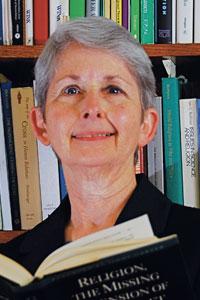
Do or did you have a woman leader as a mentor?
Most of my mentors have been men who encouraged me to pursue new responsibilities as opportunities became available. Often I was the only woman in these leadership groups, but that has changed greatly. Now I have a number of women mentors and leadership partners.
Are you mentoring young women who may be potential church leaders?
Yes, but not in any formal role. Young women have expressed appreciation in retrospect for ways I affirmed their gifts, encouraged them to pursue leadership opportunities or to continue their education—a key I believe to preparing for church leadership.
If so, how is her (their) experience the same or different from yours?
Women are now actively recruited for leadership roles; no longer is it particularly unusual for women to be selected as a pastor or CEO. The aspect that remains the same, I suspect, is that leaders develop through affirmation and a sense of call—both critical in my own journey.
What impediments have you faced in becoming a leader?
The impediments I faced were more internal than external. Growing up in a congregation that prescribed limited roles for women, I had to face my fears about becoming a public figure. Mentors in the faith community were significant in the process of discerning a call and instrumental in helping me consider new possibilities.
When you face challenges as a leader, what encourages you?
“Be properly scared and do what you have to do,” Flannery O’Connor said once. A Scripture version of that is Deuteronomy 30:11: “Now what I am commanding you today is not too difficult for you or beyond your reach. (NIV)” Balancing a sense of inadequacy with the mystery of God’s call to be a part of some larger work is something I am still learning.
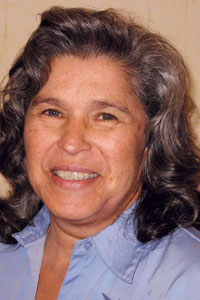
Do or did you have a woman leader as a mentor?
I had women I looked up to and modeled my life after. The main individuals were my mother and our pastor’s wife, Ida Weaver, at Poarch Community Church. She encouraged me and supported me when I was at meetings and had to be away from my family. I miss her. She now lives in Kansas and has Alzheimer’s.

Are you mentoring young women who may be potential church leaders?
I am not officially mentoring a young woman at this time.
What impediments have you faced in becoming a leader?
Fortunately, I never felt unaccepted as a women leader. I may have been inexperienced or lacked knowledge, but no one made me feel like I wasn’t accepted. It is not uncommon for a woman to be a pastor in the South, and the larger Mennonite church also now accepts women leaders.
My small church offers an advantage in this sense. With about 70 members, I know everyone and get to interact with everyone. Everyone seems to want to help me and encourage me. When I have taken positions in the church like teaching Sunday school, leading music, leading the women’s group and more, I have had everyone’s support. I’ve been blessed.
When you face challenges as a leader, what encourages you?
Regarding my board experience, I did not know a whole lot about the larger church or the organizations I served on the board. What I knew about Mennonites was what I learned at my small church. I educated myself through a lot of reading and asking questions of other board members when I didn’t understand something. They were very helpful. After a few years, I could contribute. However, even after learning more about the church, I still faced struggles and had questions. I appreciated being able to talk with the elders of my church about the issues the larger church is processing, such as divorce and homosexuality.
My main challenge at the moment is my health, as I have trouble walking. At the Native Mennonite Assembly this summer, someone had to push me around in a wheelchair, and I felt like I couldn’t contribute as much. However, people offer to help with small gestures. For example, many young boys opened the door for me. It was challenging but not impossible. I have trouble asking for help, so this is humbling.


Have a comment on this story? Write to the editors. Include your full name, city and state. Selected comments will be edited for publication in print or online.