


On a chilly, grey November morning in 1978, I found myself at a low ebb in my 18-year-old life. Tired of school, unsure of my faith, weary of my Mennonite community and confused about the future, I had decamped to Europe that summer.
For five months I found temporary refuge with an exceedingly kind family in Austria, where I worked as a laborer on their small farm close to the border of Czechoslovakia. In November, the harvest completed, I was determined to take a grand tour of Europe.
Disaster struck almost immediately. While in Athens during my first days of travel I lost all my travel money in a street scam fueled by my greed and hopes of a quick profit. Penniless except for a rail pass, I fled Greece and headed north, confused, hungry, lonely and humiliated.
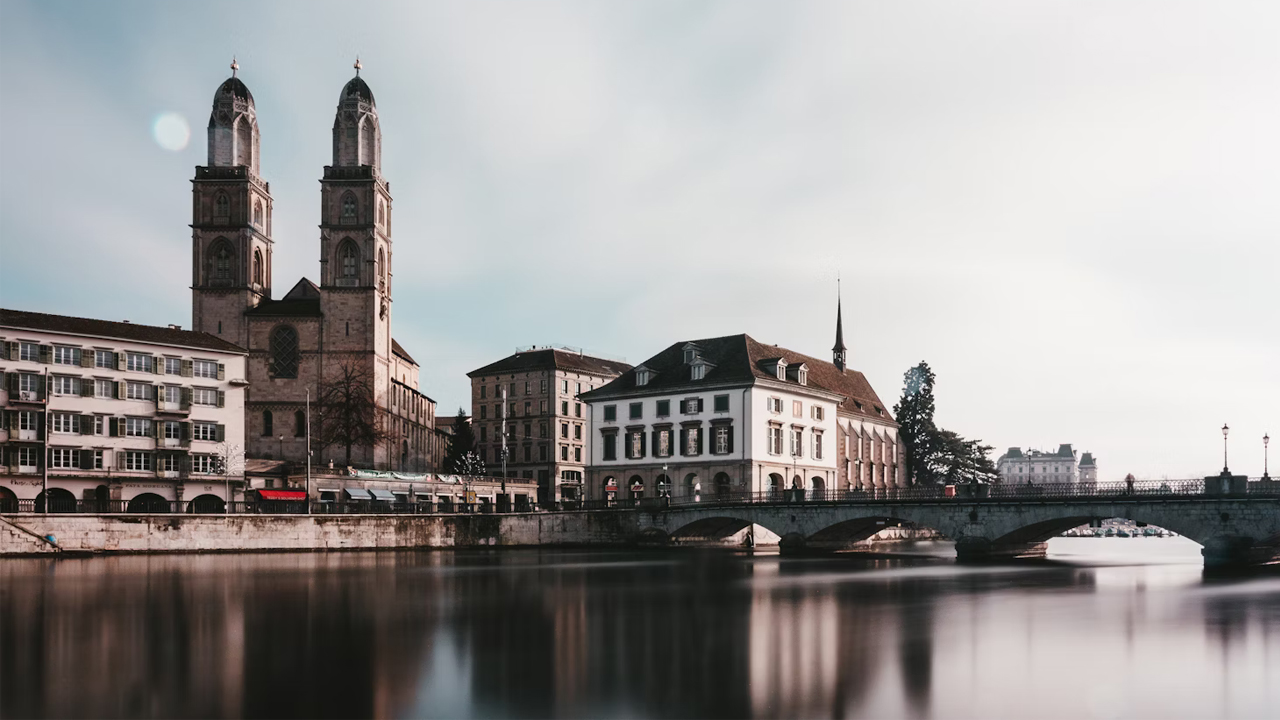
At daybreak, after nearly 36 hours of travel, I stumbled out of the train almost randomly and found myself in the Swiss city of Zurich. As I wandered along the river and then to the city center, I was drawn by the sound of an organ to enter a large cathedral. There, seated alone in the back of the church, I pondered my future.
Foremost in my mind was how to survive for the remainder of my trip. But behind those immediate worries were deeper concerns: Who was I? How did I end up here? Where was I heading?
What I didn’t know was that the church I had entered, the Grossmünster, had played a central role in the emergence of the Anabaptist-Mennonite tradition that had deeply shaped my conflicted identity.

What happened next changed my life.
Not long after I settled into a pew, I heard a booming, vaguely familiar voice of a tall man who was leading a tour group into the church. Almost immediately someone from the group noted that I was wearing a Goshen College sweatshirt, and soon the whole entourage surrounded me.
The voice I had heard belonged to none other than George R. Brunk II, the Virginia Mennonite preacher whose terrifying sermons had prompted me, then an anxious 9-year-old, to go forward numerous times during a two-week revival meeting he had organized a decade earlier in Holmes County, Ohio.
Among the other participants in the Mennonite heritage tour were my dad’s second cousins from West Liberty, Ohio, and friends of the pastor of my home congregation. When they heard my story, the group immediately took up a collection — which amounted to more than my original travel fund — and sent me on my way with a prayer and a blessing.
In that unlikely space, the community that I was desperately seeking to escape had found me and claimed me as their own.
Nearly 50 years later, in the spring of 2025, I found myself thinking again about that moment when I wandered into the Grossmünster. There have been times when it has felt like our small denomination is asking some of the same questions that were weighing me down in 1978: Who are we? How did we end up here? Where are we heading?
But on May 29, 2025, I once again witnessed the profound moving of the Spirit in the Grossmünster church. The Spirit’s stirring started already two years earlier when the Reformed Churches of the Canton and City of Zurich offered the use of the Grossmünster to Mennonite World Conference free of charge as we began planning a commemoration of the 500th anniversary of Anabaptist beginnings in Zurich.
As our worship service unfolded in that space, I suddenly felt the same sense of belonging and embrace that I remembered from 1978. But the shape and character of that community had been dramatically transformed.
A tradition once anchored in habits and assumptions of Europeans and North Americans was now buoyed by the energy and vitality — the voices, songs, stories and gifts — of brothers and sisters from Asia, Africa and Latin America. Our rituals of confession and forgiveness now included representatives from the Catholic, Lutheran and Reformed churches. A 500-year-old tradition was clearly in the midst of a joyful season of renewal and transformation.
To be sure, many unanswered questions remain for the Anabaptist churches of North America. But those who joined in the worship service at the Grossmünster on May 29 — either in person or via livestream — left with a sense that we had been given a gift, that we have a future, that we are in the process of being found and claimed by a community larger than ourselves.

Have a comment on this story? Write to the editors. Include your full name, city and state. Selected comments will be edited for publication in print or online.