


Opinion: Perspectives from readers
As we move toward a position of open (inclusive) communion that invites participation of many who may disagree on other Mennonite “teaching positions” we are challenged to consider what the basic convictions are that we want to be known by.
 Confessional statements in the Anabaptist-Mennonite tradition play a much less defining and authoritative role than in the Roman Catholic Church and in such denominations as Lutheran and Presbyterian. Most U.S. Mennonite groups have taken a less dogmatic view of their confessions of faith. The two Mennonite groups that make up Mennonite Church USA drew up several confessional statements in the 20th century. The Mennonite Church rewrote its confession about every 30 years since 1921 (1963, 1995). And the General Conference Mennonite Church drew up more general statements of beliefs that allowed for variations in local applications.
The 1995 confession was accepted as the basis for merging these two denominations. That it has come to be called a “teaching document” likely derives from its introduction, which states that it “offers an outline for instructing new church members.” That phrase suggests more a catechism than a creedal statement. The confession is also said to serve the church as “guidance for belief and practice” and to “provide guidelines for the interpretation of Scripture.” Both Scriptural interpretation and belief and practice have changed considerably over the last century, and our confessions have reflected this change.
The statement in Article 19, for example, that marriage is “to be a covenant between one man and one woman for life” restates as a dogmatic teaching (introduced with “We believe”) what the 1921 confession merely recorded in order to make the point that marriage is a “divine institution dissoluble only by death” and therefore a total rejection of divorce as human rejection of God’s intention. By 1995, divorce was no longer impermissible; the crucial issue had changed. The question now was what God’s intention is for marriage and family. What is the nature of the marriage covenant, and who can authentically be married in God’s sight? The “one man and one woman” in the 1995 confession has taken on its dogmatic gravity from the controversial circumstances that surrounded its final acceptance as a merger statement. Article 15 of the 1963 confession, “Marriage and the Home,” repeated similar words and phrases but is more catechetical, emphasizing different issues.
Whether this particular statement in Article 19 was intended to be an authoritative doctrinal statement is left indefinite. This leaves the meaning of the ambiguous phrase “teaching document” open. On the one hand, the pastoral intention is implicit in the general Mennonite understanding of the authority of confessions. On the other hand, the rarely repeated “We believe,” used mostly to introduce the articles, seems to be used intentionally to introduce the marriage section in this multisubject article.
Further, the way the confession is organized into “four sets” seems to make a subliminal distinction between dogmatic and pastoral instruction common in church tradition. The first set of eight articles deals with the basic beliefs shared by the church worldwide.
This is the kind of material generally recognized as dogma, that is, truths of unchanging character. Articles 17-23, on the other hand, have to do with “discipleship,” an area of much greater latitude, both in belief and practice. The confession itself recognizes this difference in the commentary on Article 19. The “teaching position” that marriage is “for life” recognizes that there are exceptions in applying this teaching: “Today’s church needs to uphold the permanency of marriage. … At the same time, the church, as a reconciling and forgiving community, offers healing and new beginnings.” Thus divorce, which 74 years earlier was strictly forbidden, becomes allowable.
This kind of distinction has good biblical precedent in the matter of marital and sexual regulations. In 1 Corinthians 7, Paul uses this same formulaic pattern. In verse 10, he gives the instruction that forbids divorce. This is the “instruction (“teaching position”) of the Lord.” But immediately he follows with the exceptions in which divorce may be necessary to keep the peace (vv.12-16), and adds, “It is to peace that God has called you.”
The tension is not about views of confessional authority but with the way the church operates in a violent sinful world and how it personifies the peace of Christ. Confessions of faith are merely marks along its path through history.
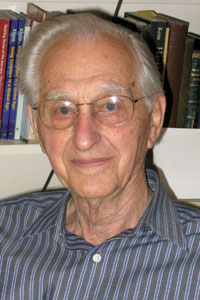
C. Norman Kraus is a member of Park View Mennonite Church in Harrisonburg, Va.


Have a comment on this story? Write to the editors. Include your full name, city and state. Selected comments will be edited for publication in print or online.