


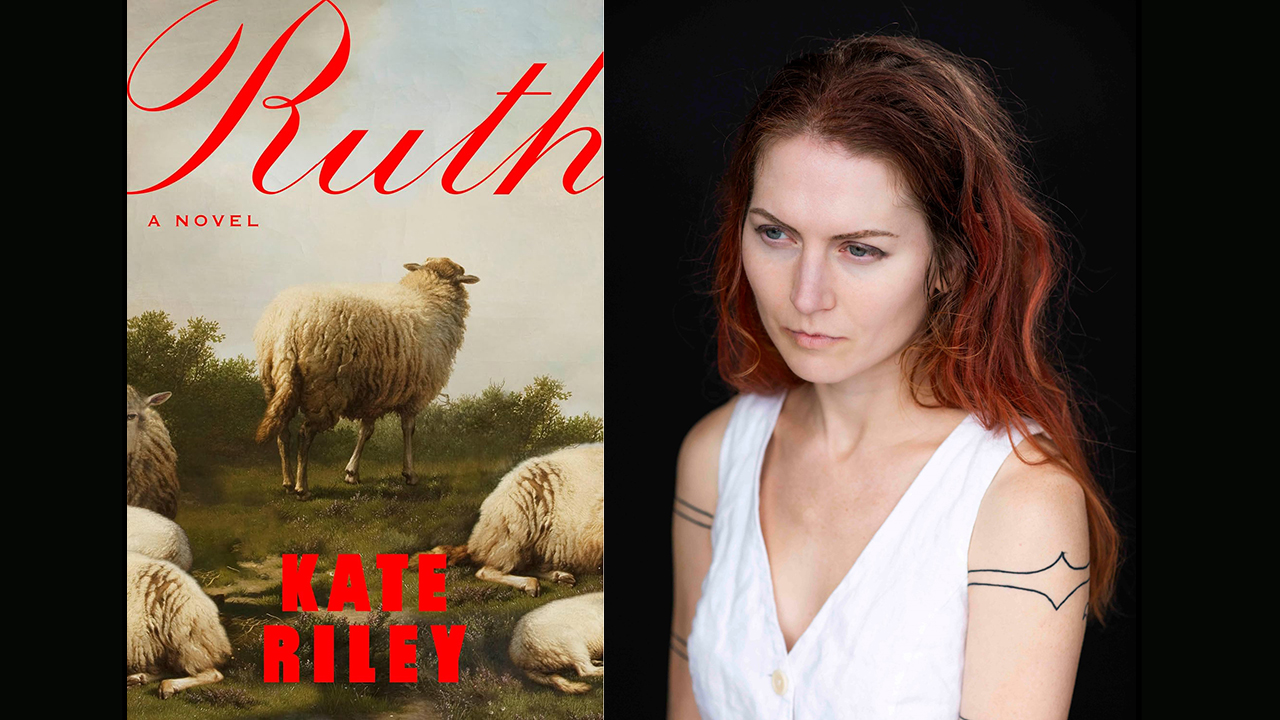
In her mid-20s, author Kate Riley left everything and joined a radical Anabaptist commune in the United Kingdom. She hoped to stay for life but left after about a year. Then she started to write.
Her debut novel, Ruth, is an odd, witty, detached drift through one woman’s life in a fictional community called the Brotherhood from 1963 to the 2010s. Curiously, several reviews in major print media outlets declare the novel to be based on Hutterite communities. But Riley has chosen not to name the community she lived with and wrote about, other than calling it an “Anabaptist commune.”
All clues in the novel actually point to a slightly fictionalized version of the Anabaptist Bruderhof communities. While the Bruderhof and Hutterites share many similarities and even were affiliated for a time, they have distinct histories and focuses.
The fictional Brotherhood members living on Dorfs and real Bruderhof members living on Hofs certainly share an ethos, rules and history. Ruth describes how the Brotherhood, originating in Germany, fled Europe at the outbreak of World War II and found refuge in the jungles of Paraguay before settling in North America and abroad. The Bruderhof shares that same history.
A stifling rule for both the Brotherhood and Bruderhof match word-for-word, except that Riley changed “The First Law of Sannerz” to “The First Law of Roßdorf”: “There must never be talk, either in open remarks or in insinuation, against a brother or a sister, against their individual characteristics — under no circumstances behind the person’s back. Talking in one’s own family is no exception.”
With such extreme dedication to community, the Brotherhood’s goal is to live in unity and purity of heart as they share all money and possessions in imitation of the early church. Ruth knows that “at baptism, she had vowed to daily forfeit all power over to others.”

Riley’s odd writing style drifts through snapshots of the profound and mundane realities of Ruth’s life and her community. It’s a scene here, a fascinating explanation of the workings of the community there. The reader and Ruth merely pass through the vignettes, unmoved.
I couldn’t put the book down, but also couldn’t quite make sense of it. I kept wondering when it would become something else. But Riley refuses to try to make sense of Ruth’s life, to add an overarching narrative.
In an interview in The Cut, Riley says folks in the community she lived with “had, to the degree that it was possible, been raised without ego.” Perhaps Ruth simply does not view her life as an unfolding story, with herself as the main character. So Riley doesn’t either.
The highest value of the Brotherhood is to live in Christian unity. But Ruth never quite fits in. She sits under the table and cracks jokes when the young women are supposed to bake bread. She voices odd philosophical questions that get little response. While others decorate Pisanki eggs with Celtic knots and crosses, Ruth etches hers with portraits of Snoopy and Santa Claus.
The Brotherhood sees spiritual danger in almost everything: intimate friendships, noticing beauty in others, desiring to do active good in the world, desiring anything at all other than Christ. As a youth, Ruth’s desire to help the suffering world outside is evidence of her dangerous ego and arrogance: “As with all worldly ambitions, the desire was the disqualification, and the only way to get what she wanted was to stop wanting it.” Eventually she accepts that “to die having buffed the Meeting Hall was to die to the self that sought any grander life.”
Obediently, Ruth continually dies to herself, but perhaps too literally. After marriage and babies, she descends into what the reader observes as a rather alarming depression. But the book is never alarmed; the narrator remains unconcerned.
Though the writing is firmly unsentimental, one scene took my breath away. Ruth births a beautiful idea. She radiates delight. And then, as usual, she never, ever gets what she wants. Someone with more authority simply takes the idea away from her, replacing it with something more uniform.
And yet, as Ruth herself knows, “the Brotherhood might be torturous, but at least it was a right and internally coherent torture.” Even Riley admits that the community she lived with seemed to have the right way of life but that she simply couldn’t handle it.
Of course, the Brotherhood and the Bruderhof do seem wonderful in many ways. What other community will provide food, healthcare and shelter for your whole life? Will feed your children and brush their hair when depression keeps you in bed? Many scenes depict an inspiring level of care for each other.
But why do so many of the women in the novel seem to live in what Julius Rubin, author of The Other Side of Joy: Religious Melancholy Among the Bruderhof, dubs “psychological captivity”? Scared of inner sin, scared of personal agency, scared of their own impossible place in the world.
Why are the high school girls on Ruth’s Dorf publicly weeping after the dangerous spiritual rebellion of sewing slight alterations into their long skirts? Why is Ruth trapped in impossible standards of sin and virtue, with no one to share her intriguing inner world?
Readers will walk away from this remarkable novel with a sense of Ruth’s bewilderment, insight into the practical workings of her radical community and questions about the roles of unity, authority and agency in a life of faith. How does Ruth walk away from her story? She doesn’t. She merely, or perhaps triumphantly, continues to exist within it.
Anne Marie Hardy Spelman works as a homeschooling mother of three children, a spiritual director and a musician. She and her family attend First Mennonite Church in Bluffton, Ohio.


Have a comment on this story? Write to the editors. Include your full name, city and state. Selected comments will be edited for publication in print or online.