


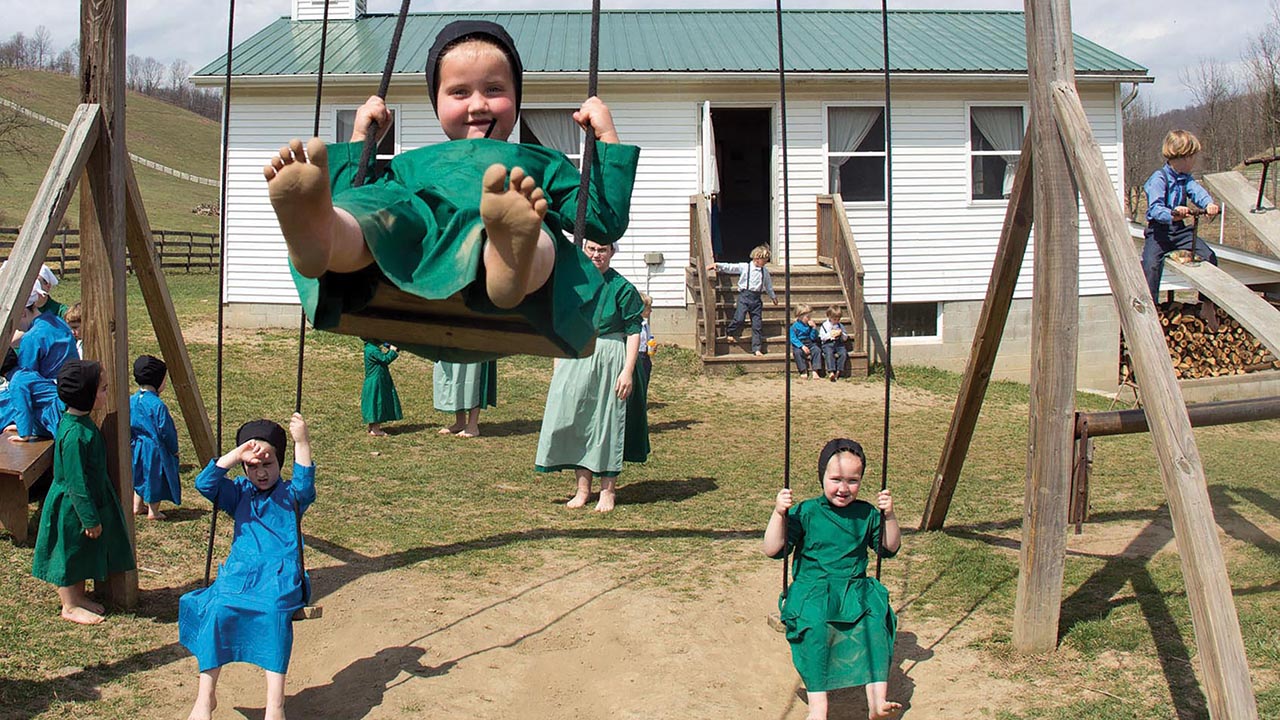
Recently at a Walmart in Lancaster County, Pa., I observed an Old Order Amish mother with several school-age children in tow. It was Halloween season, and as they walked past costumes of witches and skeletons, one of the children wandered over to get a better look. His mother, without anxiety or drama, said something to him. Without fuss, he rejoined his siblings. I suspect she said something like, “Levi, that is not our way.”
Those five words — “that is not our way” — hold a world of meaning. Old Order Anabaptist families raise their children with deep love and clear expectations. From an early age, children know their place in the family, school, church and community. There is an explicit goal: that the child will someday choose to be a Christian within the Old Order context.
This is not a casual hope. It is built into the rhythm of daily life, into the stories told, the worship practiced and the way elders model respect for the Old Order way. Uniformity of dress and behavior daily reinforce that “this is our way.”
This upbringing creates what theologian Richard Rohr calls a “container” — a structured identity, a framework of belonging and moral grounding. The Old Order child doesn’t build this container. It’s predetermined, a given. It provides stability, purpose and a formational roadmap.
But the container isn’t the goal. It’s what allows movement toward transformation and a deeper union with God and others.
This dynamic mirrors the Apostle Paul’s teaching in Galatians. Paul describes the Old Testament law as a guardian essential for spiritual childhood, providing boundaries and instruction. He emphasizes that with Christ and the Spirit, believers are called to mature beyond that container into the agency and freedom of spiritual adulthood.

The Old Order container serves this formative purpose.
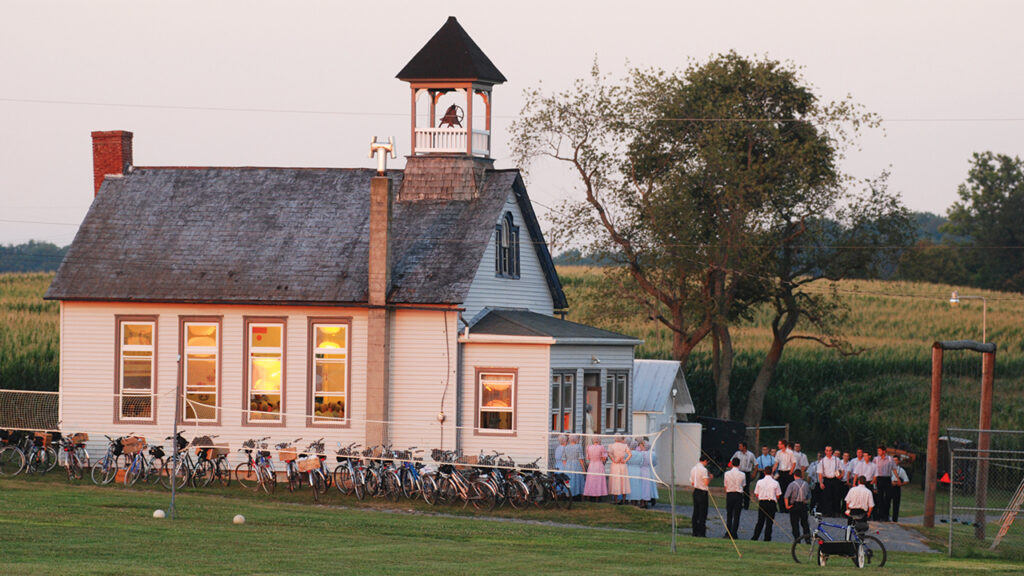
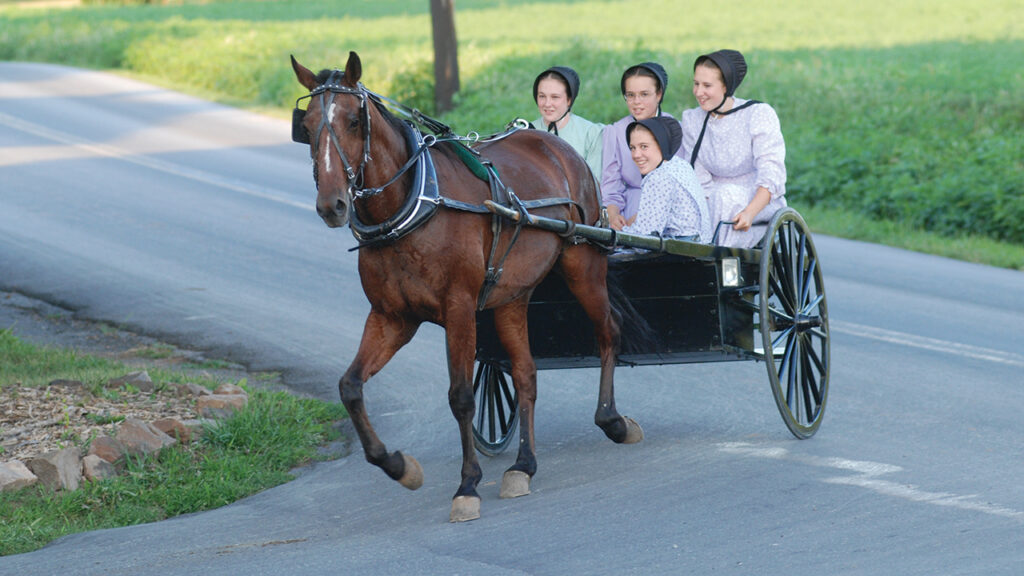
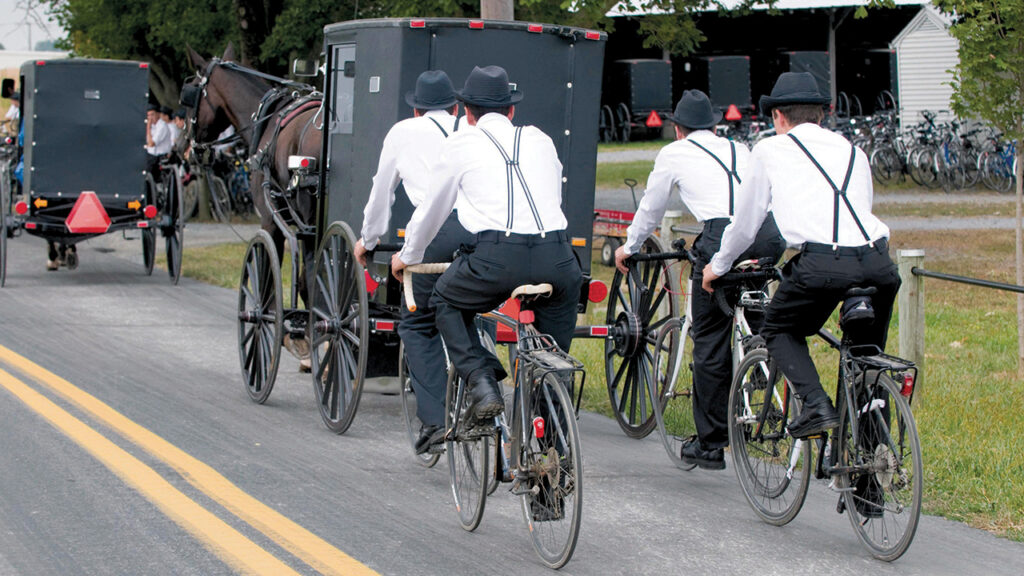
There are numerous Old Order and other Plain Anabaptist groups in North America. Their membership exceeds that of mainstream Anabaptists. Among them are Hutterites; Church of God in Christ, Mennonite (Holdeman); and Old Colony Mennonites. In this article, I discuss two of the largest groups: Old Order Amish and Old Order Mennonites. Both are horse-and-buggy churches (although some Old Order Mennonites use cars).
Old Order Anabaptists value the wisdom of past generations as the best way forward for followers of Jesus. They believe what’s stood the test of time provides the best template for today. They maintain clear boundaries between the church and the world. They are willing to change, but the new must prove itself better than the old.
Three terms that capture Old Order values are submission (Gelassenheit), humility (Demut) and discipleship (Nachfolge). For many, submitting to the wisdom of the church brings a joy that those outside the Old Order way often cannot know.
I write this as someone who hasn’t joined the Old Orders — I don’t feel called to that life — but as someone deeply formed by years among them.
Let me be clear: I’m not romanticizing Old Order people. I know families fractured by shunning. I know young people who stay more from fear than faith.
An Old Order minister from Virginia once told me, “We have enough harm and brokenness within our community that we should never feel superior.”
But I’ve also witnessed something most critics haven’t: These supposedly “oppressive” structures nurture a spiritual depth and communal commitment that our individualistic culture can barely imagine.
There’s a universal arc of spiritual formation and emotional maturity that follows stages: formation, crisis, transformation. Writers like Richard Rohr, David Brooks and Margaret Archer offer frameworks that converge with Old Order Anabaptist practice.
Archer emphasizes that maturation requires reflexivity — an internal conversation where a person critically examines the inherited way of life and chooses the path forward.
Brooks identifies the formative stage of life as the “first mountain,” when a person pursues success, belonging and stability. Old Order children grow up immersed in a coherent world of love, belonging, faith and tradition.
When I asked an Old Order friend to explain how the generational commitment to their core values happens, he was at a loss and finally said: “Well, it is just in the air of Old Order life.”
The container exists to create the conditions for a mature decision to emerge. Life presents challenges the container can’t solve. But the container serves as an anchor during the storms.
Around age 16, Old Order Amish young people enter Rumspringa — generally misunderstood by popular culture as a time of rebellion. While practices vary (I’ve visited several Amish settlements where youth behavior can indeed be quite wild), the deeper purpose is consistent: creating space for reflection and authentic choice.
Youth ask themselves: “Do I truly believe this? Is this the life I feel called to commit to?”
An Amish bishop told me he discourages baptism if a person would be joining the church primarily due to family pressure.
The Old Order Amish understand paradox. After producing a container with clear boundaries, they hold onto their young people by letting go. According to the Young Center for Anabaptist and Pietist Studies, 85% choose to stay.
If a young person decides not to join, their family and church are deeply disappointed but accept it. This fits the Anabaptist emphasis on believers baptism: Faith must be personal, voluntary, mature and reflective.
Are there lessons for mainstream Anabaptists who seek a healthy balance of competence and autonomy for young people?
Research by social psychologists Jean Twenge and Jonathan Haidt suggests North American culture gives children autonomy without competence. We grant freedom in areas where children lack readiness but withhold competence-building experiences (responsibility, meaningful work, real-world consequences) that prepare them for adult agency.
At what age can a person meaningfully step outside the formative container and critically reflect on their life?
If we truly value believers baptism, we should resist the child-evangelism impulses found in some Christian circles. We need confidence in the Holy Spirit’s work in our children’s lives and trust that our teaching and example will guide them toward mature faith.
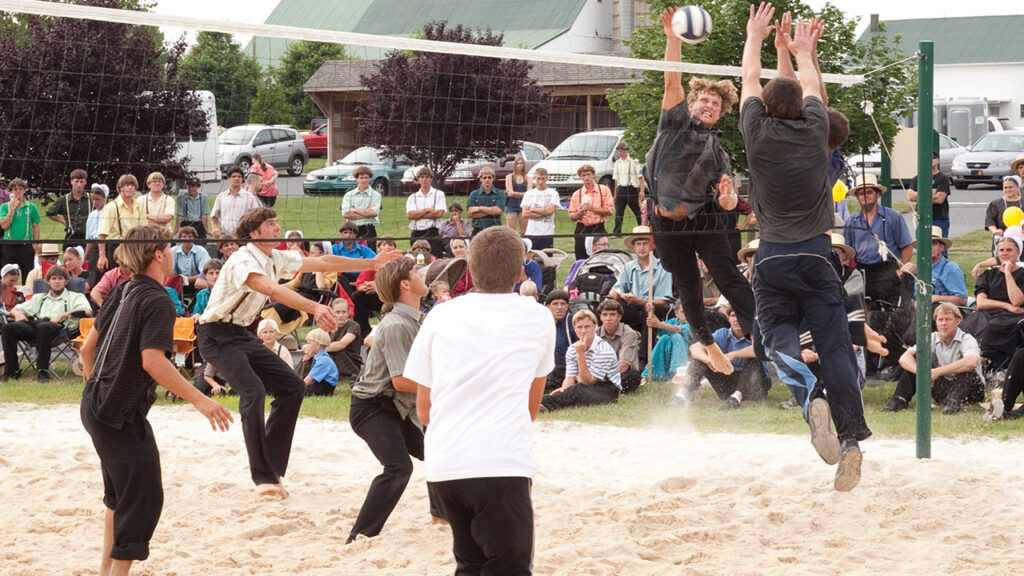
Old Order communities have institutionalized lifelong spiritual accountability. Each adult “takes counsel” twice a year before communion. They are asked: “Are you still in agreement with the Ordnung (shared expectations)? Are you at peace with God and your neighbor?”
Every six months, each member must choose to die to individual preference and surrender to God and communal discernment. At its best, this is a recurring moment of deep reflection, a rhythm of surrender woven into the fabric of spiritual life.
Young men at baptism are asked: “If selected as a potential minister, will you say yes to the discernment process?” They agree to accept a ministry burden most hope to avoid. By saying yes, a young man agrees to potential ego-death for the community’s sake.
Outsiders often assume Old Order members are captive to legalism — that they conform to the rules but lack real faith. For some this is true, but, in my experience, most Old Order people value living within a community that supports them and holds them accountable.
The Old Order way is not a life of mindless conformity but deliberate choice. It requires deeper commitment than a single baptismal decision. It offers enough structure to enable meaningful choice while preventing paralysis from unlimited and premature options.
It’s a path of letting go and holding on — dying to self and rising to life within the fabric of a community where people don’t simply adopt faith once but choose it again and again.
As that Old Order mother gently guided her child past the Halloween costumes, she embodied centuries of wisdom about spiritual formation — building strong foundations that enable authentic choice, creating space for genuine agency while maintaining clear boundaries about “our way.”
Joseph S. Miller is a researcher and writer from Lancaster, Pa. His current project is writing about how Old Order Anabaptists pass a commitment to nonresistance from generation to generation.


Have a comment on this story? Write to the editors. Include your full name, city and state. Selected comments will be edited for publication in print or online.