


Web exclusive opinion piece
In light of the current discussions around “variance” within Mennonite Church USA, it is an important time to consider how we understand variance from established denominational doctrine, standards and commitments.
 In answer to the question “How do Mennonite confessions of faith serve the church?” the introduction to the 1995 Confession of Faith in a Mennonite Perspective identifies six purposes that Mennonite confessions of faith can serve.
These include to “provide guidance” for interpretation of Scripture and for belief and practice, to build a foundation for unity within and among churches and to “give an updated interpretation of belief and practice in the midst of changing times.”
Recognizing that a Confession is prepared in a context that changes over time, the introduction acknowledges that “the confession itself is subject to the authority of the Bible.” Article 4 on Scripture further affirms that “insights and understanding which we bring to the interpretation of the Scripture are to be tested in the faith community.”
Commentary note 4 places such interpretation of Scripture in an historical Anabaptist context. Because a confession is always subject to the authority of Scripture, those with views at variance with a current confession may nevertheless believe strongly that their views are consistent with, or even mandated by, Scripture.
The 1995 Confession acknowledges that it is not the final, authoritative source and that our understandings as a church may shift. That shift will not happen instantaneously, each time a new committee is convened to prepare an updated confession of faith.
Rather, between confessions and over time, there have been and will be those in the church with evolving understandings that are at variance with established doctrine.
Are there many among us who hold fast to every aspect of the 1995 confession and to the 2001 Membership Guidelines—each a carefully negotiated document for its time—without a scintilla of variance? What does this mean as we discuss variance?
In their process of licensing Theda Good for ministry, Mountain States Mennonite Conference (MSMC) leaders knew and publicly acknowledged that their decision “varied” from parts of some denominational statements. They also felt it was consistent with others and with their understandings of Scripture.
As I reflect on the reaction to their decision, the heightened scrutiny it has received is notable.
The Mennonite Church USA Executive Board appointed a task force “to review the actions of Mountain States Mennonite Conference as they bear on our life together … in keeping with the bylaws of Mennonite Church USA and the area conference’s stated commitments when it joined Mennonite Church USA in 2005.”
It is not surprising that licensing a person in a committed same-sex relationship is controversial. What is surprising is how this decision is being singled out and considered in isolation, as though it is the only “variance” or shift evident within the broader church.
While I have not heard MSMC leaders justify their actions by pointing at other variances or shifts, it seems appropriate to acknowledge some of these:
- Article 19 of the Confession of Faith states that “God intends marriage to be a covenant between one man and one woman for life.” Congregations and conferences that have called or credentialed pastors who have been divorced (or divorced and remarried) are at variance.
- Article 15 states that “the church calls, trains and appoints gifted men and women to a variety of leadership ministries on its behalf.” Congregations and conferences that refuse to consider women for positions such as pastoral leadership are at variance.
- The Bethel College, North Newton, Kan., faculty and board have affirmed a hiring policy that is at variance with Article 19. Patty Shelly, Mennonite Church USA moderator-elect and chair of the task force to address the MSMC variance, is a senior member of the faculty.
- The 2001 Membership Guidelines for the formation of Mennonite Church USA state that the commitments about sexuality will be “reviewed with other structures in 2007.” Has there been variance from this commitment?
- The credentials of at least two pastors who performed same-sex marriages were reviewed and not revoked by area conferences. In a June 13, 2012, letter to area conferences, the executive committee of Mennonite Church USA acknowledged this and affirmed that “ministerial credentials are held at the conference level and thus ministers’ accountability is to the area conference rather than the national conference.” Is the formation of the Executive Board’s task force at variance with this earlier directive?
- In this 2012 letter, the executive committee also said that, with the Constituency Leaders Council (CLC), it would take time to consider how best to support area conferences in such discernment. How was that done, or has there been variance from this commitment as well?
MSMC leaders at the congregational and conference level, understanding Jesus’ ministry (Article 2), taking seriously the leading of the Holy Spirit (Article 3), taking seriously the authority of Scripture (Article 4), taking seriously Theda Good’s gifts and call to ministry (Article 15) and taking seriously the commitment to justice (Article 22), reached a different conclusion from that of leaders in some other conferences. For them, using Article 19 to disallow Good’s call from God would itself have been at variance with the guidance of other key articles.
Variance can be dealt with in various ways. Some may call for a pure approach, tolerating no variance. Some may tolerate some variance but feel anxiety that another type or level of variance will be the straw that breaks the camel’s back. Others may point to variance as the beginning of movements for justice throughout history.
Likewise, variance gives rise to the question, What is central? Perhaps the church can tolerate variance on some issues, but are there core beliefs about which variance cannot be tolerated? How should the notion of discipline (Article 14) be considered when people within the church reach different conclusions about Scripture?
Regardless of one’s perspective on this decision by MSMC or on variance in general, it seems unhelpful to address one variance in isolation from others. Perhaps this is an opportunity for the church to discuss and discern more generally what it means when people who seek to discern God’s will, take the authority of Scripture seriously and experience the leading of the Holy Spirit reach different conclusions.
This happens within congregations, within conferences and within the denomination. Might this be an opportunity for the Executive Board to model respect for different views on understandings of human sexuality about which denominational leaders have acknowledged we have experienced tension for the past generation?
People at the March CLC meetings—as well as representatives of Ohio Conference who attended a May 17 MSMC Faith and Life Forum—experienced the witness of MSMC leadership. They were able to hear firsthand how MSMC leaders took their role seriously, sought ongoing input from denominational leaders, held multiple listening sessions around the conference, looked to the authority of Scripture and sought to discern God’s will through the leading of the Holy Spirit in the midst of differing perspectives. This is different from what has been portrayed in Executive Board press reports.
The Executive Board proceeded to establish its task force without first hearing fully and directly from MSMC leadership, and some have expressed regret for this. It now plans to receive and act on the task force findings without honoring a request from MSMC leadership to meet in person with that board.
Just as our own understanding of confessions provides that they may change, cannot our denominational leaders seek ways to experience the in-person witness of conference leaders about their discernment process before passing further judgment? Is this not at the essence of a restorative process? Restorative processes involve hearing the voice of the other. What would be lost if the Executive Board heard directly from conference leadership?
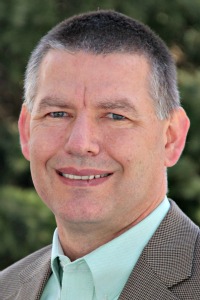
Barry Bartel is an attorney in Denver and a member of Glennon Heights Mennonite Church in Lakewood, Colo. He is a member of the Mountain States Mennonite Conference’s Dialogue Resource Team. He can be reached at [email protected].


Have a comment on this story? Write to the editors. Include your full name, city and state. Selected comments will be edited for publication in print or online.