


I grew up in the Southern Baptist church. My conversion to the Mennonite church began at Bethel College, where I was introduced to the Mennonite tradition. I grew to appreciate Mennonite theology and decided this would be the tradition for me.
This decision had two defining points. The first was relationships. I made great relationships with folks who called the Mennonite church home. This helped me realize that there was a place for me in the church.
Second was the Anabaptist peace witness. I had never thought of pacifism as a theological mandate. This was so different from anything I had been a part of.
As I continued in the Mennonite church, I realized how difficult it can be to have a theology of peace and to live it. So many leading voices advocate the use of violence. But I’ve come to believe violence is never an acceptable response. God not only calls for us to live in peace but to also be peacemakers.
And I believe our peace theology, at least the one I have come to understand, needs to be expanded.
On Sept. 10, right-wing political activist Charlie Kirk was assassinated while giving a talk at Utah Valley University. I was shocked by how many people either hailed Kirk as an innocent martyr or as someone who deserved what he had coming to him.

My mother warned me to never speak ill of the dead because that would curse the living. I have always heeded this warning. She also told me to tell the truth. Charlie Kirk did not deserve to be killed. No one does. No matter how much we dislike them. My prayer is that God softens my heart to see all of creation as beloved. What happened to Kirk is absolutely horrible and should be condemned. And we cannot ignore the harm that Kirk caused.
We need to expand our understanding of violence. Often we limit our theology of peace to avoiding physical violence. We say war and killing are wrong but remain quiet about violent rhetoric. We turn a blind eye to emotional, psychological and political violence because they do not seem as bad as physical violence.
Kirk said things that incited violence against marginalized communities. He rejected gun control and spouted racist, homophobic, Christian nationalist ideology.
While many will say these were just words, not violence, I invite us to think about marginalized people. For anyone who does not think these words were violent: Tell that to the families and friends of LGBTQ+ youth who took their own lives because of the harassment and rejection they have faced. Tell that to the women who have been oppressed, disrespected and abused. Tell that to Black folks still facing the effects of racist policies going back to the nation’s founding. Our peace theology must expand to oppose all forms of violence.
We have learned to tolerate violence. We have normalized it. We have treated violence like a water faucet. We think we can turn it on or off at will. But violence is not like water in a faucet. It is like a tsunami. Once it enters our lives, there is no stopping it. Once we let it in, we no longer can control the chaos that it creates.
In Genesis 4, Cain’s murder of Abel is the first act of physical violence recorded in the Bible. Cain allows rage and jealousy to take root, and his violent thoughts lead to a violent act.
I think Cain did not intend to kill Abel, for no one had ever died up to this point. How would Cain have known Abel would die? Cain, however, did intend to harm Abel. Cain allowed violence to enter the world, and he couldn’t control it. Violence has unintended consequences.
The beauty of this passage is found in God’s response. God allows Cain to live. Not only will Cain not die by God’s hand, but God will not allow anyone to kill him. God wants the violence to end.
Jesus echoes this idea in Luke 22:47-53 when a disciple draws his sword and cuts off the ear of the slave of the high priest. The divine work of peacemaking seeks not only to restrain violence but to end its cycle.
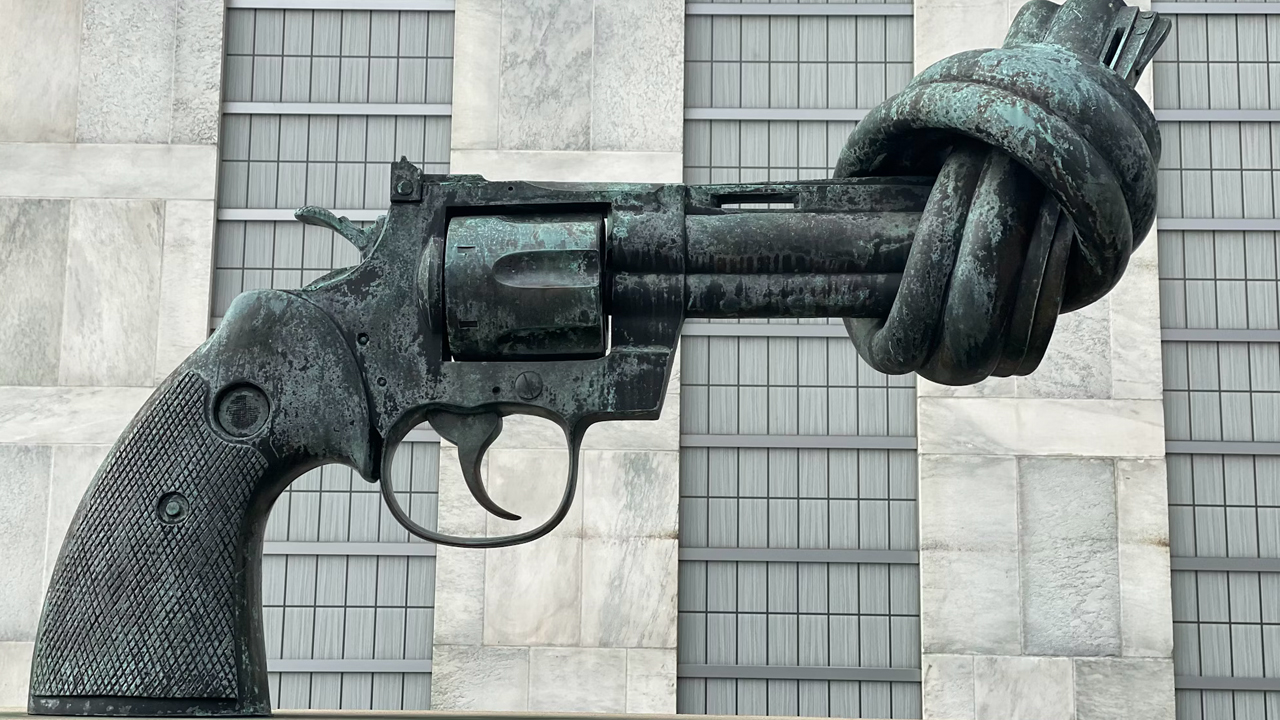
People of peace have this same mission: to seek a just peace that not only restrains from doing harm but speaks life into the world. This is the peace theology that I want us to embrace. Not just physical violence, but all forms of violence, are sinful. We cannot follow Jesus while carrying a sword, whether it be an actual sword (or gun) or the sword of our tongue. We must lay down our weapons and speak life.


Have a comment on this story? Write to the editors. Include your full name, city and state. Selected comments will be edited for publication in print or online.