



A look at the president’s executive action for immigrants
Throughout the Christmas season, we are reminded often of hospitality. We extend hospitality to friends, family and, sometimes, strangers.
In turn, we are graciously shown hospitality.
The Christmas story in Luke 2 tells of a lack of hospitality shown to Mary and Joseph, who could find no room at the inn. Less often read is the story in Matthew 2:13-15, where Mary and Joseph flee to Egypt, finding hospitality in the form of safety in a foreign land at a time when their young son’s life was threatened by King Herod.
Throughout human history, people have migrated to seek refuge from physical violence (or the threat of violence) or from political or religious persecution. Others have migrated in search of food or shelter or merely better opportunities for themselves or their children.
Today, an estimated 11 million undocumented immigrants live in the United States. Some have come simply seeking the chance for a better life. Others fled situations just as dire as that faced by Mary and Joseph.
Some of today’s Marys and Josephs have found safety in our communities and in our churches, including those in Mennonite Church USA.

An estimated 60 percent of undocumented immigrants in the United States have been here 10 years or longer.
Many never wanted to leave home but have found safety and prosperity here and have, in turn, contributed to our country’s prosperity.
Some of those families received help on Nov. 20, 2014, when President Obama announced he was taking executive action to allow some undocumented immigrants to apply to stay, temporarily, in the United States. The program could benefit up to 4.4 million people, particularly those with children who are U.S. citizens or permanent residents.
In the past five years, more than 2 million undocumented immigrants have been deported from the United States, approximately 25 percent of whom are parents of children who are U.S. citizens. An estimated 4 million children have at least one undocumented parent and live with the constant fear of family separation. Already, more than 5,000 children have been placed in foster care after their only remaining parent was deported.
The deportation of a parent is an immeasurably tragic event. Toddlers do not understand why Mommy is suddenly gone. Teenagers—barely out of childhood themselves—are left to become parents to younger children. Families are left without breadwinners. Stable homes are thrown into chaos.
The president’s action, although controversial, is a step in the right direction for treating families the way all of us would want to be treated if we were strangers in a foreign land. At the very least, the new action will keep some families together.
Analyzing and critiquing our government’s policies is a right and necessary part of a functioning democracy. But we must also be educated citizens and realize the complexity of these issues. And we must judge our nation’s laws against a higher law. Jesus was clear that we can demonstrate our love for him by showing love to the hungry, the thirsty, the naked, the sick, the prisoner and the stranger (Matthew 25:35-36). Time and again we are reminded in Scripture to love the immigrant in our midst, to show hospitality and remember that we have all been strangers.
Much has been said about the president’s action in the media, but what exactly does the action provide, why was it taken now, and how can churches respond?
1. Who will benefit?
The largest category of beneficiaries under the new action will be those who qualify for a new program called Deferred Action for Parental Accountability (DAPA). Undocumented parents of U.S. citizens or permanent residents who have been in the United States for five years or longer (and meet other requirements) can apply to stay in the United States for three years. DAPA applicants may not have been convicted of a felony or certain misdemeanors.
Recipients will be able to work and travel legally. The program is temporary, does not provide a path to citizenship and is paid for by application fees. DAPA recipients will qualify for Social Security and Medicare benefits because both are paid for through payroll deductions, but they will have no access to other social service benefits such as Medicaid or food assistance programs.
2. Who is left out?
Of the more than 6 million undocumented immigrants who will not benefit from the president’s executive action, many are parents of undocumented immigrants, people without children, those living in the United States for less than five years and those with certain criminal convictions.
Numerous heartbreaking stories tell of adults who were convicted of a minor drug possession in their youth, have since built a good life and a family but 10, 20, or even 30 years later are picked up by immigration officials and deported. These actions will likely continue.
Also missing from the president’s announcement was any departure from the administration’s recent practice of detaining thousands of women and children—primarily from Central America seeking asylum—in new family detention centers.
3. Why don’t people just come ‘legally’?
Those trying to immigrate “legally” face numerous barriers. Families endure long wait times to reunite, ranging from a few years to decades. For example, visa petitions submitted in 1994 for unmarried sons and daughters of U.S. citizens from Mexico are being processed now. For many there is no path at all. Employers complain that the process for bringing workers to the United States is cumbersome and inadequate, so many rely on undocumented workers instead.
4. Don’t we have to secure the border first?
Some politicians and pundits argue that we are in this situation because we have not enforced the law strictly enough and because we have not sufficiently militarized our borders, though we spend a staggering $18 billion per year on immigration enforcement, more than all other federal law enforcement agencies combined. Calling for more border walls makes for a good sound bite but not an effective solution. If the conditions in a migrant’s home country are such that she is willing to risk kidnapping, rape and death to travel northward, no border wall will be high enough.
Nevertheless it is much easier to call for more border security than it is to address the complex and varied causes of migration, which include U.S. trade policies, the U.S. war on drugs and our historical military involvement in Central America. It is easier to blame the undocumented immigrant and label him a lawbreaker than it is to look deeper into our own culpability. It is easier to point a finger than it is to admit that undocumented farmworkers are being exploited every day as cheap labor so that we can put inexpensive fruits and vegetables on our tables.
5. Why now?
Some have argued that the president should have waited to take this action, to give immigration reform legislation another chance. Unfortunately, it is extremely unlikely Congress will pass an immigration reform bill any time soon. The bipartisan immigration reform bill that passed the Senate in 2013 would have passed in the House as well, but House leaders refused to bring it up for a vote. The current House leadership and the incoming Senate leadership have shown little interest in working on immigration reform. It could be several years until we see a political environment favorable to immigration reform again.
6. Is the president’s action legal?
Some have raised questions about whether President Obama has the authority, under the Constitution, to take this action. That question may ultimately be decided in a federal court. Several past presidents have taken similar executive action regarding immigrants, but none as broad or affecting as many people as the current action. However, as detailed in a 2013 Congressional Research Service report, courts have generally given presidents “wide latitude” in how they enforce immigration laws.
7. How can the church be supportive of immigrants during this time?
The DAPA program will not begin receiving applications until at least May. In the meantime, one way churches and individuals can live out Matthew 25 is by volunteering to help immigrants with their documentation paperwork. There are not enough documentation providers at present. With another potential 4.4 million clients, current providers will be completely overwhelmed. Mennonite Central Committee U.S. offers an excellent training program (see box) and is looking to expand these trainings to other parts of the country.
Individuals need to continue to press their members of Congress to work toward long-term solutions to these complex problems.
Many of us avoided difficult subjects like immigration and politics.
However, because they challenge us and because the unity of families and the safety of children depend on our finding workable solutions to these challenges, we must talk with one another. Encourage your church to use the Mennonite Church USA Radical Hospitality Bible study, a six-week program, to study and discuss these issues. Educate yourself and others, participate in healthy debates, look for practical solutions and encourage policymakers to do the same.
What can churches do?
• Mennonite Church USA Radical Hospitality Sunday school series: mennoniteusa.org/radicalhospitality
• Information about helping to provide documentation services: mcc.org/immigration-training
• Advocate for better U.S. government policies toward immigrants: washington.mcc.org
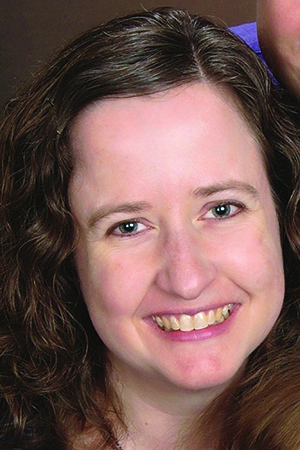
Tammy Alexander is senior legislative associate for domestic affairs, Mennonite Central Committee U.S. Washington Office. She has been advocating for immigration reform on behalf of MCC for six years.


Have a comment on this story? Write to the editors. Include your full name, city and state. Selected comments will be edited for publication in print or online.