


The historical memory of persecution sensitizes North American Anabaptists to the irony of U.S. Christian grievance. The myth of a faith under attack persists, though Christianity holds unrivaled cultural power. The idea of an embattled faith has emerged as a bedrock theme of the Trump administration.
Events in the aftermath of 31-year-old conservative icon Charlie Kirk’s assassination burnished the Republican Party’s pretense as an indispensable defender of the faith. Parts of the memorial service transmuted into a politically charged rally for a crusade against perceived enemies.
With an exception: Erika Kirk, grieving her husband’s murder, forgave the assassin in a grace-filled testimony that brought to mind the mercy that the Amish community of Nickel Mines, Pa., extended to the man who murdered six girls at a school in 2006.
Erika Kirk’s appeal to the Sermon on the Mount, and President Trump’s response — “I hate my opponent; . . . I’m sorry, Erika” — presented a defining moment for Christian nationalism. Writing for Religion News Service, John Fea, who teaches American history at Messiah College (affiliated with the Brethren in Christ), described the choice the speakers presented: “Were they asking people to embrace a God who invites men and women to become citizens in his kingdom of justice, peace, love, mercy, meekness and humility? Or . . . to embrace a MAGA movement that seems to diametrically oppose all these things with nearly every Trump policy decision?”
Erika Kirk’s call to love enemies drowned in a sea of weaponized Christianity preached by speakers like Defense Secretary Pete Hegseth, who declared: “This is not a political war. It’s not even a cultural war. It’s a spiritual war.”
Rarely at an event commanding the nation’s attention has “spiritual warfare” been defined in such partisan terms. Wall Street Journal columnist Peggy Noonan observed a “self-consciously Christian GOP” boldly claiming God’s favor.

The idea that U.S. believers suffer persecution energizes the Christian nationalist movement. To boost its reputation as Christianity’s defender, the Trump administration this year formed an “Anti-Christian Bias Task Force” to root out discrimination against the nation’s leading faith. The Interfaith Alliance, a group of Christian leaders, denounced the fabrication of a “nonexistent threat.”
“Far from Trump as a protector of Christians, the major threats to Christians in the United States are coming from Trump’s own administration,” the group wrote on May 1. “Authoritarian theocracy does not serve the interests of Christians. We have already seen that any Christian who steps out of line with this administration will be targeted, which greatly diminishes how we can follow Christ.”
Governmental pressure to silence critics of White Christian Republican orthodoxy has increased since then.
Anabaptists in the Global South know what real persecution is. We hear their voices in reports from the Mennonite World Conference Online Prayer Hour and in the prayer requests of MWC’s Deacons Commission.
In September, Donaldo Txime of Angola said: “Many churches are being closed by the state, and our freedom of worship is under threat.”
Bhavana Masih of the Bhartiya General Conference Mennonite Church reported: “In many states of India, preaching the gospel is being banned, and persecution of new brothers and sisters coming into the faith is increasing.” Especially in Chhattisgarh state, “there is regular news of physical attacks on pastors and church buildings,” MWC added.
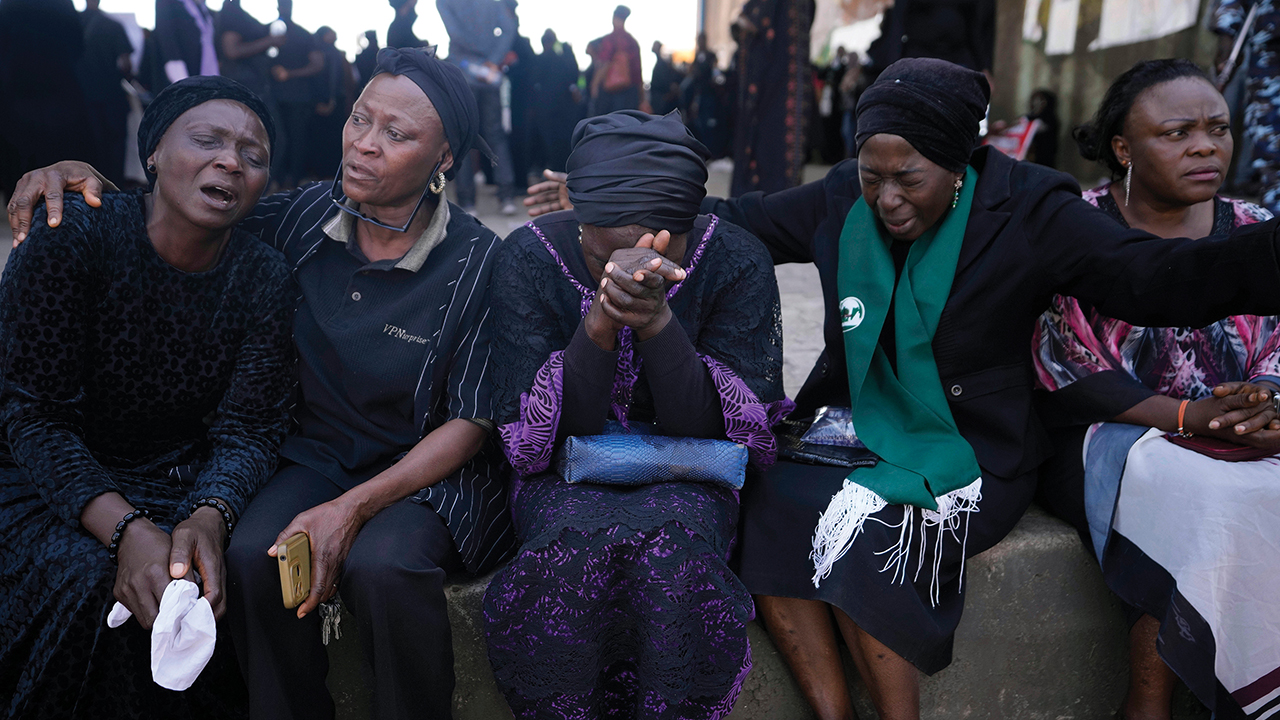
According to the International Society for Civil Liberties and Rule of Law, the most dangerous place in the world to be a Christian is Nigeria, where the Church of the Brethren has more than a million members. “In the first seven months of 2025 alone, Islamist groups killed 7,087 Christians and abducted 7,800 others because of their faith,” RNS says. “[Nigeria] now sees an average of 30 Christians killed every day.”
Persecution is a part of Anabaptism’s present as well as its past. Txime’s appeal — “We humbly ask believers from every nation to join us in intercession” — sounds urgent.



Have a comment on this story? Write to the editors. Include your full name, city and state. Selected comments will be edited for publication in print or online.