


Experiences from someone who saw a war from two ends
I teach chemistry (not everyone’s favorite subject), so I’m used to people not wanting me to give a presentation. When someone called in a bomb threat, however, after reading that I would speak at Markham (Ill.) Mennonite Church on a Sunday morning in 1988, it involved a topic more important to me than chemistry. The congregation decided to go ahead with the service, although some families kept their children home, and I spoke about my experiences in Nicaragua documenting human rights violations by the U.S.-backed Contra guerrillas.
Talking about the war in Nicaragua is like describing the culture shock students experience returning to their First World bedrooms after living with a host family in the two-thirds world in an adobe hut under a tin roof. The explanations don’t do justice to the disparity experienced.
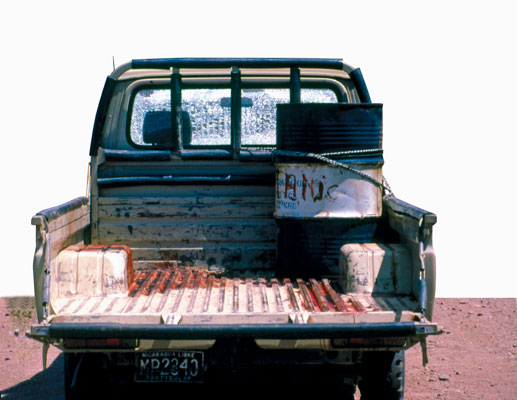
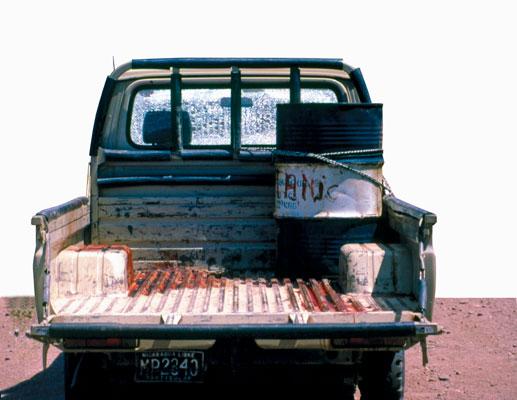
One of those experiences was coming across a tan civilian pickup truck that had been ambushed an hour earlier. We had been on this road the previous week. The intense sun on the sprawling, flat cornfields at some places had reminded me of peaceful summer days growing up in Ohio on Augsburger Road, where Doug and Jim Caskey and I often played as kids.
There sat an empty vehicle, its tires flattened, the windows shattered by bullets; blood was in the cabin and two pools in the pickup bed. The victims in the back must have bled profusely, as the blood had flowed out and onto the ground before the sun’s heat had started drying it into a sticky glue. We didn’t know if the ambulance had removed the victims alive or dead, but we knew that blood in the back came from two children.
Earlier in the day an army roadblock had prevented us from driving through here. A group of Contra guerrillas had been seen ahead, and they frequently ambushed civilian vehicles on this road. The two other Witness for Peace (WFP) co-workers and I were eager for them to lift the roadblock so we could continue searching for Richard, a coworker who had been kidnapped by the Contras the week before.
Eventually, giving up, we turned around and drove away. That’s when we saw this tan pickup, with two boys in the back, pass us going the opposite direction. They took our place at the roadblock. When it was lifted an hour later, they were the first to pass.

The next day we attended a wake for the victim in the cab, a 28-year-old man. We listened to his friends and his wife, who nursed a 6-month-old baby, grieve. “Why would anyone want to do this? How can they shoot innocent civilians and children? What do those people hope to achieve by doing these things?”
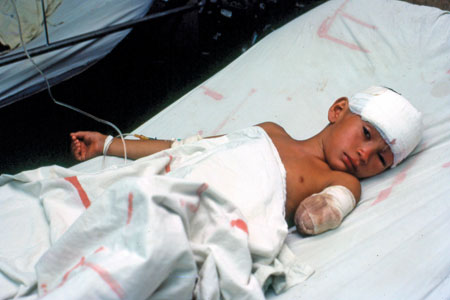
A 15-year-old boy in the back survived a bullet through the neck that nearly hit his spine. He had been travelling to a weekly Bible study with his 8-year-old brother, who lost his arm and was brain-damaged. He wouldn’t talk. The older brother didn’t know if it was because of the emotional trauma or the brain injury. Kids where I grew up on Augsburger Road don’t have to worry about the U.S. government doing this.
Would those have been our consequences had we waited with patience at the roadblock and been the first vehicle through? I’d like to think that the markings on our pickup identifying us as journalists meant we would have been spared. Nevertheless, having been spared, what responsibility did that place on me?
Certainly to tell the stories of what I had seen and heard from Contra victims: the cooperative farm burned to the ground and three fathers killed, the Chilean agronomist captured and decapitated, the 6-month-old baby we buried after the Contras attacked her house, the poor farmer kidnapped from his home in the middle of the night and found dead the next morning.
Although I came from the country that trained, bankrolled and directed the Contra guerrillas, Nicaraguan victims always made me feel loved. “We know people in the U.S. can’t control what their government does,” they often told me. As the other WFP volunteers and I knew, however, that was patently untrue. But surely, if we told people in the United States what we witnessed, wouldn’t they stop the government? After all, we don’t treat each other in the United States like this. That’s why I dedicated five years to talking and listening to those on two ends of this war—the receiving and the sending.
However, sharing what I’d witnessed did not change the minds of many Contra supporters I spoke to in the United States. Even if the conversation started in a church, the justifications ended up under the flag, based on patriotism, differentiating “us” from “them.” Stories about Contras killing children clashed with national pride; the more pride, the less they wanted to hear. Because religious ritual is used to teach patriotism, I shouldn’t have been surprised.
I also spoke to many supportive audiences who did write their congresspeople. But that’s because most audiences were Mennonite groups that invited me.
That support wasn’t the case for a WFP volunteer who returned to speak at his home Mennonite congregation. They got angry, not with their government but with their member who had gone to Nicaragua. That Mennonite church had a U.S. flag in it. When I picture the blood in the pickup, I don’t see it coming from our bullets or politics; it came from our patriotism and comfort with dual allegiances.
When ardent Contra supporters said the deaths of innocent Nicaraguans were necessary collateral to protect the United States, I considered asking if that rationale extended to the death of the person standing in front of them. I didn’t ask; I knew the answer, from the bomb threat at Markham and U.S. government warnings against working in Nicaragua. If you behave as if your country isn’t elevated above others, people see you as one of “them.”
The patriotic argument always begins with love (for country) but inevitably demands our acquiescence for doing things to outsiders that is criminal behavior in our own country. The war taught me that peace begins with the way Jesus treated Samaritans, tax collectors and soldiers. He went out of his way to teach us that no borders stood between him and them. It didn’t matter that such actions violated intense social expectations or angered some.
As a kid I often attended sporting events at a Mennonite college with the tradition of standing and singing the National Anthem. I wondered if it was inconsistent, but then why would the college do it? When I discovered as a student at Goshen (Ind.) College that it didn’t play the anthem, that practice spoke louder to me than any classroom lecture on the topic. That practice was later validated in the war by what I saw patriotism do to people on both ends, the believing and the receiving. That is why I felt terrible sadness when the college that set me on the path to Nicaragua was teaching students to stand in solemn religious obedience for a ceremony cultivating patriotic allegiances.
Doug Schirch is professor of chemistry at Goshen (Ind.) College.


Have a comment on this story? Write to the editors. Include your full name, city and state. Selected comments will be edited for publication in print or online.