


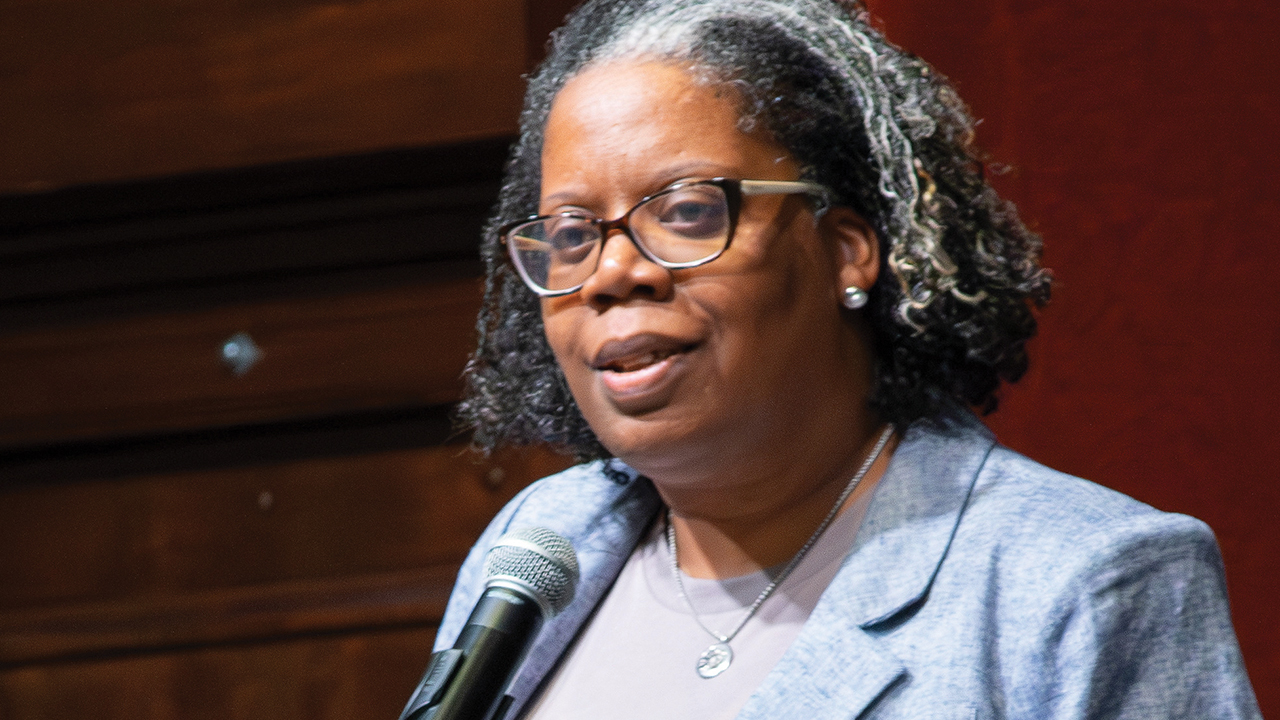
“Sisters, we’ve been brainwashed,” said Shannon Dycus, interim president of Eastern Mennonite University, in her keynote address to 185 attendees at Mennonite Church USA’s Women’s Summit on July 8 in Greensboro, N.C.
She said women carry the weight of systems of oppression that measure their worth by labor and productivity.
“There is a binary that tells us that we either need to be working like a machine, or we can rest and fear that we aren’t doing enough,” she said.
The event, hosted by MC USA’s Women in Leadership ministry, addressed this dichotomy by inviting participants to consider a radical way to think about rest — as not just a necessity but an act of defiance. This was reflected in the summit’s theme: “Beholding It Together: Rest and Resistance.”
“Rest is a portal to seeing ourselves more fully,” said Dycus, while admitting that she struggles with “the grind,” the guilt and finding rest.
Dycus explored the importance of rest by highlighting the words and experiences of three women:
— Tricia Hersey — author, theologian and activist, who coined the term “rest as resistance” — upheld the tenet that our bodies are sites of liberation, an inclusive idea that means we all have what we need to rest.
— Harriet Tubman, abolitionist and social activist, woke up from a dream in 1862 chanting the phrase, “My people are free.” Dycus asked: “If Harriet Tubman could talk about freedom in the present tense while posters were hanging around the country marking her as a fugitive slave, then why aren’t we leaning toward the possibility of our dreams to be bold, to be robust in this moment where anti-Blackness, anti-immigration and state violence reign in our streets?”
— Rosemarie Freeney Harding — organizer, teacher, social worker and co-founder of Mennonite House, an early integrated community center in Atlanta — taught that resting together nurtures community. “What if we understood rest as the basic need that it is, and committed our buildings and our resources to meet this shared need?” Dycus asked.
“There is power in our bodies, power to rest, which becomes power to resist and heal, power to imagine and hope, power to change things as they are, if we close our eyes and rest,” she said.
Dycus mused that Mennonites don’t know what to do with this teaching.
“Everything about being Mennonite means that, when there’s something wrong, we do something — we get up, we cook, we quilt, we pray and we start a committee, right?” she asked, which was acknowledged by a chorus of laughter.
Dycus then led the audience through a five-minute, meditative exercise. She exhorted them to imagine new possibilities and closed with the lyrics from a lullaby from the Nap Ministry.
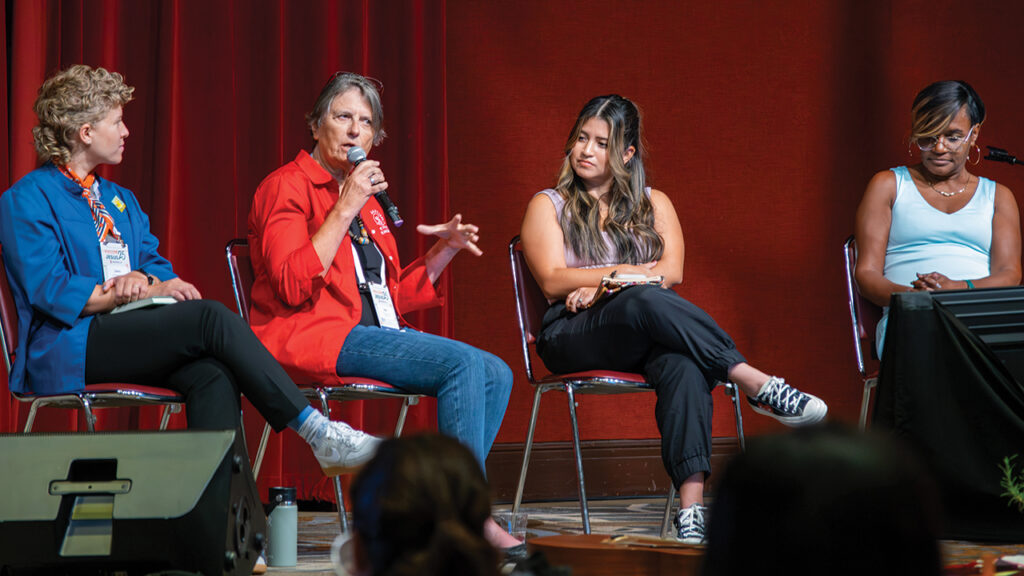
The summit included two panel discussions where eight women and gender-expansive people talked about their experiences in leadership. Moderated by Abby Endashaw, a member of the summit planning committee, the panelists discussed moments when they felt truly seen and heard, rest and resilience, building collective power, how their self- and community-care practices contribute to collective liberation, claiming power under patriarchy and lessons they’ve learned in their leadership journeys.
Mindy Nolt of Lancaster, Pa., performed an original song, “I Will Hold You Up.”
The summit closed with singing, prayer and a time of anointing, in which participants were blessed to return to their communities, renewed and empowered.



Have a comment on this story? Write to the editors. Include your full name, city and state. Selected comments will be edited for publication in print or online.