


If there’s one thing people of faith are told to do, it’s to trust and support members of their place of worship — to bear each other’s burdens, to use the language of the Bible.
That includes being always being ready and willing to assist.
And it’s what can make places of worship susceptible to affinity fraud.
Affinity fraud happens when people take advantage of a community’s trust to carry out financial scams.
In some cases, it happens when people join faith communities with the intent of committing fraud. But it can also be perpetrated by longtime members.
Affinity fraud in faith groups can be like Ponzi or pyramid schemes, where people are promised high returns for investing in a project. Or it can be asking for loans because the borrower has fallen on hard times.
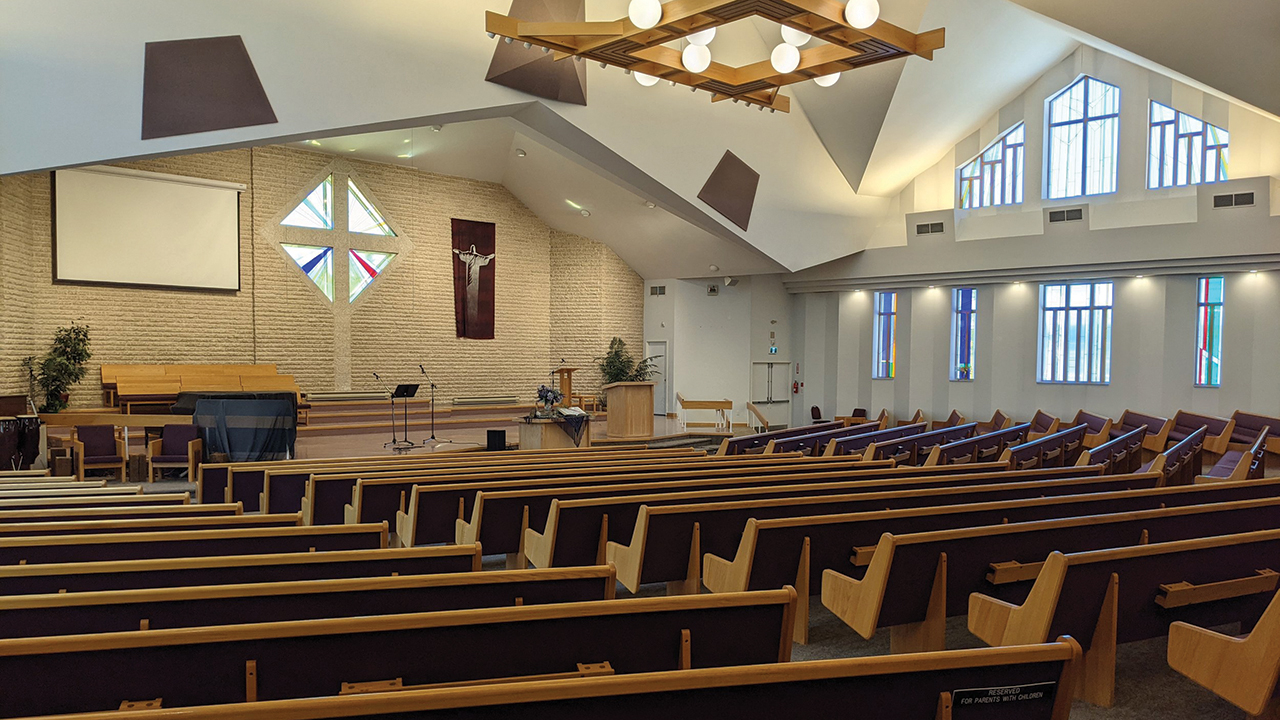
Bethel Mennonite Church in Winnipeg, Man., knows about affinity fraud all too well.
Earlier this year, the church discovered a scheme within its membership that resulted in 35 households losing about $1.1 million.
According to the church, the son of two longtime members claimed to need money to pay for child support and legal fees related to a lawsuit that was expected to result in a large settlement. The son had attended the church at one time, but no longer does.
At first, he borrowed money from his parents, receiving about $700,000 from them. The parents also went to friends in the church to ask them to help their son. Those who loaned money were promised to be paid back when the lawsuit was settled.
People responded generously. Some gave over $250,000. In total, among the parents and the others, $1.8 million was loaned.
There was one important condition, though: Lenders were told that, because of the lawsuit, everything had to be kept secret. In fact, things were so hush-hush the lenders had no idea others had given money until the fraud was exposed.
Last fall, a few Bethel members became concerned when they learned about these loans. Church leaders asked a committee to work with the family to learn more. By April, it became clear to the committee and to the parents there had never been a lawsuit or need for secrecy.
Also, the money was gone. The lenders would never be repaid.
While Bethel Mennonite Church has no fiscal responsibility in this matter, the situation is of concern to church leadership, said church council member Adelia Neufeld Wiens.
“Did we as a church inadvertently help create the conditions for this unfortunate situation by encouraging people to support each other?” she wonders. “How can we minister both to those who lost money and also to those who are responsible for the fraud?”
Also challenging for Bethel is that it is part of an Anabaptist belief system that places a high value on forgiveness, reconciliation and restoration.
“We hope there may eventually be healing and reconciliation,” she said. “Those goals, however, cannot be rushed or mandated.”
An added layer is most of the people who fell victim to the scam were seniors, a group that can be vulnerable to schemes like this.
“The issue of elder abuse is front-and-center for the congregation,” Neufeld Wiens said. “We want to be supportive and helpful to those harmed by this experience.”
The church has alerted the Financial Crimes Unit of the Winnipeg Police Services, and an incident file has been created.
Bethel’s experience is a cautionary tale. Affinity fraud can happen anywhere.



Have a comment on this story? Write to the editors. Include your full name, city and state. Selected comments will be edited for publication in print or online.