


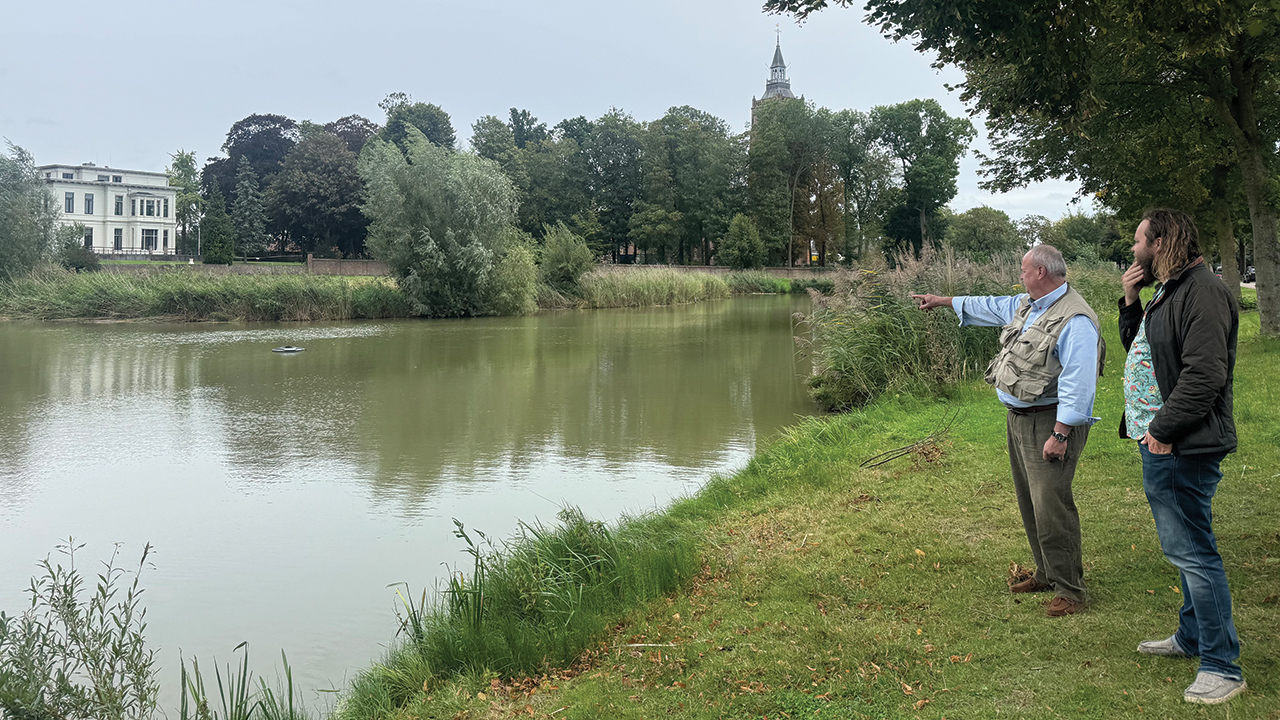
A group is working to bring Dirk Willems back to his hometown.
The Anabaptist martyr was born and eventually executed in Asperen, a village in the Netherlands. He became famous to Anabaptists around the world for escaping prison and then returning to rescue his pursuer who had fallen through ice. The price of loving his enemy was reimprisonment, torture and execution by burning at the stake on May 16, 1569.
For centuries the most notable memorial to his life and sacrifice was in Martyrs Mirror — the story and picture of Willems reaching out in assistance to his jailer. A life-size bronze statue of the scene was dedicated in 2018 at Mennonite Heritage Village in Steinbach, Man.
Plans are coming together to construct a similar statue in the very water where the iconic act took place, about a block away from the short, but nevertheless notable, Dirk Willems Street.
Theo Witjes, chair of the Historical Society of Old Asperen, said the Manitoba statue invigorated members of the community of about 3,000 people when a friend in the U.S. shared a link to an online Mennonite World Review article about the Steinbach initiative (MWR, Dec. 17, 2018).
“The plan for a place of remembrance has been on the table for quite a few years but became more urgent and defined after the unveiling of the statue in Steinbach,” Witjes said. “Many here felt almost ashamed that people in Canada and the U.S. seem to know more about Asperen’s history than the average citizen of our little community.”

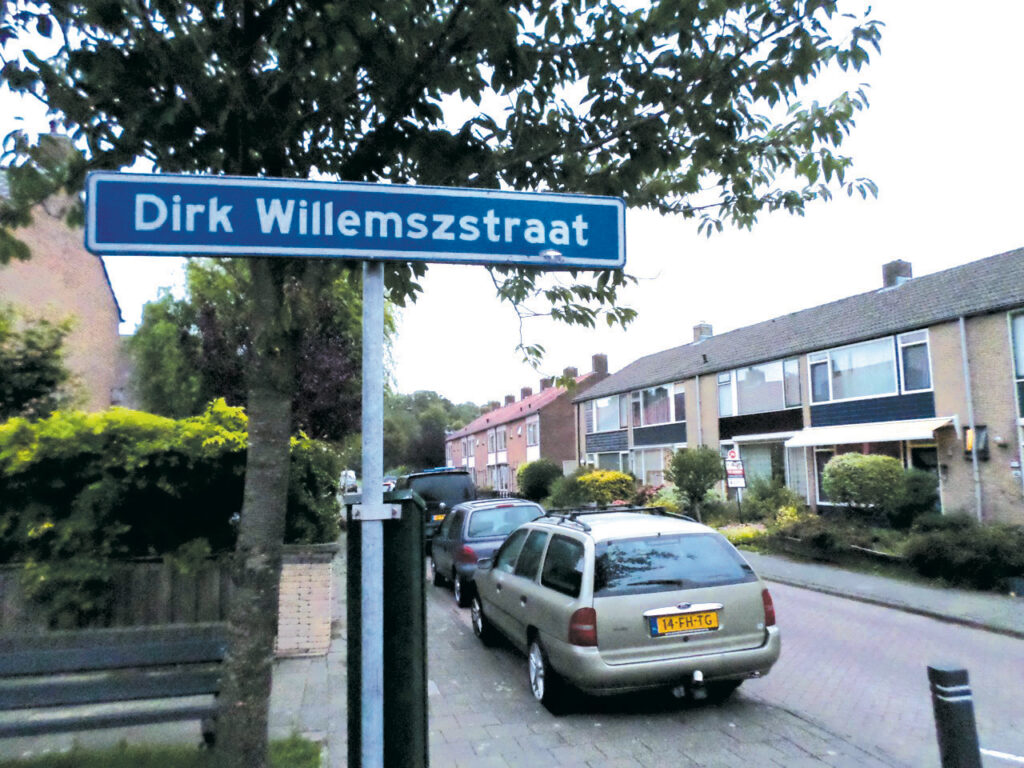
Waddestein Castle, the jail from which Willems escaped, was destroyed in 1672 by French forces. But portions of the moat that iced over for Willems’ flight remain, along with the massive Dutch Reformed Church that served as his prison after his recapture. Today the area is a park, and the closest structures are a playground and a row of houses across the street.
“In the last few years, the [Dutch Reformed Church] in Asperen noticed a sharp increase in buses arriving in Asperen with travel groups of Mennonites who want to visit the church which still has the prison where Dirk was said to be locked up the evening before his execution,” Witjes said. “These groups are now given tours to the “Hondegat” (Dogs Hole), which is the former moat of our Waddestein Castle from which Dirk escaped over the ice and the castle grounds. Not much has changed in Asperen since 1569.”
A large sign once explained Willems’ actions and sacrifice, but the local government cleared some trees in 2019 and that sign got swept away as well.
Witjes initially envisioned a floating statue moored to the bottom of the moat, which would get locked into ice to complete the scene in winter. That has evolved into concepts of a statue sitting on a base built in the moat depicting the scene in weathered steel or possibly even glass produced in the neighboring town of Leerdam.
The Dutch Reformed Church has enthusiasm about the project and is interested in assisting, but its budget is consumed with upkeep of the large structure and its contents.
Pastor Peter van den Berg is involved in statue conversations and said his congregation includes members who are convinced of believers baptism and have been rebaptized, though the denomination practices infant baptism.
“In the times of Dirk Willems, the Catholics burnt each other when they had different opinions about church, baptism, etc., and later the reformers did [too],” he said. “But nowadays we discuss with each other and try to understand and respect each other, looking for unity as believers in Christ.
“We have to learn from history . . . and honor Willems, who was prepared to give his life for the honor of Jesus Christ as a true follower.”
As plans for a statue and a budget continue to take shape, Witjes and the historical society have started raising funds through publication of Dirk Willemszn, Son of Asperen: A True Story About Faith, Betrayal and Courage, with proceeds supporting a life-size memorial.
The book covers three years of events from the 1566 Beeldenstorm (Iconoclastic Fury) — when Calvinist mobs destroyed artwork in Catholic churches — up to Willems’ execution in 1569.
“We chose to portray Dirk as a man in his prime with a wife and children, a leader of Anabaptists in Asperen but not an elder. A simple man struggling with the changes in society,” Witjes said. “We have tried to bring him to life in a respectful way and explain to 21st-century inhabitants of Asperen who their fellow townsman was and how his life must be an example to all in this day and age.”
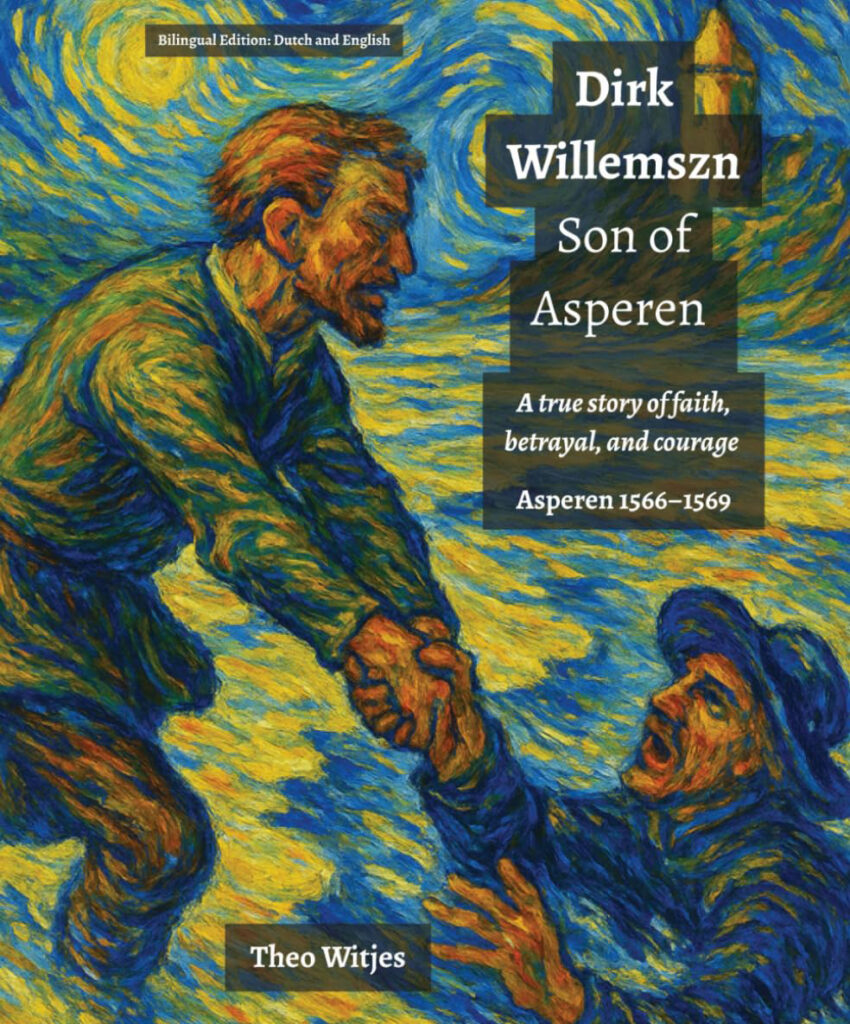
The book, released in August in the Netherlands, includes both Dutch and English translations. Pandora Press released it a month later in North America, with proceeds also supporting the Asperen statue. U.S. and Canadian orders can be made online at amazon.com/dp/1778730345.
Witjes reported that enthusiasm about Willems has increased with publication of the book. A local theater group was so impressed with the story that they are developing a play about his life, hoping to perform it in 2026 or 2027 and perhaps translate it into English.
“Would a theater group be welcome in Canada or USA for performances after trying things out here in Asperen?” asked Witjes. “We would so love to reestablish the lost bonds with the Anabaptist communities of the world. Further research has proven without a doubt that Anabaptists lived in Asperen well into the 18th century, so we want to reconnect with this part of our life as inhabitants of present-day Asperen.”
The historical society is planning signage detailing Willems’ life and listing donors, who can support the statue project financially via PayPal using the historical society’s email address: [email protected].



Have a comment on this story? Write to the editors. Include your full name, city and state. Selected comments will be edited for publication in print or online.