


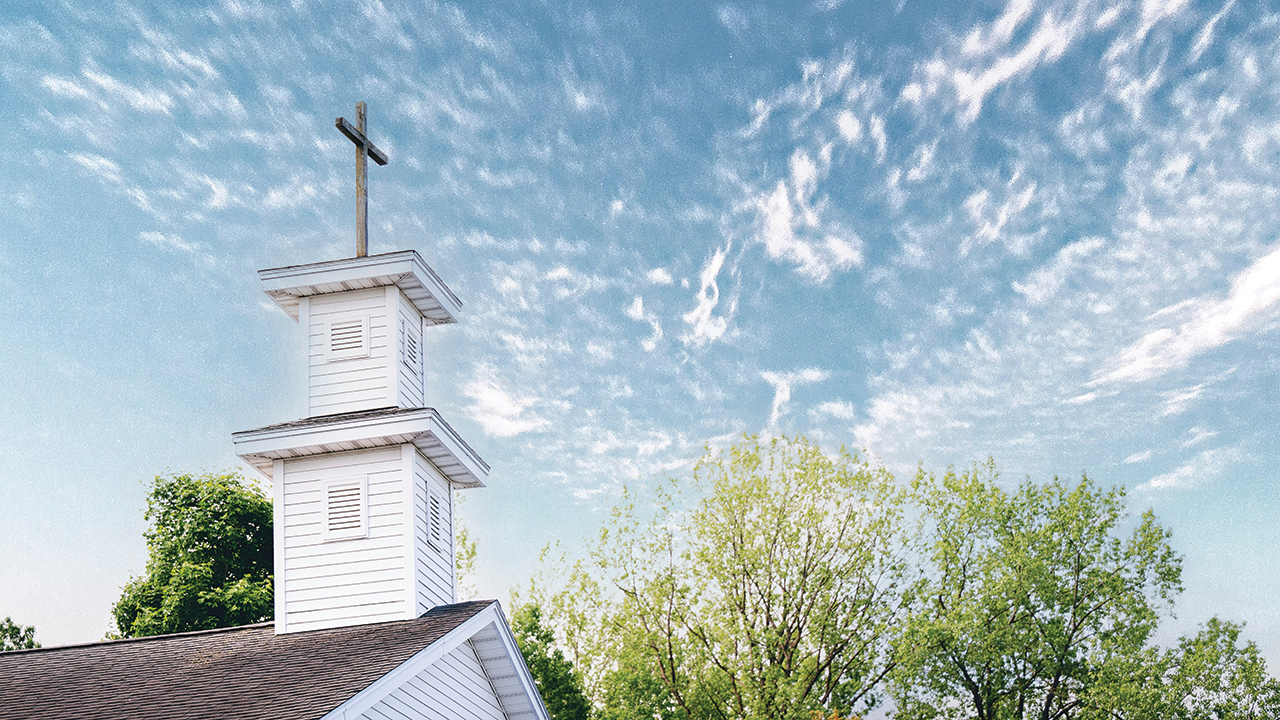
Polls and surveys note the largest trend in American Christianity today is the rise of nondenominational churches. Why? And why now?
At the same time, all U.S. denominations that keep records, from mainline to evangelical, report declines in membership.
Can we assume, anecdotally, that many who are serious about faith are sliding from historic denominations into generic, “nondenom” churches? Is this migration creating a stronger, more united, basic-common-denominator church that is an answer to the prayer of Jesus in John 17?
Or is it a “cut-flower-church” severed from its historic roots?
For much of my life, I’ve sailed in nondenominational waters but always returned to an Anabaptist port.
I’ve participated in Bible studies, prison fellowships and church-planting teams with coworkers from a wide variety of denominations. The small group I currently lead in Mechanicsburg, Ohio, includes women from Roman Catholic, Episcopal, Methodist, Baptist and unchurched backgrounds.
My experience in interdenominational settings has been educational and enriching. I see nondenominational churches reaching people that Mennonite churches aren’t.
So why am I a Mennonite? Why does rootedness in a specific tradition matter?
Nondenominational churches strive to remove as many barriers as possible. They specialize in getting people through the door. They are welcoming and seeker-sensitive. But does the one-size-fits-all approach take into account the cost of discipleship?
A Mennonite church planter who noticed people drifting from a nondenom church to his quipped, “They catch ’em, we clean ’em.”
I believe the simple, stoic Mennonite worship culture I grew up with has benefited from the fresh winds of charismatic renewal, the prayers and liturgies of high-church traditions and deeper biblical scholarship. Rigid forms of dress have become more varied. Largely agrarian lifestyles have diversified to include a wide variety of trades and professions. Missional outreach has placed us in global fellowship with brothers and sisters on all continents.
All of these changes have increased my appreciation for historic Mennonite teaching on holiness, discipleship, nonconformity and nonresistance.
I had an “Anabaptist grid” through which to run the various practices I encountered. Being a Mennonite meant something. Something worth changing jobs for. Something worth living and dying for.
Early Christians and the Anabaptists who sought to renew the traditional churches of their day had rigorous periods of instruction and spiritual formation for new believers. Following Jesus and choosing believers baptism often meant death.
Modern evangelicals (nondenom groups) emphasize the believe-and-be-baptized stories from Acts. It’s easy to hop from one nondenom church to another with almost no accountability.
One Mennonite mother told me, “I just want my children to go to a Bible-believing church.”
What does that even mean? “Even the demons believe — and shudder,” wrote early church leader James, as he argued for faith expressing itself in concrete practices (James 2:19, English Standard Version).
Could we paraphrase James to say, “A church without well-articulated beliefs and practices and active accountability is dead”?
A recovering addict stood in his Mennonite church and said, “I’m proud to be accepted as a member of this church, even though I don’t have a ‘Mennonite’ name.”
The pastor responded, “I hope we always have recovering addicts in this church — but not the same ones.”
This church is known as “welcoming and discipling.” Its membership class includes the study of Anabaptist history and the Confession of Faith in a Mennonite Perspective.
As we seek to be faithful followers of Jesus in a world of social-media influencers and artificial intelligence, I believe we’ll need all the roots we can nurture.
I was fascinated to hear Ross Douthat, a Roman Catholic podcaster and columnist for the New York Times, say recently: “It’s really hard to imagine cultures getting through that [AI] and flourishing without some kind of religious attachment or connection. The 21st century is going to be great for the Amish, the Mennonites. . . . Religious communities that are good at managing their relationship with technology — bet on them long-term.”
Cut flowers are beautiful while they last. But God calls us to be like trees planted by streams of water that yield fruit and do not wither in times of drought (Psalm 1).
Jewel Showalter works for Rosedale Bible College in development and communications and is active in Forty One, a congregation in Mechanicsburg, Ohio, affiliated with the Rosedale Network of Churches. Reprinted with permission from Beacon, Rosedale Network’s online publication.


Have a comment on this story? Write to the editors. Include your full name, city and state. Selected comments will be edited for publication in print or online.