


I said “yes” in the quiet glow of my phone screen. It wasn’t a loud, public announcement, but a direct message to a fellow Ethiopian woman — a simple promise: “I will use my platform to share your story.”
As an Ethiopian woman studying theology and peace studies at an Anabaptist seminary in America, I live in a tension of privilege. I have access to education, safety and a digital pulpit that many of the sisters I advocate for do not. Social media advocacy is not an easy battle. Some have been labeled an outsider, canceled and bashed online. I have watched friends flee Ethiopia under death threats. And in a digital world that tempts us to prize controversy over compassion, advocacy often feels like swimming against the current.
But this is the space we have. So, I said yes.
My faith, shaped by the Anabaptist call to peaceful community and the Ethiopian principle of Andenet — to stand with someone — calls me to a different path: to decentralize myself. This “yes” meant risking my engagement metrics. It meant consciously handing over my digital pulpit — a hard-earned space — to center her words, her images, her needs.
I follow in the footsteps of a Jesus who was never aligned with the powerful when it came to the poor, the oppressed and especially women. He was served by women, called them disciples and elevated them in a culture where men prayed, “Thank you for not making me a woman.” To stand for women was, and remains, a radical act of faith. When I amplify women’s voices online, I believe I am walking in that same radical way of Jesus.
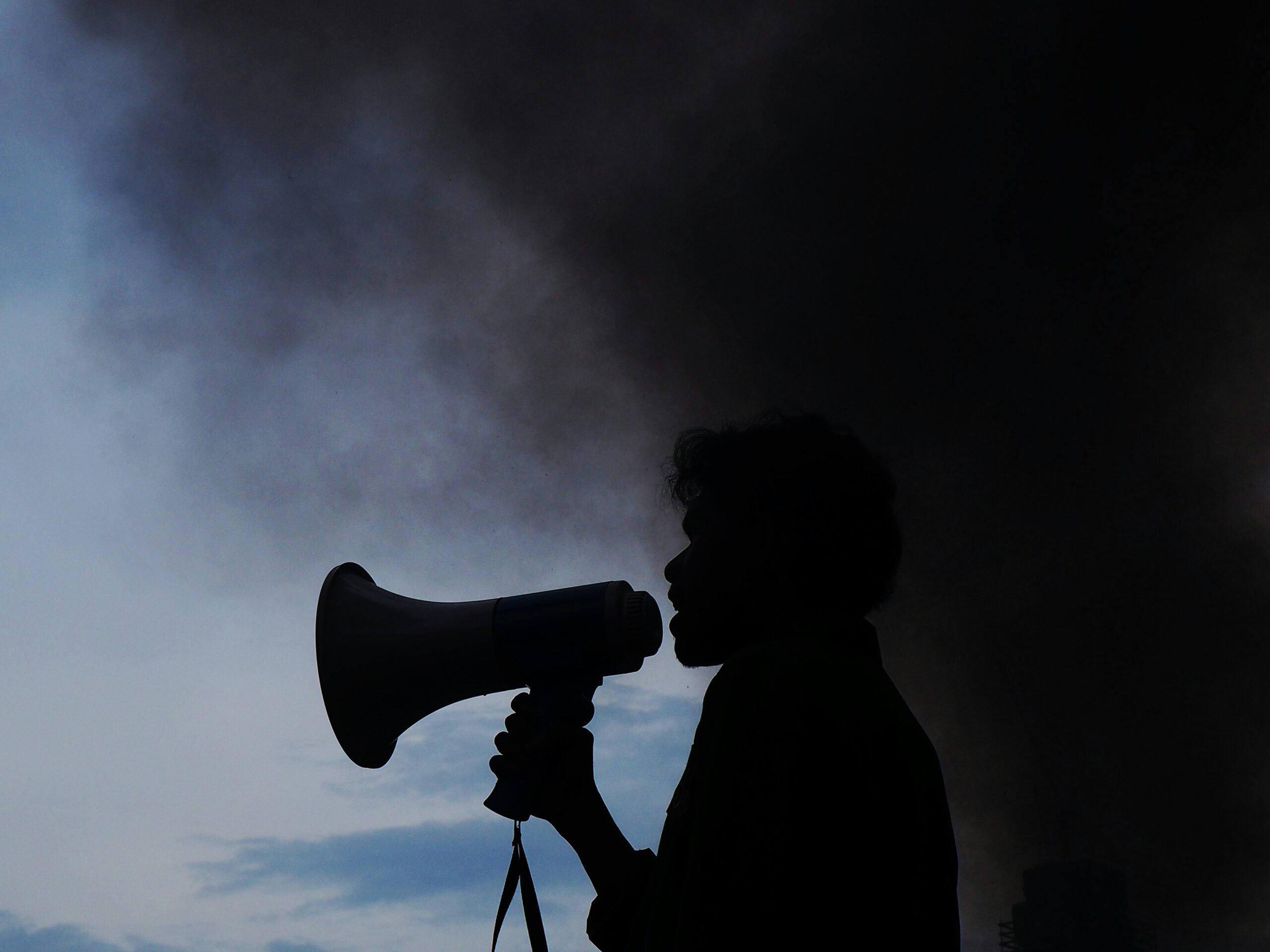
My “yes” was a small act of redistributive justice, shifting the resource of attention to where it was most needed. I am learning that faith-led advocacy is not always about broadcasting your own convictions. Sometimes, it is about humbling yourself to become a megaphone for a voice the algorithm would otherwise ignore.
The first Anabaptists practiced radical mutual aid, ensuring no one was in need. In my small, digital way, this felt like a 21st-century equivalent: a mutual aid of attention and amplification. Just as early Anabaptists risked prison and exile for their communities, perhaps today we are called to risk our reputations and platforms for the sake of others.
This is the Anabaptism I want to help build: not only concerned with individual prophetic voices, but also dedicated to weaving a global network of solidarity. A faith that uses its privilege to speak for the marginalized. A faith that passionately, relentlessly and humbly passes the mic.
This advocacy is worship. It is risky. It is exhausting. But it is also holy. Nonviolent resistance is the way of Jesus, and for me, showing up online is part of that resistance. This is my liturgy; this is my prayer.


Have a comment on this story? Write to the editors. Include your full name, city and state. Selected comments will be edited for publication in print or online.