


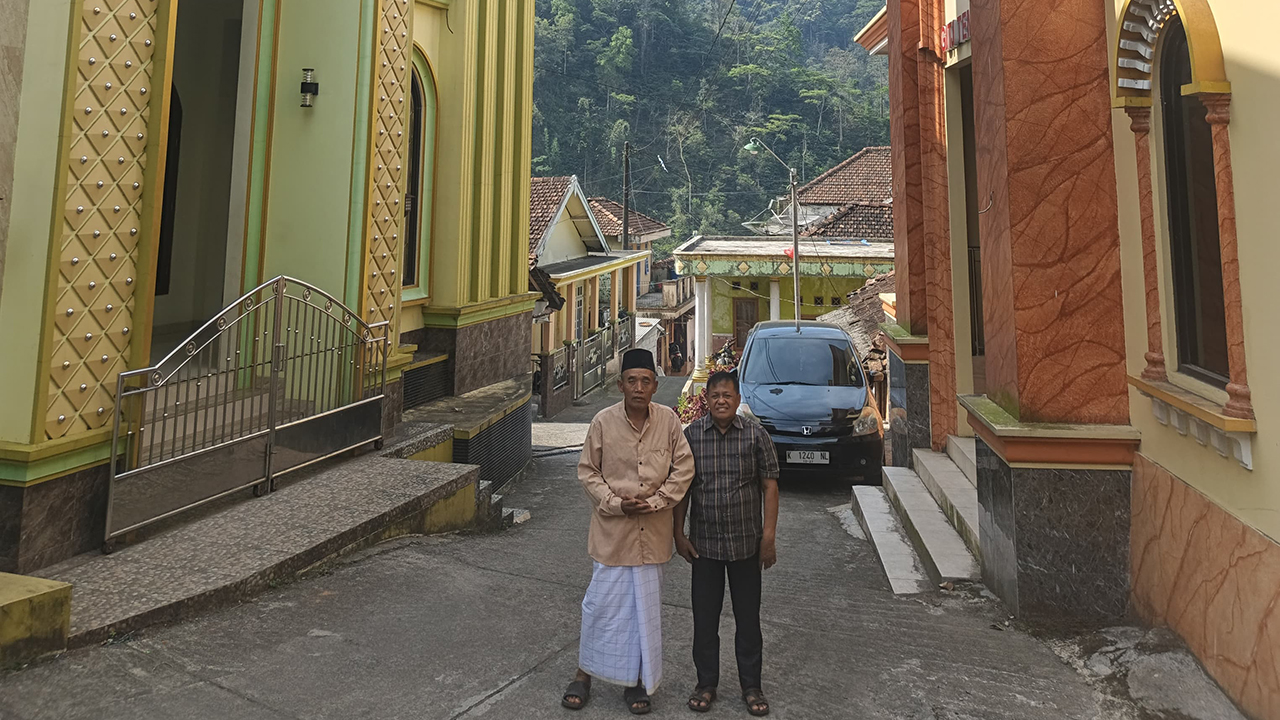
In the mountain village of Tempur, Indonesia — a region of Central Java famous for its coffee and cool climate — all the Christians are Mennonite.
Yet they are a tiny minority. In 2021, Tempur had 3,522 residents: 3,481 Muslims, 38 Christians and three Buddhists.
(All Indonesians are required to declare their religion. About 87% are Muslim, and 10% are Christian.)
All the Christians of Tempur are members of GITJ (Javanese Mennonite Church), a conference or synod rooted in the Javanese Anabaptist tradition, founded in 1854 by Dutch Mennonite missionaries.
Despite being few, the Christians in Tempur are fully integrated into community life. A Christian woman was once elected to the village council. Suwadi, the respected head of Pekosa hamlet, is also a Christian.
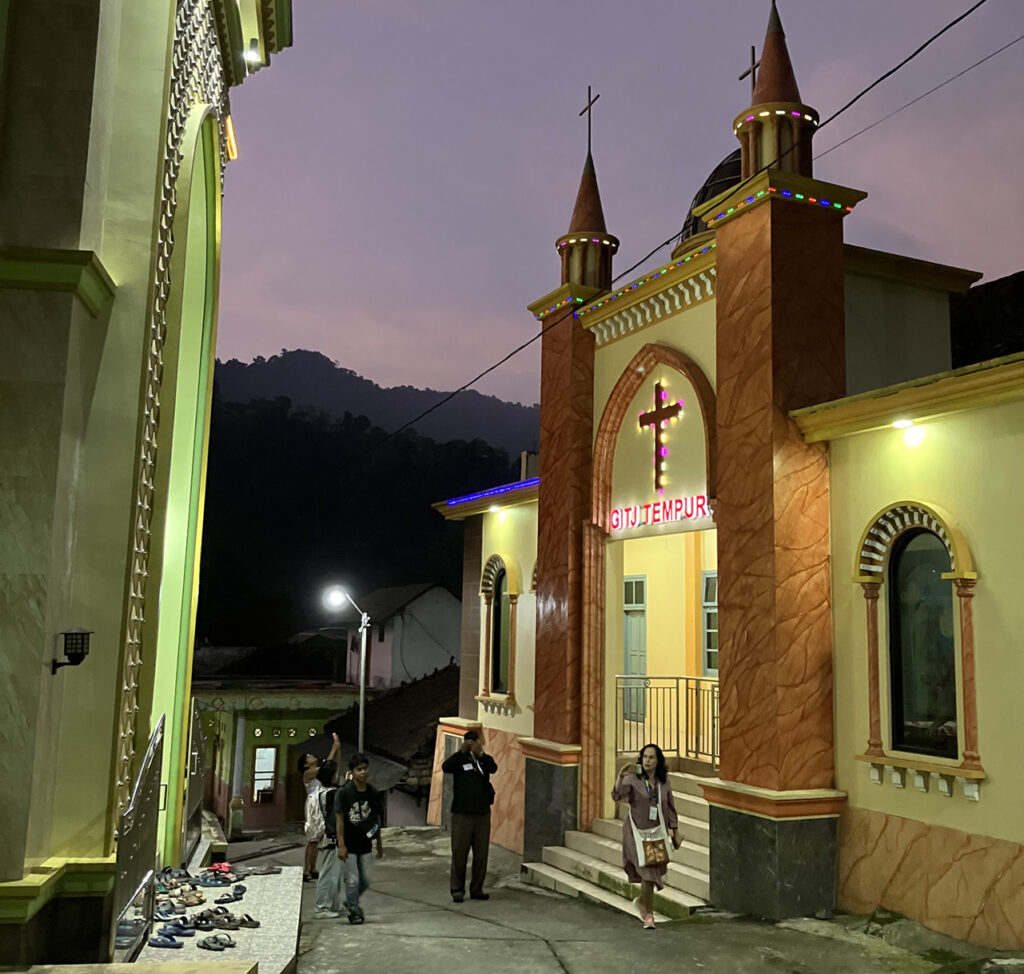
Perhaps the most striking symbol of interfaith harmony is physical: The Nurul Hikmah Mosque and the GITJ Tempur Church face each other directly, separated only by a 3-meter lane.

When the church was built in the early 1990s, Muslims joined in its construction. About a decade later, when the mosque was built, Christians contributed. Today, renovations of either building are a shared endeavor, with donations from villagers near and far.
The Mennonites and Muslims of Tempur are not just neighbors but partners. When the mosque overflows during Friday prayers or Quranic gatherings, the church veranda opens to accommodate worshipers. When Christmas celebrations draw large crowds, the mosque does the same.
Both communities share food, help prepare for festivals and stand together during illness, death or disaster.
The Christians and Muslims of Tempur demonstrate tolerance at a time when religious intolerance in Indonesia has become increasingly visible.
Indonesian Mennonites understand the importance of tolerance — both because we are a religious minority today and because we know the Anabaptist history of persecution in Europe.
We are the spiritual descendants of victims of intolerance. This makes us even more committed to practicing tolerance today.

Yet not all tolerance is the same. What kind of tolerance do we live by?
There are three kinds of tolerance: cheap, negative and costly.
— Cheap tolerance is shallow, often limited to slogans, campaigns or elite-driven agreements. It is fragile and collapses quickly in times of crisis. It only allows difference that does not threaten one’s comfort or interest.
— Negative tolerance is reluctant. It refrains from open hostility but harbors suspicion or prejudice. Difference is endured, not appreciated.
— Costly tolerance is sincere and transformative. It demands sacrifice, humility and commitment. It sees diversity as an asset and a shared responsibility.
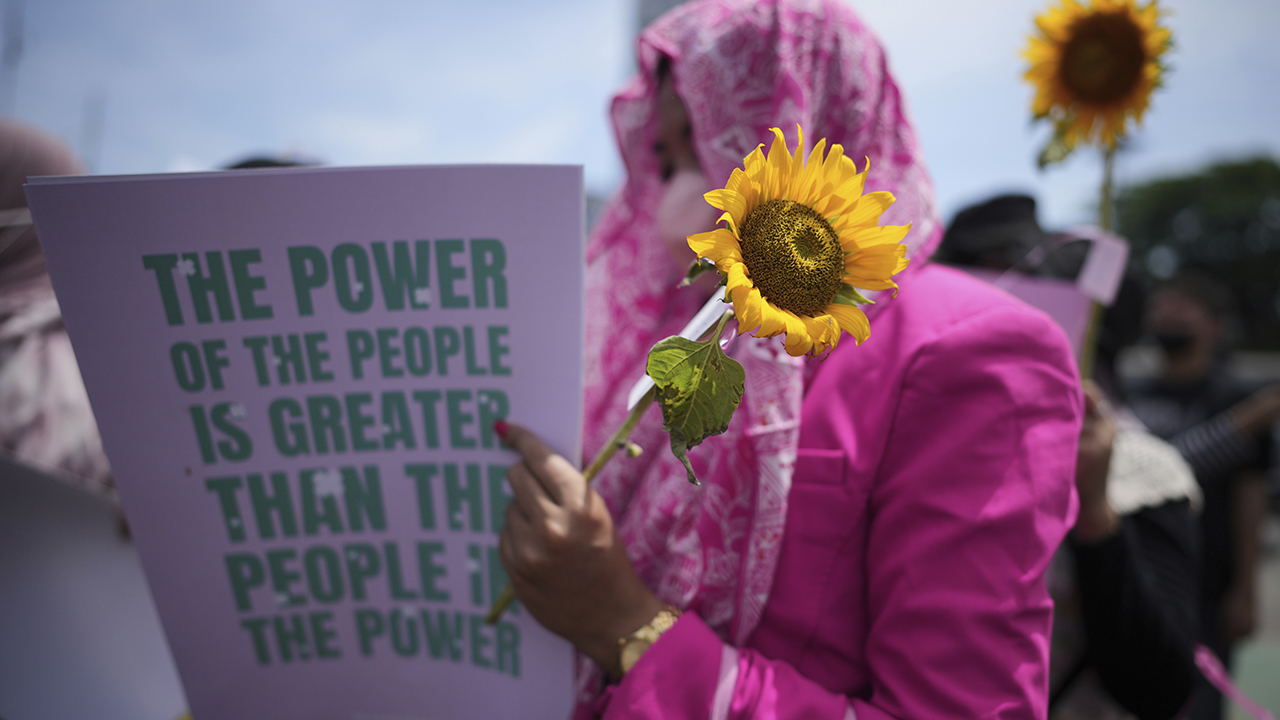
Lamentation and hope for a wounded nation
What do you do when, after years of giving your government a chance to do the right thing, you see it taking a turn for the worse?
Growing up in Indonesia, I knew corruption, nepotism and a lack of concern for the masses were the norm. A Chinese Indonesian, I was raised in an era of subtle repression of my ethnic group after a 1965 military coup, which was blamed on the Communist Party. Anything Chinese could be tied to Communism.
My ethnic and religious groups responded to this collective trauma by keeping to ourselves. Among some of the Indonesian Mennonite community of Chinese descent, the Anabaptist peacebuilding principle was interpreted as meaning that we should stay out of conflict, not get involved, remain insular.
Then in 1998, the dictator Soeharto was forced to step down after student protests and an economic crisis. I thought real democracy finally reigned.
But in 2024, the people elected as president a military general with ties to the former dictator. The new government can do anything it wants. It churns out new regulations without proper consultation faster than the Constitutional Court can render these rules invalid.
Disregard for the rule of law, militarization of civil services and coercion to get people in line have become the norm once again. So have smear campaigns against human-rights and environmental activists, journalists and academicians.
It pains me to watch this regression. What can I do?
I started by resharing stories on social media to inform people about injustices. Then I realized some people have become embittered and numb. “Corruption is just a fact of life,” they said about the things I posted.
I realized social media is not a place for constructive discourse but a tool to push people toward polar opposites. People are not there to learn but to affirm their beliefs and attack those who differ.
I stopped sharing my political views on social media.
Then I realized people need a listening ear. They ache to tell their stories but fear being judged and attacked on social media. I decided to give time to counseling those traumatized by police brutality and cyberbullying. I’ve also taught groups to cope with an uncertain future and move from helplessness to hope.
It’s a far cry from what I thought political activism was all about. I may not have a loud voice, but I can offer a real-time presence.
As student protests unfolded in Indonesia from Aug. 25 onwards, my thoughts went back to Zurich, Switzerland, where on May 29 we commemorated 500 years of Anabaptism.
On that day, I stood where our forebears met, taught, dissented, faced persecution and gave their lives for their convictions. Their faithfulness bore fruit. Five hundred years on, believers baptism and separation of church and state are widely practiced around the world. The impact of Anabaptism gives me hope that what we do for Indonesia today will also bear fruit in God’s time. — Elina Ciptadi
The Mennonite Christians of Tempur practice costly tolerance. Their way of life blends local cultural values and Christian convictions rooted in love, humility and peace.
Their tolerance is more than cultural politeness. It is an expression of faith. Their theology emphasizes love and humility in daily interactions with Muslim neighbors.
Suwadi, a Mennonite from Tempur, explains: “If a Christian refuses to engage with Muslims, that means he has no faith. Christianity is about love. Why would we not be good to those of another faith?”
Love is expressed in acts of kindness. It reflects the Anabaptist-Mennonite tradition, where discipleship means nonviolence, hospitality and solidarity with others.
The testimony of Poniyah, the first Christian in Tempur, reflects this faith. When she converted, she faced resistance from her husband and suspicion from neighbors. Some even accused her of causing illness. Instead of responding with anger, she endured with prayer and compassion. Over time, her steadfastness built respect.
Every night she prays: “I ask that Tempur remain harmonious, that neighbors live in sufficiency and that peace be felt by all.” Her endurance embodies the Christian conviction that love, modeled after Christ’s sacrifice, is stronger than hostility.
The younger generation shares this conviction. Petra and Ahong, youth leaders in the church, explain: “People of faith should naturally be tolerant, because religion teaches goodness. If religion teaches intolerance, then the problem is with how it’s taught.”
Their words echo the Christian belief that true devotion is measured by the ability to love across differences.
One of the clearest marks of costly tolerance in Tempur is restraint. For Mennonite Christians, this is an act of humility, echoing Philippians 2:3: “Do nothing out of selfish ambition or vain conceit. Rather, in humility value others above yourselves.”
For example, the church avoids holding services during Friday prayers or Muslim holidays. When Christians host communal meals, they invite Muslim leaders to slaughter animals according to halal practice, so that food can be shared without hesitation. These acts are not obligations but chosen sacrifices, expressions of Christlike love.
Muslims likewise show restraint, avoiding the use of loudspeakers in ways that could provoke offense.
For Christians, love of God is inseparable from love of neighbor, even when it costs comfort or convenience.
The spirit of tolerance in Tempur is also shaped by Javanese culture, which values harmony, consensus and mutual aid.
The region’s ancient temples reflect Hindu-Buddhist roots, where balance and peace were celebrated. Local legends emphasize solidarity, calm and protection of the weak.
Yet for Mennonites, costly tolerance is not simply Javanese courtesy but Christian discipleship. It embodies the gospel in a plural society.
Children and youth grow up experiencing interfaith cooperation as normal — helping to build mosques and churches, joining in harvests and serving together youth associations.
For Christian families, to follow Christ is to serve neighbors. An elder said: “Christians who do not open themselves to others show they lack faith. True faith is love that yields, love that gives space.”
In an age when intolerance makes the news, the Mennonite Christians of Tempur offer another vision: a small but resilient community practicing costly tolerance rooted in love, humility and Christlike witness.
Danang Kristiawan is a pastor in GITJ Jepara, Indonesia, and a teacher in Wiyata Wacana Mennonite Seminary in Pati, Indonesia.


Have a comment on this story? Write to the editors. Include your full name, city and state. Selected comments will be edited for publication in print or online.