


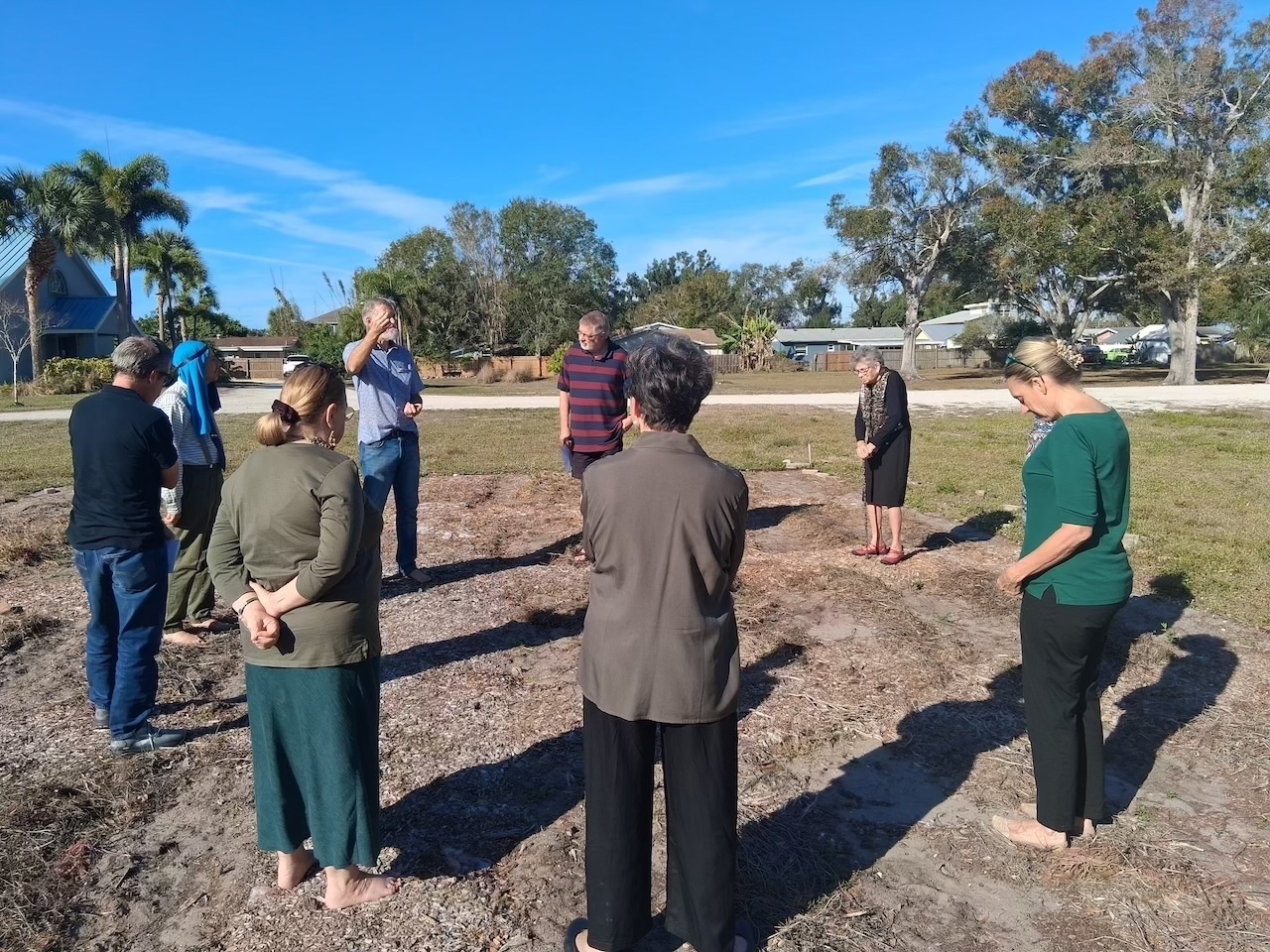
There’s a curious phrase in the first chapter of Acts: “a sabbath day’s journey.” It refers to the short walk between Jerusalem and the Mount of Olives — just under a mile. What I love about this detail is that it shows how Sabbath is not only about what we don’t do, but about how we move through the world with intention.
Scripture and tradition give plenty of guidance about what should be set aside on the Sabbath — work, production, the endless push to make or manage more. Orthodox Judaism names 39 categories of work to refrain from. But walking isn’t on that list. The question was never whether travel was allowed, but how far, and with what spirit.
Some groups urge almost no travel on the Sabbath, citing Exodus 16, where the Israelites were told to stay in place because God had already provided enough manna. But the tone of that passage reads less like a prohibition and more like an invitation: Relax. Trust Me. You already have enough.
That, to me, is the heart of Sabbath — a posture of trust and sufficiency. It isn’t just a set of rules; it’s a way of relating to God and to creation. It loosens our grip on the constant desire for “50% more,” the subtle dissatisfaction that follows many of us no matter how much we have. Sabbath is God’s framework for living life as a gift — with what we have as individuals and especially living into the collective life that not being attached allows.
But as anyone with a busy mind or a history of hard work knows, letting go is no small task. Some of us carry generational memory in our bones — farmers, gardeners and caretakers who are used to working until the job is done. Even rest can feel like one more thing to accomplish.
This is where the idea of a sabbath day’s journey helps me. In my fifteen years of organic farming, I was always striving to balance being within the rhythms of the land with the imperative to maximize our production. My life was more about the latter, to be honest, but playing with that tension made me aware of the grace that the Creator always offers in everything from soil regeneration (which generally happens in ways we don’t cause) to the mystery of love (ditto). I want in this column to explore ways that grace emerges into real life on land, in relationships and in church.
I experience Sabbath in all three as making space for that grace. With “a Sabbath day’s walk,” real life is happening, but the space lets something divine emerge. Sabbath gives permission to move, but with gentleness. It allows a walk, but not a march. It invites us to be present to our steps, not driven by our tasks.
I’ve found that this posture can be carried even into ordinary work — yes, even gardening. While scattering seed or pulling weeds, we can hold a little attention aside to notice how we feel, and to let Sabbath seep into our bodies. God’s invitation is not to perform rest correctly, but simply to inhabit the moment with trust.
Practice: Doing Sabbath work
This week, try a “sabbath day’s work.”
Choose a small task that needs to be done while you’re practicing Sabbath — watering a houseplant, sweeping a porch, folding a few towels, walking a short loop. Ideally, it will be with others. Let it be work, but not driven work.
Notice your breathing. Notice what is enough. If urgency rises, simply name it and return to the task without judgment. When you finish, pause for ten seconds and say, “This is enough, and I am enough.” Let this small act be your way of receiving God’s invitation to rest, even while your hands are moving.



Have a comment on this story? Write to the editors. Include your full name, city and state. Selected comments will be edited for publication in print or online.