


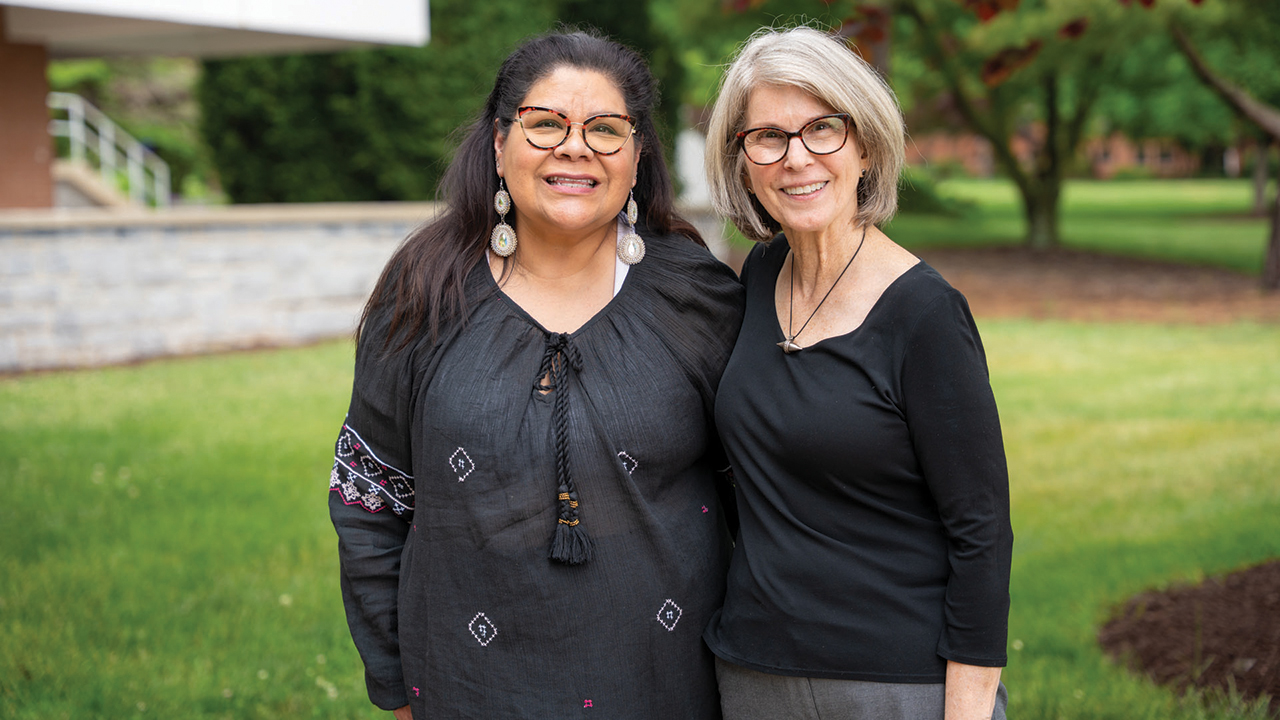
Small talk isn’t on the agenda at a Climate STARR training. Instead, participants introduce themselves by answering the question: “How is your heart?”
This opens the door for sharing about the psychological effects of climate change.
The purpose is “not to try to convince anybody of anything,” said Carolyn Yoder, who developed the training with others in the Climate STARR Collaborative. Rather, it’s to “normalize the anxiety and the emotions” in connection to the climate crisis and find meaningful action.
Emerging research shows climate anxiety and distress are rising around the world. A landmark 2021 study of 10,000 young adults in 10 countries, published in The Lancet Planetary Health, revealed climate change is psychologically damaging for multiple reasons.
Many young adults live in constant fear of natural disasters and environmental changes. They also experience feelings of betrayal and abandonment when government leaders and older adults fail to address the crisis.
Participants in the study reported chronically high levels of fear, worry, anger, grief, despair, shame and guilt.
“Although painful and distressing,” the authors say, “climate anxiety is rational and does not imply mental illness.”
Yoder, a psychotherapist based in Harrisonburg, Va., specializing in individual and collective trauma, agrees.
“People who are worried about this are right on target,” she said. “We should be worried!”
The problem is when those emotions aren’t processed adequately and translated into action.
“If we just keep squelching our feelings, we are going to numb out or burn out,” she said. “. . . It will eat us up, and it will paralyze us in ways that will make us less likely to imagine a better future and actually do something creatively about this.”
Yoder believes the best way to process the trauma from climate change is in community. That’s why in 2023 she gathered a group of experts to develop the Climate STARR curriculum for group “learning labs.”
STARR stands for Strategies for Trauma, Action, Resilience and Regeneration.
The Climate STARR collaborative offers multiday trainings in person or online. The curriculum is being released this summer in book format for teachers, church leaders and community members wanting to lead their own groups.
The Collective Trauma Handbook: Rhythm, Resistance and Resilience in Times of Fear and Uncertainty, by Yoder and Elaine Barge, is expected to be available in September through Amazon and other vendors.
Yoder’s vision for Climate STARR was born out of her own experience with climate distress, as well as decades of experience working as a trauma therapist around the world.
Around 2000, Yoder noticed an uncomfortable feeling in her body.
“I felt like there was a low hum inside me all the time,” she said. “I realized that low hum was anxiety about the bigger issues that were going on in the world like polarization, economic inequity, racism and climate change.”
Yoder knew from her training that to address this feeling she needed to process her emotions. But she couldn’t do that in a vacuum.
“These big problems shouldn’t be things that we carry on our shoulders individually,” she said. “If we are taking this on individually, we will collapse, we will break down, we will have the depression, the anxiety.”
She learned from her years in Asia, Africa and the Middle East that addressing the symptoms of trauma isn’t enough if symptoms are caused by a widespread, ongoing threat — like climate change.
Yoder believes the solution is to join with other people to process the trauma, take action together and create safe spaces to imagine a different future.
In 2002, Yoder helped create a training program called STAR (Strategies for Trauma Awareness and Resilience) housed at Eastern Mennonite University’s Center for Justice and Peacebuilding. Yoder worked with the faculty to bring together psychology and conflict transformation to address communal trauma, specifically that caused by the 9/11 terrorist attacks.
Two decades later, just as she was beginning to consider retirement, Yoder felt compelled to apply the principles from the STAR program to climate change.
The final push came when she learned her grandson, who was about 10, had been brought to tears by the realization of how climate change was impacting the planet. Though he lived only two miles from her, they had never talked about the subject.
“He didn’t know his Nana was walking around with this low hum of anxiety inside of her,” she said, “and she didn’t know he was picking up about it. I want my grandson to know that he’s not alone, and I want him to know that people in his church really care about it.”
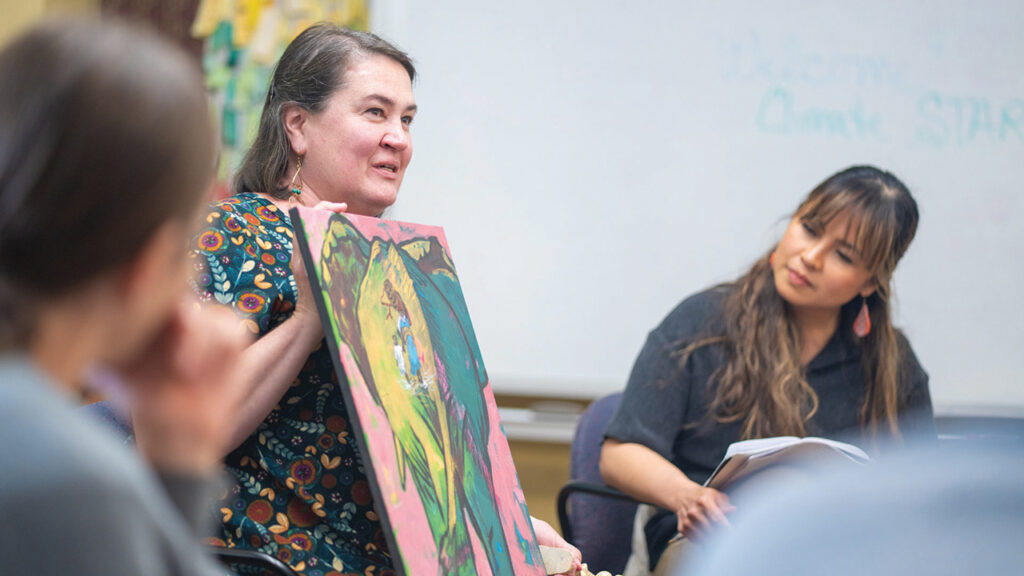
The first training was held at EMU in 2024. Participants learned from experts, took part in circle discussions and practiced lament rituals over three days.
— They learned to recognize the signs of trauma and understand its long-term impacts.
— They shared items that symbolized what broke their hearts about the climate crisis.
— They discussed the question, “What is my work to do in this world, and what is not?”
— They made space for each other’s emotions.
— They reflected on what they received from their heritage and what kind of ancestors they wanted to be.
“This is about intergeneration healing, too,” Yoder said. “How do we go through collective trauma and process it as we go so it doesn’t go down the generations and cause trauma down the generations?
“One of the biggest things we can do for each other now in these uncertain times is to witness one another and take action together. The No. 1 thing that gets us through hard times is community. However, how can you be in community with each other if you’re not talking about what’s happening? If you’re not talking about how it impacts us?”
Two other in-person trainings were held over the next year. Katelyn King, who participated in May 2025, said having a safe space to express her emotions was healing.
“We started out by addressing the reality of the crisis without sugarcoating it,” she said. “Within five minutes I started crying.”
They worked through “all the pain and sadness” and began “using the power of imagination to really think through, What does the world we want look like?” King said.
King is finishing a doctoral dissertation at Bryn Mawr College on climate change stress and coping among U.S. young adults. The topic is close to her heart, since she’s experienced climate anxiety since she was a teenager.
“I remember a time when my dad and my uncle were talking about it,” she said. “We were sitting at the kitchen table, and I just burst into tears. It was so horrible to think that this future could befall us.”
The emotions came to a head in the summer of 2020. King, who lived in Pennsylvania, had recently given birth to her first child. All summer, she said, “It was extreme [weather] event after extreme event.”
“I was crying all the time,” she said. All around she saw changing weather patterns, water pollution and dying trees. “It was so big, it was consuming my thoughts.”
The Climate STARR workshop provided a community to process her grief. She keeps in touch with some of the participants.
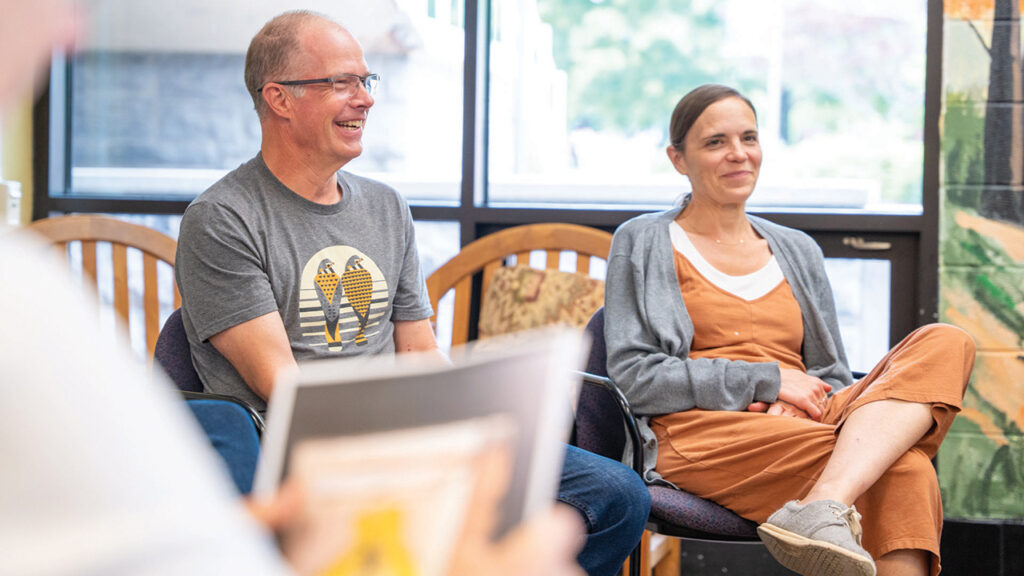
Yoder planned to expand into online trainings last fall, but a concussion forced her to put the project on hold.
As she recovered, she began working with Barge on the handbook, which addresses authoritarianism and migration as well as climate change.
The first training using the new book was this June at Eastern Mennonite Seminary with a group of humanitarian workers.
Yoder said the training material is not faith-based in conventional ways and avoids “spiritual bypass” — the idea that “God will make it all right.” But faith is always part of the conversation.
A practice she likes to share from her church, Community Mennonite in Harrisonburg, is a lament ritual she attends every Tuesday.
For half an hour, she and others gather in the sanctuary to read a current event from the news, share their feelings, light candles and pray.
“Every week that gives me a place to just acknowledge what’s going on,” she said. “I go out of there and I feel so much better. . . . I’m not alone. I’m not just sitting in my bedroom saying, ‘Oh this is so terrible!’ ”
Because of rituals like this one, Yoder no longer feels the uncomfortable hum in her body.
“I still am worried,” she said. “I’m very concerned, but that’s different than carrying a low hum of anxiety.
“I don’t feel it in the same way because I’m no longer holding it in. I think that’s what people learn in these training and learning labs: When I’m able to say [what I’m feeling], there’s something that rolls off my shoulders.”
Sierra Ross Richer is a freelance writer and farmer in eastern Iowa. She writes on climate change and sustainability in her Substack, “LANDing.” This article is the fourth in a series on faith-based action caring for the land and environment.


Have a comment on this story? Write to the editors. Include your full name, city and state. Selected comments will be edited for publication in print or online.