


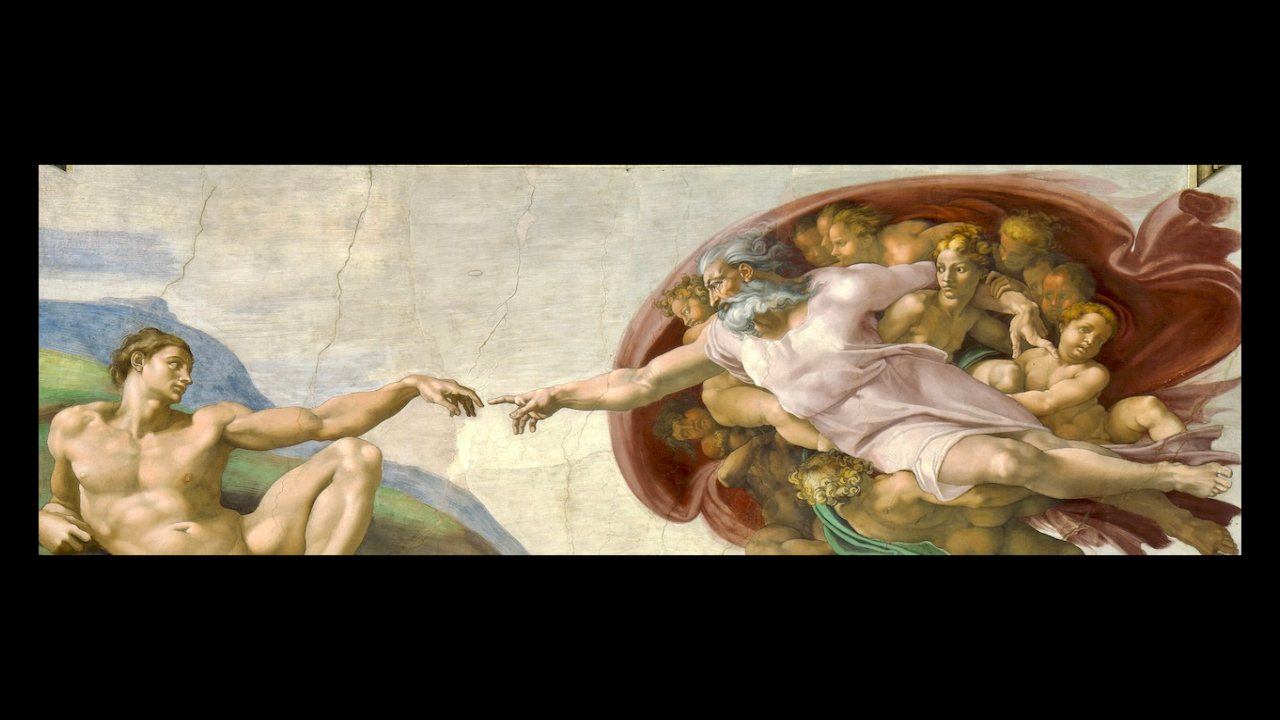
For years I believed the phrase “made in the image of God” had become a pious slogan Jews slap on almost every issue — a phrase in danger of becoming a cliche. In an opinion piece in Commentary, and in my book Tikkun Ha’Am/Repairing Our People: Israel and the Crisis of Liberal Judaism, I asked out loud: Have we overused the phrase? Do we even know what it means?
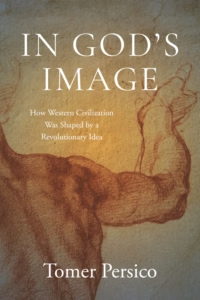
I can now say, with confidence, that we know what it means, thanks to Tomer Persico, who teaches at the Shalom Hartman Institute and is the author of In God’s Image: How Western Civilization Was Shaped by a Revolutionary Idea.
In short form: The image of God might be the most important idea that the Jewish people offered to the world.
Let’s start with what “image” meant before Genesis got hold of it. In the ancient Near East, an image was not a symbol — it was actual presence. The only person who could represent the presence of God was — you guessed it — the king.
Then along comes Judaism, and we completely rewrite that in our usual, radical way: “And God created humankind in the divine image, creating it in the image of God — creating them male and female,” Genesis 1:27 reads. This means that every human being is significant, unique and equal — the president, the corporate lawyer, the homeless person, everyone.
This is not just a nice idea. It turns out to be the most explosive idea in all of Western history.

Since we’ve just marked the 250th anniversary of the birth of America, let’s go to our foundational document, the Declaration of Independence:
“We hold these truths to be self-evident, that all men are created equal, that they are endowed by their creator with certain inalienable rights, that among these are life, liberty and the pursuit of happiness.”
If you are looking for the seed of the idea that made America — that we are all endowed with certain inalienable rights — you must go back to that idea in Genesis.
But most people do not know Thomas Jefferson’s first draft of the Declaration did not say, “we hold these truths to be self-evident.” It said “we hold these truths to be sacred and undeniable.” Benjamin Franklin crossed out “sacred and undeniable” and wrote “self-evident” in its place.
Those are two very different ideas.
Jefferson was a bit more pious, saying you need to ground human equality in theology. (And no, the system of slavery from which he benefited was not a reflection of the image of God.)
Franklin said, no, any reasonable person would know this: human equality is grounded in reason.
With his edit, Franklin completes the move and shows us the entire 500-year migration Persico’s book tracks: a sacred idea quietly handing itself over to secular reason, and somehow surviving intact.
We are still arguing as a civilization about which version of that sentence we actually believe.
But also, are we actually prepared to put that idea into action? It is just one of many Jewish ideas upon which our civilization depends, and many people simply have not gotten the memo. Don’t believe me? Just look around.
My own favorite version of this idea comes from another teacher at the Hartman Institute, Melila Hellner-Eshed. She once said, in a lecture, that each of us is a pixel in a photograph of the face of the Shekhina, the presence of God in the world.
I’ll leave you with words from my friend and teacher, Rabbi Yitz Greenberg.
After the Shoah [Holocaust], Greenberg writes, affirming the infinite value, equality and uniqueness of every person “is the only credible statement about God one can really make. This is the true glorification of God in an age when God is profoundly hidden.”
Your job? Wherever and whenever you can, uncover the presence of God.


Have a comment on this story? Write to the editors. Include your full name, city and state. Selected comments will be edited for publication in print or online.