


Last Thursday was a beautiful day with mild temperatures and brilliant foliage, just past peak leaf peeping (a seasonal activity of traveling to view changing autumn leaves) here in Vermont, but still displaying the most vibrant colors we’ve had in recent memory. I had already cancelled any idea of computer-based indoor work on account of it being too nice outside.
Permission to do this is something new that I’m practicing, as my current employment allows for a more flexible schedule. My new plans were to rake leaves at home for mulching the row of garlic cloves I’d recently planted. Rain was coming the next day and then a hard freeze with our first snow forecast for the weekend.
Then neighbors called and invited me to come by for a slice of grape pie (made using a recipe from the Simply in Season cookbook). Their two Concord grape vines were laden with ripe fruit. We have many grape vines here on our homestead and no grapes. The turkeys ate the entire crop, again, which had looked so promising just last month. Netting isn’t something we’ve invested in yet. My neighbors have.
After enjoying the pie, I returned home only to feel a strong tug to return to the vines. Come. Now. The harvest is ripe. A quick online search confirmed my inner sensing and urgency — Concord grapes are best harvested when dry and before a hard freeze. Indeed, the time was right now, given the forecast.
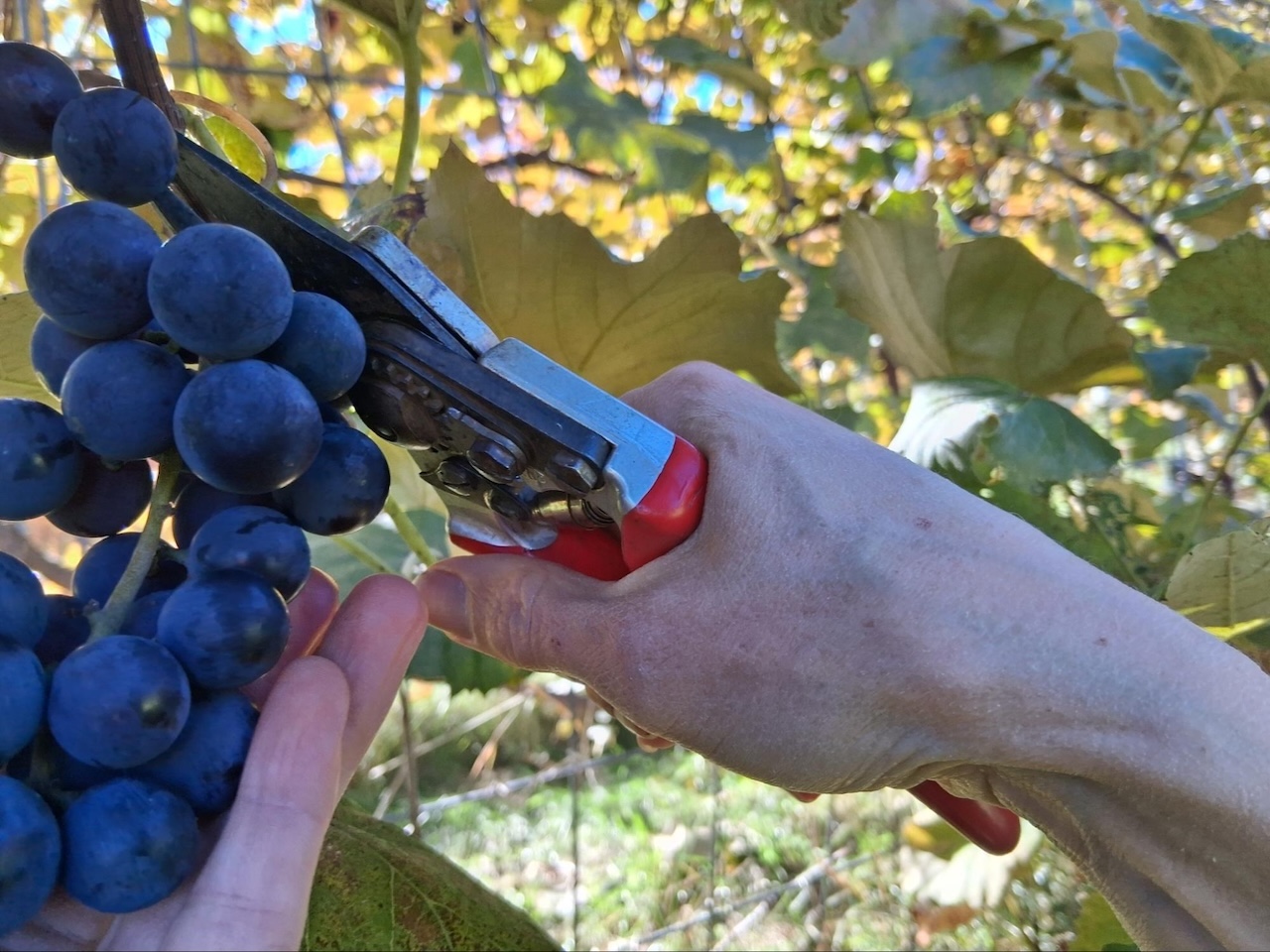
I called the neighbors and offered my labor in their vineyard in exchange for grapes. All other to-dos were set aside (which included thoughts of writing this column which would’ve been a different topic entirely, had I not responded to the call to be outside and with the grapes). While I was among the grapes, the birds flitted happily about, delighted by the removal of the net! Together we harvested side by side.
This made me think about the many Bible stories and parables pertaining to vineyards, vines and grapes. There is wisdom here if we have ears to hear. Listening to the invitation of Jesus in Matthew — to look at the birds, to see their Creator feeding them, to notice they were not stockpiling in barns — I could have felt a sense of judgment on my activity. My intentions for being in the vineyard were to store up lots of grape juice, jam and fruit leather for winter months ahead.

Yet I don’t think Jesus would condemn my squirreling away food. I was reverent. My entire being was present, alive, joyful and grateful as I soaked up the sun, enjoyed the birds, smelled earthy autumn, said please and thank you with each bunch I clipped and left plenty of grapes for the birds.
Yes, I would be storing this harvest, but it wasn’t related to anxiety of a scarcity mindset or with egocentric independence of fending for myself. I was showing up, recognizing God’s provision, abundance and generosity, which were was being extended to me by my neighbors —the humans, the grapes, the birds, the foliage, the sun. They were all reflecting and revealing such divine love, and I was receiving it with open arms and overflowing baskets.
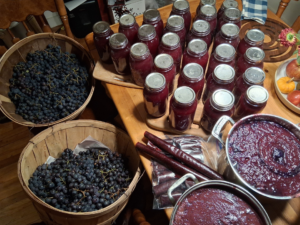
I got to pass this gift on to others, and the spirit that blessed me has rippled out. I sent bunches of grapes, fresh juice and fruit roll-ups to school, work and church all week. What delight to offer up food that contained the beauty of a day and the spirit-energy of an interconnected world that is wonderfully made.
RECIPE: Mindful first bite
This practice, often done with a raisin, invites you to eat with awareness and appreciation for your food. We often rush through the eating experience and miss much of what is available. Breathing and engaging our senses helps us slow down and show up.
If you’ve ever practiced mindfulness in any way (such as meditation, relaxation or breathing exercises), you are familiar with how easily our minds wander. The same happens when we eat. When you begin to practice mindful eating, one important thing to remember is not to judge yourself when you notice your mind drifting off the experience of eating. Instead, just keep returning to the awareness of this moment.
Ingredients:
- 1 raisin (or another bite of any food you have available)
- Your awareness
Instructions:
- Begin by setting aside any distractions. Get into a comfortable position. Take a few centering breaths.
- Pick up the food. Let your eyes connect with what you see. Notice texture, size, color. Look as if you’ve never seen this type of food before.
- Explore the sense of touch. How does the food feel (light/heavy, warm/cold, dry/wet/sticky, hard/soft)? What do you experience with your fingers, through your skin?
- Bring the food towards the nose. Engage smell. Many of us skip this powerful opportunity to inhale, exhale and experience scent.
- Send the food towards your mouth, taking one bite and closing your eyes. Relax your hands and/or put your utensil down. Explore taste, texture, temperature and sensations in your mouth.
- Check in with your ears. Can you hear any sounds the food makes in your mouth? Chew slowly and just notice what it feels like, sounds like.
- Notice each tiny movement of the jaw. Stay present. Notice the subtle transition between chewing and swallowing as you prepare to swallow. What changes to flavor while you chew?
- Try to follow the food moving towards the back of your tongue and into your throat. Swallow and follow until you can no longer feel any sensation of the food remaining.
- Open your mind to wonder. What is the story that could be told by this food? Acknowledge that the story continues through you now as the food becomes incorporated into your being.
- Take a deep breath in. Exhale. Give thanks for the food that nourishes and fuels the body.



Have a comment on this story? Write to the editors. Include your full name, city and state. Selected comments will be edited for publication in print or online.