


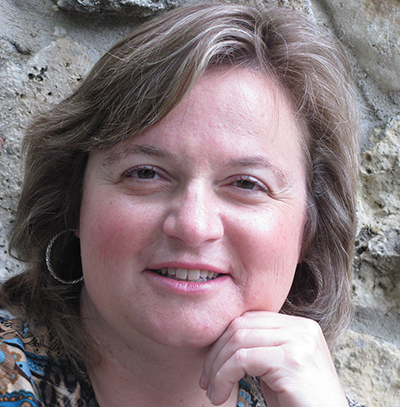
By Ann Minter Fetters
In creativity we express ourselves as made in God’s image.
No doubt, it was the highlight of my trip to Italy. Anyone who has seen it knows what I mean. The Creation of Adam, the central image in a long line of frescoes that grace the narrow ceiling of the Sistine Chapel. Michelangelo’s portrayal of the Creator’s finger reaching out to touch the finger of humanity is one I keep returning to, even some 20 years later. It is, for me, one of the most powerful images of God. In it I see that we are not only lovingly created but that our own creative acts are an extension of that love. In the midst of those acts we emulate the Creator. In this way, our creativity becomes holy work.
He describes how the craft of furniture making can function as a source of meaning, authenticity and fulfillment for many people. “The same is true of other self-expressive, creative disciplines,” he writes.
Of course, many people don’t see themselves as creative or as what the world would consider to be artists. They believe that to be artistic means, for example, being adept at drawing or painting. But this definition limits the scope of what it means to create. A broader concept of creativity can be found, for instance, in the act of rebuilding an engine or in the disciplined training for a marathon. It is simply the process of tapping into our creative impulses and bringing them to life.
The energizing act of creativity has more recently resonated with me since I’ve started writing fiction. In my own career of teaching college English, my writing has mainly been academic—first, learning it, then teaching it and doing it. Likewise, my work as a free-lance writer has been journalistic. While both of these involve a process of articulating ideas onto paper, that process is primarily left-brain work, structured and prescribed. Though this kind of writing was meaningful for me, after about two hours of doing it, my head would hurt, and I found myself glancing at the clock. I was desperate to take a break.
As my writing became more creative, however, I discovered something interesting. My imagination ran free. I was thoroughly absorbed in what I was doing. I lost all track of time. This was right-brain activity, and it came from my soul. I was, indeed, bringing something new to life.
The same can be said about rebuilding an engine. Mathew B. Crawford, in his book Shopclass as Soulcraft, writes about his experience as a mechanic. “Seeing a motorcycle about to leave my shop under its own power, several days after arriving in the back of a pickup truck, I suddenly don’t feel tired, even though I’ve been standing on a concrete floor all day. The owner hops on his newly repaired bike, and as he revs the engine, that sound pleases me, as I know it does him. The wad of cash in my pocket feels different from the paycheck I earn in my office job.”
How, then, is such work holy? In my fiction, I don’t necessarily write on “Christian” topics. I might use the name of Jesus in my stories; I might not. But if my work is the best I can deliver, if it expresses truth and beauty in their own right, then I believe it is pleasing to God.
So, too, running a marathon can be a godly pursuit. The 1981 film Chariots of Fire tells the true story of Eric Liddell, a British athlete training for the Olympics. He possessed a strong faith, and his running was an expression of his spirituality. “I believe God made me for a purpose,” he said. “He also made me fast. And when I run, I feel his pleasure.”
It comes down to this: It is in the creation of something new that we experience the divine. And what of Michelangelo? Did he have a spiritual awakening when he painted the ceiling of the Sistine Chapel? One can only wonder, but it’s hard to imagine, as his wet brush touched the plaster surface, that he didn’t understand that what he was doing was, in fact, holy.
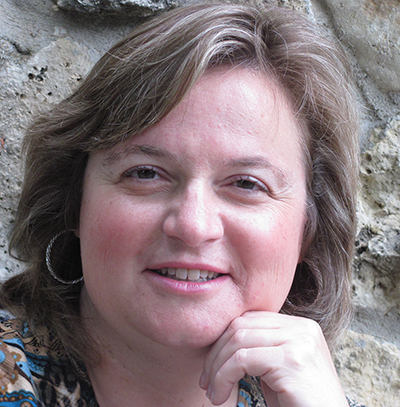
Ann Minter Fetters is a member of Lorraine Avenue Mennonite Church in Wichita, Kan.


Have a comment on this story? Write to the editors. Include your full name, city and state. Selected comments will be edited for publication in print or online.