


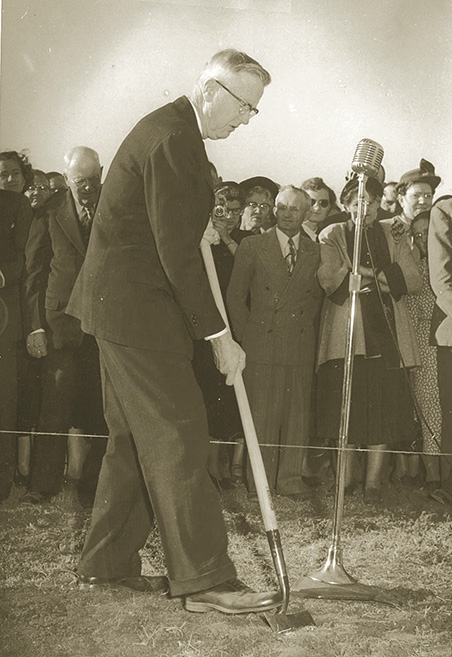
Prairie View mental health center celebrates 60 years of ministry.
During World War II, many conscientious objectors, including 1,500 Mennonites, gained firsthand knowledge of how the mentally ill were warehoused in state-operated hospitals. When the war ended and they returned to their home congregations, these young men shared their experiences and pondered how their church should improve the conditions in mental health treatment.
Their sense of urgency and moral responsibility inspired Mennonites to advocate for dispelling the stigma associated with mental illness. They recognized that there were people suffering from mental disorders within their own families, congregations and communities, and they deserved the highest quality and most humane treatment possible.
During this same time, great minds emerged in the field of psychiatry and the science of the human brain, and treatment for diseases evolved. “Together these forces created a kairos moment,” says Dorothy Nickel-Friesen, two-term board member for Prairie View, Inc., and former conference minister for Western District Conference. The combination of science and Christian witness set in motion a ministry that continues to transform lives decades later.
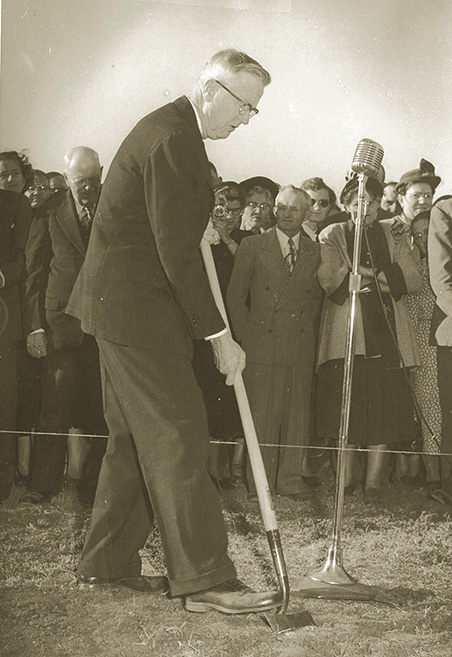
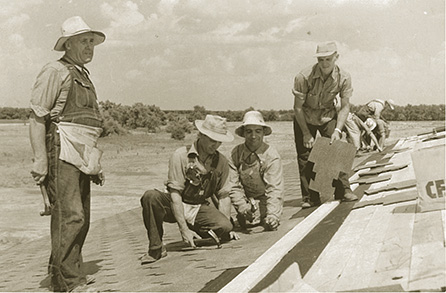
The Central Care Advisory Committee, composed of Mennonite Central Committee-related groups, planned and prayed over their shared vision for five years. Their Christ-centered work led to the opening of Prairie View on March 15, 1954. Founded on the vast prairie of south central Kansas, the result was construction of a 60-bed psychiatric hospital for Mennonites. It was built entirely by volunteer labor and staffed largely by volunteers.
Word spread quickly beyond the Anabaptist community, and the leadership at Prairie View felt an obligation to provide service to anyone who needed it. Christian compassion, a treatment philosophy based on scientific study, and innovation remain at the heart of Prairie View today.
Prairie View, a member of Mennonite Health Services Alliance of Mennonite Church USA, transforms lives through the treatment of all behavioral health conditions, supporting the patient, caregivers and loved ones. Through inpatient, outpatient and community-based services, more than 13,000 patients are served annually by Prairie View.

The science and our understanding continue to advance. Prairie View is among industry leaders when it comes to innovation and strategic collaboration. Clinicians of multiple disciplines provide specialized services to children, families, adults and older adults. Addiction treatment is approached from a holistic therapy method, treating the mind, body and spirit of the individual. Prairie View is the only provider in the state of Kansas for Transcranial Magnetic Stimulation (TMS) therapy, a unique FDA-approved nonmedication treatment for depression.
Prairie View also provides experiential learning for corporations, congregations and boards who desire to create strong teams to sustain them into the future. Opportunities to work together and overcome challenges encountered on high and low elements on Prairie View’s adventure courses empower groups to communicate and cooperate in ways that enhance effectiveness in board rooms and classrooms across Kansas. Prairie View provides comprehensive behavioral health services and promotes holistic wellness.
Prairie View’s evolving community alliances are helping build healthier communities where everyone can succeed. They have been a strong influence in the creation of a fully integrated community health collaboration that will serve the needs of those most vulnerable.
With a focus on the uninsured and those in poverty, the Harvey County (Kan.) Health Collaboration will provide comprehensive health and wellness under one roof. In a newly renovated facility, Prairie View’s Health Home Services, the Harvey County Health Department and the Health Ministries Clinic serve patients from multiple counties in south central Kansas.
It isn’t easy. “External regulation and the incredible demand on all types of resources provide challenges to delivering services to everyone who needs us,” says Jessie Kaye, president and CEO of Prairie View, Inc. “Although we receive funding from various public systems and many commercial payers, it’s important to realize that these payments do not cover the actual cost of service delivery, especially for those without adequate health insurance or financial resources. And those funders certainly do not reimburse for chaplaincy services, prevention efforts or needed outreach to families and communities. Thus, we have a continuing need for charitable support.”
Philanthropic support in the form of annual gifts, grants and charitable bequests are valued tools to ensure the quality, scope and legacy of Prairie View. “If we can nurture relationships with the faith community,” Kaye says, “and if the church embraces its role as supporter, advocate and influencer, we can overcome the stigma of mental illness and substance abuse disorders and improve access to high quality care and support.”
Another serious concern is the scarcity of qualified clinicians. “We must be responsible stewards of our human resources,” Kaye says. “Our staff is the heart of who we are. High risk, low compensation and emotional intensity make human service ministry challenging, and the risk for staff burnout is high. We currently face a scarcity of geriatric psychiatrists, child and adolescent psychiatrists, addiction treatment clinicians and addictionologists. Maintaining these valuable specialties within our organization is critical.”

Kaye tells of one patient who, one year ago, was in a wheelchair, barely able to speak and continuing to decline. “Through our comprehensive approach to treatment,” Kaye says, “her clinicians were able to diagnose and treat a medical condition that complicated her mental disorder. Today she is walking, talking, a very active participant in her own treatment, and involved with various community and church activities. Her strong faith, together with our individualized services, is sustaining her as she deals with issues of grief and loss.”
Kaye says she sees Prairie View as an extension of the greater church: “Our mission statement describes the ‘compassion, competence and stewardship’ we offer in the Spirit of Christ.”
The main campus of Prairie View remains in Newton, Kan., with outpatient offices in Hillsboro, McPherson and two locations in Wichita, Kan. Through bylaw and in agreement with MHS Alliance, a majority of the composition of the Prairie View governing board are Anabaptist affiliated. Covenant relationships with Western District Conference and South Central Conference of Mennonite Church USA keep faith at the core of the mission. Prairie View maintains relationships with other Mennonite-related institutional ministries while sharing expertise and resources with area congregations and leadership.


Have a comment on this story? Write to the editors. Include your full name, city and state. Selected comments will be edited for publication in print or online.