


Our worship should be reflected in our everyday lives.
Apparently we in the United States are losing religion.
Pundits report on the growth of the “nones,” the folks who say, when asked, that they have no religious affiliation. This does not necessarily mean they don’t believe in God or some higher deity; in fact, most of them do. They just don’t want to be identified with any particular religion.
 One of the reasons for this, especially among people under 30, is the feeling that organized religion equals hypocrisy, that what religious people say is not reflected in what they do. In reality, they feel, religious people are exclusive, not inclusive. They are selfish, not generous. They care about themselves, not others. This is a real problem, though it is not a new problem. It is something people who have faith have struggled with since the beginning.
In our Mennonite women meetings we are studying of the book of Amos. At one meeting the topic was true worship. We looked at an uncomfortable passage. Amos, speaking on behalf of God, says: “I hate, I despise your festivals, and I take no delight in your solemn assemblies. Even though you offer me your burnt offerings and grain offerings, I will not accept them; and the offerings of well-being of your fatted animals I will not look upon. Take away from me the noise of your songs; I will not listen to the melody of your harps” (Amos 5:21-23).
This is God’s opinion of religious hypocrisy. It is God’s reaction to folks doing what they think God wants in terms of worship, then going out into the world to live lives that are greedy and selfish, judgmental and hurtful to others and themselves. This was happening in Amos’ day, and it happens in our day as well. This is the hypocrisy some folks in our own culture have experienced. They hear empty words and false promises. So they throw in the towel and become a “none.” Can you blame them?
At our Mennonite Women meeting we considered this passage from Amos and talked about worship. For most of us, worship on a Sunday morning is a meaningful part of our lives. That feels good. But then our leader, Jeni, asked us, “Do you think God is pleased with our worship? Do you think there’s any need for a prophet like Amos to challenge us, to say to us, You’re being hypocritical, you’re just going through the motions, your worship is all noise to God?” That question startled and disturbed us. We didn’t know what to say.

In his booklet “What Is an Anabaptist Christian?” (Missio Dei, Number 18, Mennonite Mission Network, 2008), Palmer Becker writes that as Anabaptist Christians we have three core values:
- Jesus is the center of our faith.
- Community is the center of our lives.
- Reconciliation is the center of our work.
How do these core values shape our worship?
Let’s start with the first core value: Jesus is the center of our faith. We follow Jesus. He is our Savior. According to Becker, “In the Anabaptist tradition, salvation means being transformed from an old way of life to a life that exemplifies the spirit and actions of Jesus. Salvation … is made possible by the indwelling of the Holy Spirit, who empowers disciples to follow Jesus in daily life.”
Our worship includes thanking God for and living into the salvation we’ve received through Jesus Christ. We do this by learning about Jesus, by knowing who Jesus is and by following Jesus in our daily lives. What does that entail?
“When Jesus came to Nazareth, where he had been brought up, he went to the synagogue on the Sabbath day, as was his custom. He stood up to read, and the scroll of the prophet Isaiah was given to him. He unrolled the scroll and found the place where it was written: ‘The Spirit of the Lord is upon me, because he has anointed me to bring good news to the poor. He has sent me to proclaim release to the captives and recovery of sight to the blind, to let the oppressed go free, to proclaim the year of the Lord’s favor.’ And he rolled up the scroll, gave it back to the attendant, and sat down. The eyes of all in the synagogue were fixed on him. Then he began to say to them, ‘Today this scripture has been fulfilled in your hearing’ “(Luke 4:16-21).
Jesus claimed these words from Isaiah 61 as his mission. If we truly are followers of Jesus, this is our mission as well. It seems that keeping Jesus at the center of our faith leads us directly to the third Anabaptist core value: Reconciliation is the center of our work. The rituals of Sunday morning worship—singing, praying, proclaiming, hearing—are important because they keep our focus on Jesus and teach us about him, but they are worth nothing if this focus is not carried further, if the work of reconciliation—Jesus’ work—does not become the focus of what we do in our daily lives.
If we, as followers of Jesus, honor God and do the work of reconciliation, we will stand strong and bring glory to God. “They will be called oaks of righteousness, the planting of the Lord, to display his glory.” (Isaiah 61:3b) This is part of true worship.
However, from an Anabaptist perspective, worship is not an individual act. It is something that happens best in community. Yes, we each need to spend time with God on our own.
But this is not enough because the very act of coming together is also a means of worship, a way of honoring God. Coming together and becoming a community is what God desires for us and for the world. The author of Ephesians expresses this well:
“But now in Christ Jesus you who once were far off have been brought near by the blood of Christ. For he is our peace; in his flesh he has made both groups into one and has broken down the dividing wall, that is, the hostility between us. … So you are no longer strangers and aliens, but you are citizens with the saints and also members of the household of God, built upon the foundation of the apostles and prophets, with Christ Jesus himself as the cornerstone” (Ephesians 2:13, 19-20).
God works to reconcile those who would be enemies or strangers and bring them into one community. Through Jesus, God does this. God reconciles Jews and Gentiles, outsiders and insiders. We honor God by taking this seriously and by coming together as a community, core value #2. There we practice living faithfully and peaceably together, inspired by the teachings of Jesus and the Holy Spirit, fueled by prayer and praise. Then we take our faith out into the world to work at reconciliation, to build community there as well. All these things go together. We cannot take them apart and still be in God’s favor.
When we pledge our allegiance to God, it is not something to take lightly. If we enter into this relationship and then turn our backs on parts of it, we are in for trouble. If we focus only on “me and Jesus” and decline to be part of the work of building a community, or if we dedicate our lives to working for reconciliation but do not look to God for guidance and strength, or if we allow the worshiping community of which we are a part to become riddled with hostility, then we can justifiably be called hypocrites.
Our worship is no longer sincere. It is not true. And it is worse than that: It is damaging to us and to the world around us, a world that desperately needs to see something authentic and be invited into the life-giving light of God.
Our worship, if it is true, has an effect on the world. What we do on Sunday morning is reflected in our prayers and actions all week long. It is reflected in our care for one another. It is reflected in our everyday lives. We gather to worship so that we can be scattered to serve. It is all these things together that make us a true and convincing witness to the love of God and to the life we have received in Jesus Christ.
True worship includes but is not limited to the rituals of our Sunday mornings. It includes but is not limited to the caring and sharing that happens in our communities. It includes but is not limited to the ongoing work of reconciliation in our daily lives. True worship is all these things and more, for it expresses our longing and desire to be like Jesus and to honor God with our whole being. This is something the world will see and will know is real.
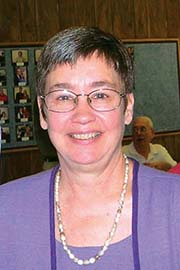
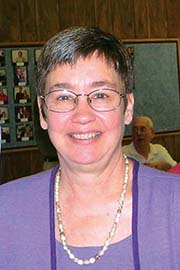
Betsy Headrick McCrae is pastor of Glennon Heights Mennonite Church in
Lakewood, Colo.


Have a comment on this story? Write to the editors. Include your full name, city and state. Selected comments will be edited for publication in print or online.