


Could we learn something about Christian worship from spectator sports?
Shortly after dawn one day, my husband and a friend headed out to a football game. Their anticipation had begun as soon as they had tickets. They packed food and gear and confirmed directions. They drove through towns, over mountains and into the fan-filled parking lot.
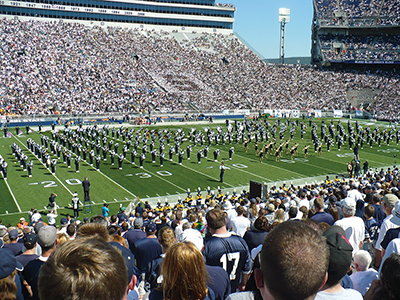 Finally, the pair inched into the stadium, joining the crowd arrayed in blue and white. Spectators shouted, pumped their fists, leapt to their feet, clapped wildly and occasionally writhed in distress.
Collective groans and cheers rang out. This football game was truly a total body experience.
Much current western worship requires little preparation and calls for little movement. We rouse from sleep, gobble some food, drive to church and slip into a pew.
Distracted by myriad concerns from the week, we try to quiet ourselves. What follows is often a sedentary and somewhat solitary service. We sit and listen to prayers, sermons and testimonies.
Could we learn something about Christian worship from spectator sports?
What would it mean if believers brought the same level of anticipation, spirit, purpose and fervor into corporate worship?
Just like the pair who prepared for the game, we should be expectant in mind and body as we look ahead to worship.
As the spectators felt a common purpose in supporting their team, we should unite in worshiping one God and feel spirited and fervent in doing so. Using our bodies and our voices more might help us experience more joy, spirit and unity in our worship.
Indeed, modern believers can draw lessons from ancient Israel’s three major pilgrimage festivals: Pesach, Shavuot and Sukkoth. All involve preparing food, reciting Scripture and traveling. The ancient Hebrews marched up to Jerusalem singing and praying. We have a record of these prayers of ascent in Psalms 120-134.
Contemporary culture suggests that posture and movement are important for communication. We ask students to sit up, we expect prospective employees to give a firm handshake, we smile when we greet friends and we stand when a dignitary enters the room. In all these, our body not only communicates but also informs our disposition.
Jesus seemed to have underscored the importance of the body when he instituted Communion. Often we stand and process forward toward a common table in quiet meditation. Some of us fold our hands, and others may join in reverent, meditative hymns. In taking the bread and the cup, we reaffirm that we are body, we sustain the body and we nourish our souls by this simple yet profound act.
Movement and vocalization make prayer more meaningful. As a child, I knelt for prayers and felt reverence. We stood to say the Lord’s Prayer aloud every Sunday, and I marveled at the sound.
More recently I have been moved by the full-throated unison singing of the Lord’s Prayer as we stand and clasp hands. When we stand, we are ready to receive. When we kneel, we are reminded of our humanity and God’s sovereignty.
Once in a Good Friday service, my congregation knelt 12 times at regular intervals during a solemn liturgy, an act that transformed Good Friday for me.
We already use our bodies and voices in worship: call-and-response readings, reciting Psalms or prayers together, standing for singing or for the Gospel reading, giving offerings by walking or dancing to the front, passing the peace or kneeling in prayer.
These moving and powerful ways of engaging our whole beings in worship are too infrequent and unimaginative.
Corporate worship is an opportunity to engage together in praise and prayer. It is our chance to affirm our belonging to the new creation, and it is our chance to strengthen ties with the universal assembly of believers.
If we approached worship more like a football game, we would enrich those corporate bonds, connect to Christians worldwide and stand on ancient Hebrew ritual. Even the most sedate among us can feel a leap of joy in clapping or shouting an amen.
Rose Breneman Stewart is a member of East Chestnut Street Mennonite Church in Lancaster, Pa.


Have a comment on this story? Write to the editors. Include your full name, city and state. Selected comments will be edited for publication in print or online.