


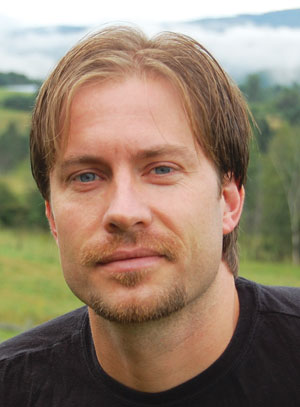
Sociologist Bob Brenneman brings to life stories of ex-gang members in Central America
Bob Brenneman believes in the power of story. His own story moves from growing up in a rural church in southern Michigan to Eastern Mennonite University (EMU), Harrisonburg, Va., to Guatemala to Notre Dame (Ind.) University, where he completed a doctoral program in the sociology of religion. His dissertation has been published by Oxford University Press as the book Homies and Hermanos: God and Gangs in Central America.
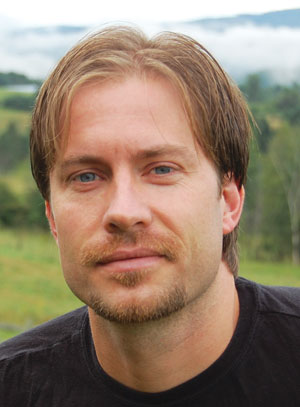 Born in Pennsylvania, Bob moved to Michigan, where his parents helped Bob’s grandfather, who had started the North Wayne Mennonite Church (near Dowagiac, Mich.) as a church plant of the Conservative Mennonite Conference. Later Bob’s father served as pastor of the church.
In 1993, Bob began studies at EMU, where he majored in English and theater and minored in Spanish. During his four years there, he spent a semester in Guatemala at the CASAS program, in which students learn Spanish and live with a local family.
After graduating from EMU in 1997, Bob returned to Guatemala and worked with Mennonite Central Committee (MCC) for four years. There he met Gaby Ochoa, now his wife.
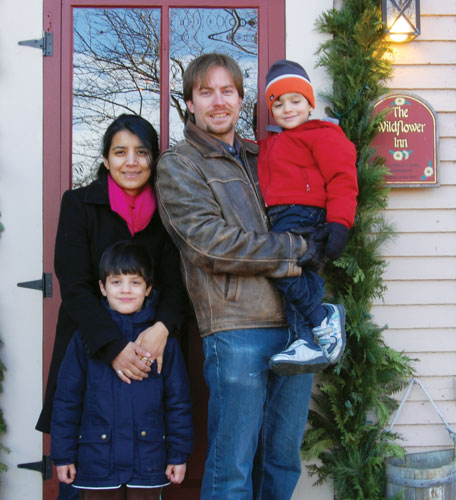
He became interested in studying at seminary and spent one semester at Associated (now Anabaptist) Mennonite Biblical Seminary (AMBS) in Elkhart, Ind., in 2001, before returning to Guatemala, where he and Gaby married.
Pentecostalism: In 2003, he decided to study sociology of religion and enrolled in the graduate program at Notre Dame. He had read such authors as Peter Berger, Robert Wuthnow and Christian Smith and wanted to understand better the interplay of religion and society. He also studied liberation theology and Pentecostalism.

“Sociology emphasizes method and quantitative analysis,” he says. He thought that provided a better understanding of what’s going on in religion. He also hoped to get a theological degree at AMBS and took several more courses there. But once his children, Nicolás, who’s now 6, and Gabo, 4, were born, he gave up that goal.
Eventually, he needed to choose a dissertation topic. He was interested in studying foot-washing practices of Mennonites and published an article in Mennonite Quarterly Review. But his advisor talked him into focusing on another topic that interested him: gangs in Central America.
During his service with MCC, he had met an MCC worker from Colombia, Ricardo Borres, who worked with the Honduran church on reconciliation between warring gangs. But Bob had not dealt with them firsthand.
He returned to Guatemala and collected data in 2007 and 2008. As his book describes, he interviewed 63 former gang members who had chosen to leave that life. Many joined a church, usually an evangelical or Pentecostal church in their city or town.
But Bob did more than collect data. He told many of these (mostly) men’s and women’s stories. He begins each chapter of the book with a story of a former gang member. “I didn’t want to just use quotes to make a point,” he says. “I wanted to dignify the person telling his story and in the process change the one hearing the story.”
Global capitalism: Writing the book changed him as well, he says. And it helped him resist change. Academia tends to pull a person toward success and a safe environment, he says. But the book pulled him back “into caring about the plight of those being ground under by global capitalism.”
He has become more aware of the vast chasm between the opportunities he and his students have and what those young people he interviewed in Central America have who are tempted to join gangs. “I realize how privileged I am and how deeply divided the world is” between those who have so much and those who have so little.
What enables these gang members to leave their gangs, at the risk of their lives, and join a church? The churches are there, first of all, in the communities where these people live. The churches tend to stress transformation and see this as a social process, not just a psychological change. The churches also emphasize community, discipleship and nonviolence.
While most of these churches are evangelical or what we would call Pentecostal, the Honduran Mennonite Church has been involved in working with ex-gang members for many years. Bob says their ministry is among the most holistic and effective of all he witnessed.
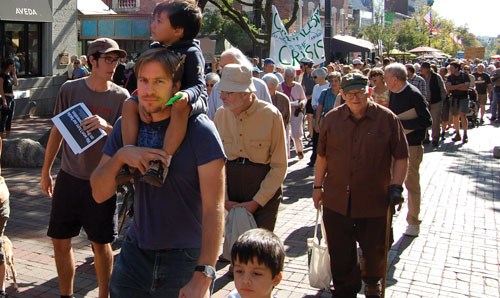
Kevlar vest: What these churches do is carry out ministry in their social location. For many middle-class, North American Mennonite churches, that would not usually include gangs. However, Bob has observed the ministry of a Spanish-speaking Mennonite congregation in Cicero, Ill., with gangs in its neighborhood. The primary staff person for such work is the church’s youth pastor, who wears a Kevlar vest to work, Bob says. The church held a peace walk in its neighborhood and offered a free concert.
Bob, who is a member of Kern Road Mennonite Church in South Bend, Ind., now teaches at St. Michael’s College in Burlington, Vt. And he takes students to Guatemala when he can.
He continues to believe “in the power of story to shape and transform people and communities.” Through his book and his teaching he hopes to “give voice to those caught in the struggle against greed and violence, which make them feel invisible and inaudible.”
Gordon Houser is associate editor of The Mennonite.


Have a comment on this story? Write to the editors. Include your full name, city and state. Selected comments will be edited for publication in print or online.