


A story of two camps and two different experiences in a girl’s life
I counted off to my mother as I stuffed the contents into a duffel bag: “One flashlight, one tooth brush, toothpaste, a wash cloth, a towel and a Bible.” I was nervous and excited. It was the summer of 1972, and I had just finished the second grade. My friend Ellen had invited me to attend her church camp for a week, and much to my delight, my parents had given their consent.
“No shorts or sleeveless shirts allowed,” the pamphlet read as I squinted at the small print near the bottom of the list. I refrained from mentioning this part to my mom and crammed some shorts and tank tops in with my other things. I couldn’t imagine they would make us wear pants or dresses while hiking through the Indiana woods in the sticky heat of July.
Once Ellen’s family dropped us off at the campground and we said our goodbyes, we were ushered over to the swimming pool to hear the camp rules from one of the adults in charge. My excitement soon faded as a wiry old woman lectured us. She had on a worn, plaid dress, her hair pinned up in a bun, as she told us what we could and could not do. As she went through the list, the crooked finger she had been waving in the air pointed itself right at me. “And there will be no one wearing shorts, like this young lady has on,” she scolded. “When you get to your cabin,” she said as she looked me in the eye, “you’ll be changing into long pants or a skirt.” I looked down at my pink knit shorts, humiliated at being made an example of. “And one more thing, kids,” she continued. “No peein’ in the pool.”
We campers departed quietly as we were matched up with counselors and made our way to our respective cabins. My counselor, Glenda, was a kind-faced young woman with long, honey-colored hair. Maybe this camp will be OK after all, I reassured myself, as Ellen and I picked our bunks and got settled.
I assume that we did the usual activities at camp that week: arts and crafts, canoeing, swimming, archery. I don’t remember much about our days, but I remember our nights clearly. Every evening after supper we gathered at the camp meetinghouse, sitting in our cabin groups on one of the long cement steps that rose before a concrete platform that functioned as a stage. A red-haired, lanky man known as Uncle Dave (we were to call all of the adults aunt or uncle), paced in front of us, telling us Bible stories and leading us in songs. Then, before he dismissed us, he asked for our attention and invited us “to be saved.” Night after night he warned us about the fires of hell and the certain Rapture to come. He told us that not even young children would be exempt from God’s wrath and that if we would only accept Jesus into our hearts as our Lord and Savior, we could escape from God’s punishment and live with him eternally.
“Somewhere in outer space,
God has prepared a place for those who trust him and obey.
Jesus will come again,
and though we don’t know when,
the countdown’s getting closer every day.”
I remember this song especially well; a missionary lady with a gray permanent and a flowered, polyester dress flipped a spiral-bound songbook onto a page showing a drawing of Jesus, his hands spread wide, coming down from the clouds.
“Ten and nine, eight and seven, six and five and four,
call upon the Savior while you may.
Three and two, coming through the clouds in bright array,
The countdown’s getting closer every day.”

Whenever Uncle Dave extended this invitation, all shuffling stopped. The only movement was the moths fluttering around the light bulbs overhead. We were then dismissed to return to our cabins, while our counselors remained to visit with any of us who wished to make a commitment. Even though earlier that year I had made a decision to follow Jesus as my mother prayed with me by my bedside, I was afraid. What if that wasn’t enough? I thought to myself now. I’d better do it again, just to make sure. There were only two of us that stayed behind that first evening. Glenda scooted beside me and prayed with me as I again asked Jesus into my heart. The next night, too, I became afraid after hearing Uncle Dave’s preaching, and I stayed afterward. Again, Glenda prayed with me.
I remember several nights, after those meetings, when we were lying in our beds in the dark, a few flashlights shining circles around the cabin ceiling. Glenda lay in the bottom bunk of her bed, having just finished reading us devotions. “You girls need to think about where you are in your commitment to Jesus Christ,” she said softly. “What if you wake up tomorrow and you’re the only one left in the cabin? Jesus said he will come like a thief in the night. What if the Rapture happens and you’re the only one left behind?” No one dared to say a word, although one night, after Glenda left for the bath house, I remember one girl quietly asking the rest of us: “Doesn’t this feel like a prison?”
That Sunday afternoon, as I climbed the cement steps of the meetinghouse after our closing worship session, my dad’s hand reached out to me from the top step, and I lifted my eyes to see him and my mother sitting there, waiting to take us home. The flood of relief I felt when I saw that hand was a feeling I’ll never forget.
It comes as no surprise, then, after my sixth-grade year, that I was reluctant to sign up for summer camp again. This time another friend asked me to join her for a week at Camp Amigo, a Mennonite camp in Sturgis, Mich. This was my church camp, so I knew I would feel more comfortable. I was older now, too, and figured I could handle the time away from home.
Again, our week was filled with the usual camp activities: water games in the lake, singing crazy songs on the way to the dining hall, the final talent show on Friday night. There was definitely a Christian presence, but it was totally different from what I had experienced earlier. We gathered as campers every night around a giant bonfire to sing camp songs and hear Bible stories, but the atmosphere was warm and inviting, not one full of threats and fear. This is the Jesus that I want to know, I thought then, if only subconsciously. I saw God’s love come alive in the way the staff treated us as campers.
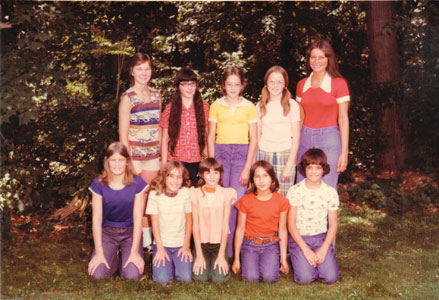
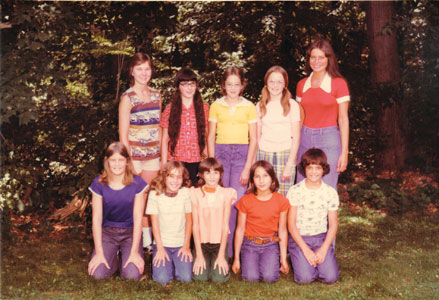
The time and attention they spent spoke convincingly of the concern and genuine care they had for us as young people. I had no doubt they were available for spiritual conversations, but that happened most often informally, both in our cabin and as we went about our daily activities. As the week came to an end, I can still remember saying goodbye to my counselor, Mary, a dark-haired beauty whose quick laugh and lively spirit had made a great impression upon me. “May God continue to bless your life,” she scribbled on the back of our group photo. “Remember, Jesus is the best friend you can ever have.”
As I look back on that first camp experience, I realize I was probably too young to be away from home for that long and that my homesickness probably colored my time there. But as the years have gone by, I have come to recognize increasingly that what was going on at that camp was nothing short of abusive. For adults to be instilling fear into the vulnerable hearts and minds of little kids, especially in the name of religion, was not only harmful at the time but surely had negative repercussions for many of those children for years to come. Fortunately for me, my other experiences growing up in the church did not reinforce that negative evangelistic approach. I don’t think I ever told my parents much about what happened that week; perhaps I needed to absorb it over time to understand it better. I am now critical of anyone who even talks about the idea of hell with a small child. And I hope that my own daughter can one day experience what I did that second time around.


Have a comment on this story? Write to the editors. Include your full name, city and state. Selected comments will be edited for publication in print or online.