


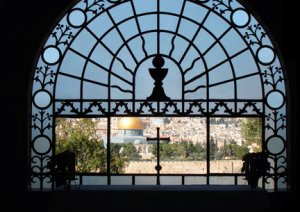
Our treatment of immigrants in the United States has links with the Palestine-Israel conflict.
As he came near and saw the city, he wept over it, saying, “If you, even you, had only recognized on this day the things that make for peace! But now they are hidden from your eyes.”—Luke 19:41-42
Dominus Flevit on the Mount of Olives in East Jerusalem is the name of a church and a site of pilgrimage for many Christian travelers to the Holy Land. Literally, “Dominus Flevit” means “the Lord wept” in Latin and is remembered as the site where Jesus stopped to look out over Jerusalem to weep and ask this striking question to all who would follow him.
Do we recognize the things that make for peace? Are they right in front of us, hidden from our eyes?
The language of peace often surrounds us. For example, I work with Mennonite Central Committee U.S. in Peace and Justice Ministries, which includes programs dealing with antiracism training, immigration education, women’s advocacy, peace education, restorative justice and conflict transformation. MCC’s peace and justice work in the United States goes back more than 60 years to the establishment of the Peace Section in the early 1940s, an effort that has worked over the years to nurture the peace witness of the church and seek to live out that witness faithfully.
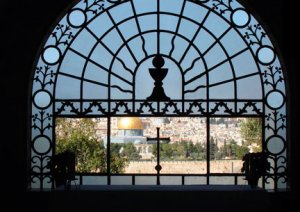
Prior to this, I worked as a peace development worker with MCC in the Occupied Palestinian Territories, living in the West Bank town of Bethlehem, working to build relationships with Palestinian and Israeli groups committed to justice, peace and reconciliation and communicating their stories to folks back here in the United States.
When I read the text from Luke’s Gospel, I cannot help but feel that Jesus is speaking directly to me, to us. Indeed, these words are a challenge to all of us who make use of the language of peace.

This is a subversive text. And it reminds me of a story about what the language of peace in Palestine-Israel looks like, a story from Hedy Sawadsky, a relief worker with MCC in the Middle East in the 1960s. A Palestinian woman challenged her: “What you’re doing here is fine, but it is only band-aid work. … Go home and work for peace and get at the root causes of evil and war.”
“Why do you see the speck in your neighbor’s eye but do not notice the log in your own eye? Or how can you say to your neighbor, ‘Let me take the speck out of your eye,’ while the log is in your own eye? You hypocrite, first take the log out of your own eye, and then you will see clearly to take the speck out of your neighbor’s eye” (Matthew 7:3-5).
Since my return from Palestine, I cannot help but see the linkages to the work of peace and justice here in the United States. Just as that Palestinian woman told Hedy, the root causes are too often rooted here.
I continue to struggle with not being cynical about the situation in Palestine and in Gaza in particular. It is not a healthy place for me to be, spiritually or emotionally. But the Gaza Strip is a heart-breaking catastrophe in so many ways, and the people there have been suffering for so long. It makes me think about the ways we in the United States are irrelevant—in the sense that it is less about what we need to do and more about what we need to stop doing. In other words, honestly looking at the ways we, the United States, have made Gaza into a prison: through our tax dollars, our military aid to Israel, which includes the military hardware used in Gaza, our veto power that obstructs United Nations Security Council responses or our media representations of Gaza and Palestinians that too often dehumanize.
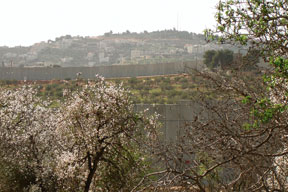
Honesty in our self-reflection should lead us to confession and repentance of our own histories of violence and injustice on this continent. I once heard quoted a Native American who argued that the best way for people from the United States to address the terrible conflict in Palestine-Israel is to deal more seriously with our own history of colonization, dispossession and displacement and work for justice for the indigenous peoples in the United States. This would not only address a serious and ongoing historical sin but in the process more effectively help our Palestinian and Israeli brothers and sisters suffering in that broken land. This manner of systemic analysis recognizes that work for justice in Gaza should be part of the work for justice everywhere.
This has led me to seek a “thicker” definition of peace, one that emerges out of a more systemic analysis of violence and injustice. Martin Luther King Jr. spoke about these linkages, particularly in naming the connections between racism, poverty (classism) and war (militarism). Or put another way, we must recognize that our work at antiimperialism abroad must be complemented by our antiracism and antioppression work at home.
Identifying the historical trends of colonization, dispossession, and displacement in a place such as the Middle East, how might an accompanying peace issue look in our communities? How might we identify these linkages? Immigration is such an issue, an issue all too invisible, or at least invisible to some. In fact, wherever you may be right now you likely will not have to look too far to uncover the plight of undocumented neighbors and discover opportunities to recognize “the things that make for peace” particularly as it relates to the biblical call to welcome the stranger (Leviticus 19:33-34; Ephesians 2:17-20).
Newcomers to the United States continue to encounter an unwelcoming hostility shaped by racism and xenophobia. They are too often met with suspicion, intimidation, isolation, militarized borders, raids and migratory documentation backlogs. In recent years, the Immigration and Customs Enforcement agency conducted some of the largest workplace raids in the history of the United States, causing fear, separating and terrorizing families and disrupting entire communities and the lives of immigrants and U.S. citizens. The ongoing construction of the U.S.-Mexico border wall materializes this antiimmigrant sentiment. There are an estimated 12 to 16 million people in the United States with undocumented immigrant status. And the U.S. immigration system continues to be dysfunctional, lacking programs for guest workers and increasing documentation backlogs and proposing futile programs that do not address the root causes of immigration.
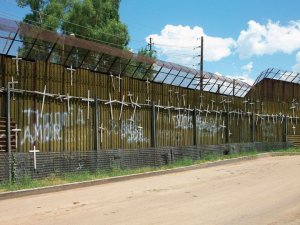
In this context, many Christian communities continue to be ambivalent about how it should respond to immigrants, and in its majority the church remains uneducated about the political, economic and social issues that cause immigration. For example, when coming to the United States individuals are looking for economic opportunities, means for survival for themselves and their families and fleeing the dire situations their countries are facing—many of which are directly connected to foreign policies of the United States, including trade agreements, such as the North American Free Trade Agreement, that could be understood to lead to the “colonization” of local economies, resulting in a displacement that dispossesses whole communities and uproots people. The economies of neighboring countries, such as Mexico, have been seriously affected by trade policies that promote economic disparity and dependence.
A genuine peace that speaks to all these forms of violence and injustice is our challenge. This takes us beyond the all-too-familiar and omnipresent language of peace, recognizing that what is required is more than a word, more than holding another peace summit that provides the opportunity for another high profile photo op, more than another gathering around a peace agency or a peace church.
Indeed, peace in its thickest, most holistic form always challenges the status quo that maintains the structures of violence that benefit the powerful and privileged. And so, a thicker definition of peace requires a thicker, more systemic analysis and approach to peace, accompanied by engaged and engaging theological reflection.
Whether it is seeking a just peace in Palestine-Israel or radical hospitality for the stranger in our midst, how do we look with open eyes and listen with open ears and hearts so that we may see and recognize on this day the things that make for peace?
Timothy Seidel is director for Peace and Justice Ministries with Mennonite Central Committee U.S. He was a peace development worker with MCC in the Occupied Palestinian Territories 2004-2007 and a contributing author to Under Vine and Fig Tree: Biblical Theologies of Land and the Palestinian-Israeli Conflict (Cascadia Publishing, 2007).


Have a comment on this story? Write to the editors. Include your full name, city and state. Selected comments will be edited for publication in print or online.